Market Bubble Analysis & Commentary
Daily commentary on the speculative excesses, valuation extremes, and structural risks shaping global markets right now. Articles cover equities, property, crypto, commodities, and the macro forces that drive boom-and-bust cycles, with frequent reference to historical parallels documented in the encyclopedia. Each piece is written to translate complex market signals into clear, actionable context for long-term investors.
Analysis falls into four recurring categories — historical-parallel pieces that map a current market condition onto a documented past bubble; crypto-market-cycle notes that track halving positioning, stablecoin reserves, and exchange-concentration risk; property-market-risk pieces that examine credit availability, household debt, and rental-yield gaps; and global-market-risk articles that focus on yield-curve signals, central-bank divergence, and sovereign-debt sustainability. The category badge on each card identifies which lens the article uses.
Every article is written to a strict editorial standard. Specific numbers must be traceable to live indicator data or supplied source text. Speculative phrasing is avoided. Articles below an 800-word threshold are rejected and regenerated. Pieces flagged for review are held back rather than published with disclaimers. Use this feed to track how today's risks are evolving and where the next mania may already be forming.
The pipeline that produces these articles draws on a structured set of inputs: a daily-refreshed table of macro indicators (Shiller CAPE, Buffett Indicator, US 10-year yield, MOVE index, Bitcoin dominance, stablecoin reserves, household debt-to-GDP, and roughly forty others), a curated news feed scraped from central-bank statements, regulatory filings, and major financial outlets, and the full encyclopedia of historical bubbles for parallel-matching. The model is instructed to flag any indicator reading that crosses a documented historical threshold and to anchor its analysis in that signal rather than in sentiment or narrative.
Editorial independence matters. Bubblepedia does not accept sponsored placements inside analysis articles, and affiliate links — where they appear — are confined to clearly labelled blocks separated from the body copy. We do not short or hold leveraged positions in any asset discussed, and we do not publish price targets or trade recommendations. The goal is structural understanding: helping readers recognise the shape of a bubble before it bursts, and the shape of a recovery before it begins. Bookmark this page or subscribe to the weekly digest to follow the analysis as it evolves.

Nifty Fifty to Magnificent Seven: How Passive Flows Create Concentration Risk
The Magnificent Seven's dominance of the S&P 500 — exceeding 33% of index weight by late 2025 — replicates the structural mechanics of the Nifty Fifty era with a dangerous modern amplifier: passive index flows that automatically compound concentration regardless of valuation.

Bitcoin's Halving Cycle: Pattern Recognition or Self-Fulfilling Prophecy?
Bitcoin's four-year halving cycle has become the dominant framework for crypto positioning, but the same narrative certainty that defines bull market peaks may be the cycle's greatest structural risk.
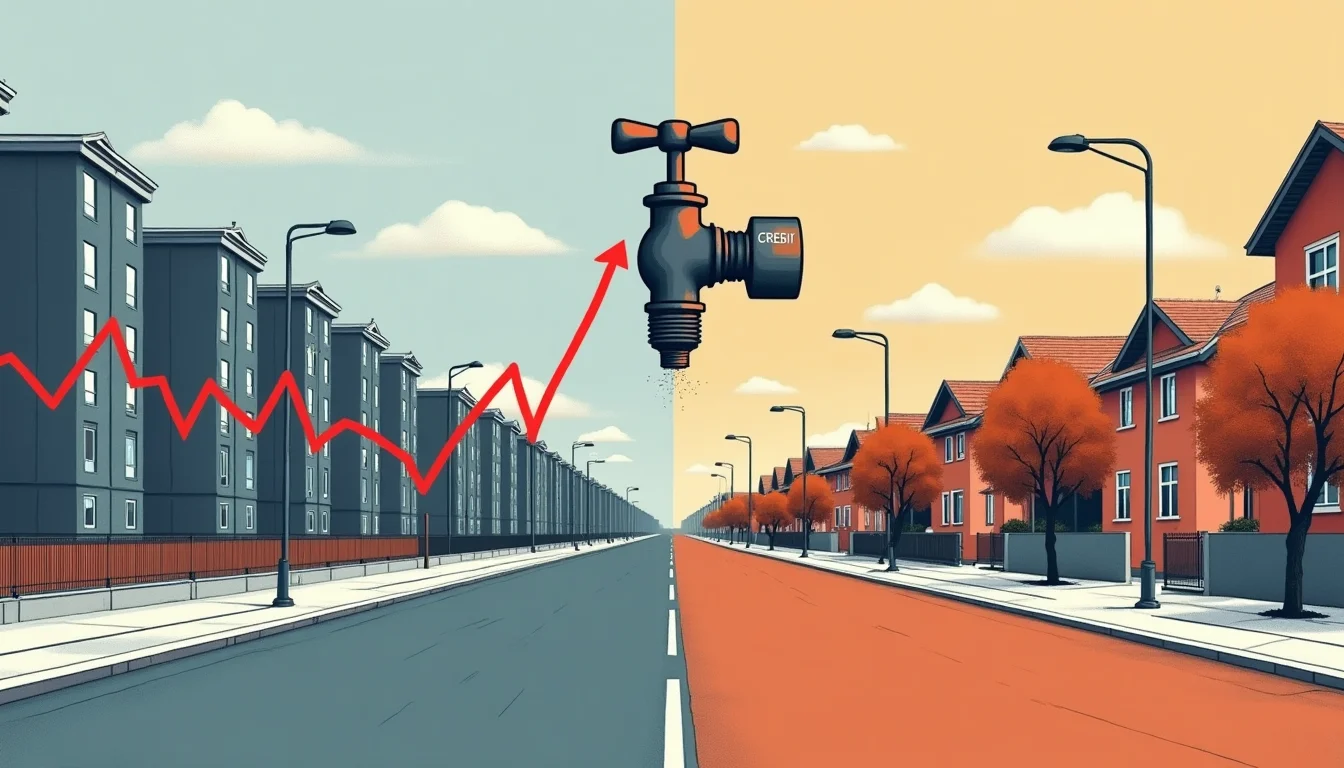
How Australia's Lending Cycle May Mirror Sweden's 1990 Property Collapse: A Credit Availability Analysis
As Australian lenders begin tightening serviceability assessments and household credit growth slows from its post-pandemic peak, the structural dynamics now emerging bear a striking resemblance to the credit-availability turn that preceded Sweden's catastrophic early-1990s proper

Term Premium Surge Echoes 1928 Bond Market Complacency
Rising term premiums in U.S. Treasuries, amplified by a hotter-than-expected PCE inflation print, are flashing the same structural warning signs that bond markets ignored in the final years before the 1929 Wall Street Crash.

OpenAI's IPO Anticipation Arrives at a $400 Billion Revenue Gap — History's Largest Infrastructure Overbuild Meets Wall Street Optimism
As SpaceX's IPO stokes investor appetite for OpenAI and Anthropic listings, the AI infrastructure sector carries a fourfold gap between annual investment and enterprise revenue that dwarfs every previous technology overbuild in financial history.

Spot Bitcoin ETFs Cross $130 Billion in AUM as Pension Capital Enters a Fourth Crypto Cycle
Spot Bitcoin ETFs have accumulated over $130 billion in assets under management since their January 2024 launch, with institutional flows now structurally reshaping a market that has historically been driven by retail speculation — raising familiar questions about whether profess

Australia's Fertility Rate Falls and Migration Slows: What Shifting Demographics Could Mean for Property Prices
Australia's property market has been structurally supported by demographic tailwinds for decades, but a convergence of falling birth rates, ageing baby boomers, and volatile migration cycles now mirrors the demographic inflection that preceded Japan's 1990s lost decade and Sweden

U.S. Sells $518 Billion in Treasuries as Warsh's Fed 'Regime Change' Drives Short-Term Yields Higher
A record weekly Treasury issuance of $518 billion, spiking short-term yields, and a Federal Reserve leadership transition are compressing the global risk premium in ways that echo the asset-monetisation delusions of John Law's Mississippi Company collapse.

Doginal Dogs Survived 2024 While 2021 NFT Collections Collapsed
As 95% of 2021-2022 NFT collections trade at effectively zero value, Doginal Dogs' $1 billion trading volume and $100,000 OTC sale reveal a striking divergence driven by the composition of buyers — and offer a rare case study in what separates durable digital assets from speculat

Strategy's Bitcoin Funding Model Cracks as Stablecoin Reserve Mechanics Enter the Spotlight
As Bitcoin slides toward $60,000 on fears that Michael Saylor's Strategy faces a funding crisis, analysts are scrutinising the stablecoin reserve architecture that underpins crypto market liquidity — a system whose opacity echoes historical episodes of fractional reserve fragilit

Australia's Migration Slowdown Mirrors 1970s Demographic Shift
Australia's migration slowdown to 306,000 mirrors New Zealand's 1970s demographic inflection that preceded a property market correction, highlighting how population flow reversals can trigger housing market adjustments.

Iran Nuclear Deal Triggers Oil Market Chaos Mirroring 1987 Crash
The unexpected US-Iran nuclear agreement has triggered an 18% oil futures collapse and massive energy sector volatility, creating supply shock transmission patterns that parallel the computer-driven market chaos of Black Monday 1987.

Switzerland's Population Cap Rejection Mirrors Canadian Immigration Surge as Housing Affordability Reaches Critical Threshold
Switzerland's narrow rejection of a 10 million population cap reflects the same demographic pressures driving Canada's housing crisis, where mass immigration has created affordability conditions that parallel historical property bubbles.

Bitcoin Mining Capitulation Mirrors 1897-1898 Klondike Exodus
Bitcoin's mining difficulty has fallen 15% in two weeks as miners liquidate equipment worth $6.8 billion, paralleling the mass abandonment of mining claims during the Klondike Gold Rush's brutal 1897-1898 winter.

Australia's Construction Sector Dependency Mirrors Spain's 2007 Peak as Building Industry Reaches Critical Economic Threshold
Australia's construction sector has reached levels of economic dependency that parallel Spain's dangerous pre-crisis reliance on building activity before the 2008 property market collapse.
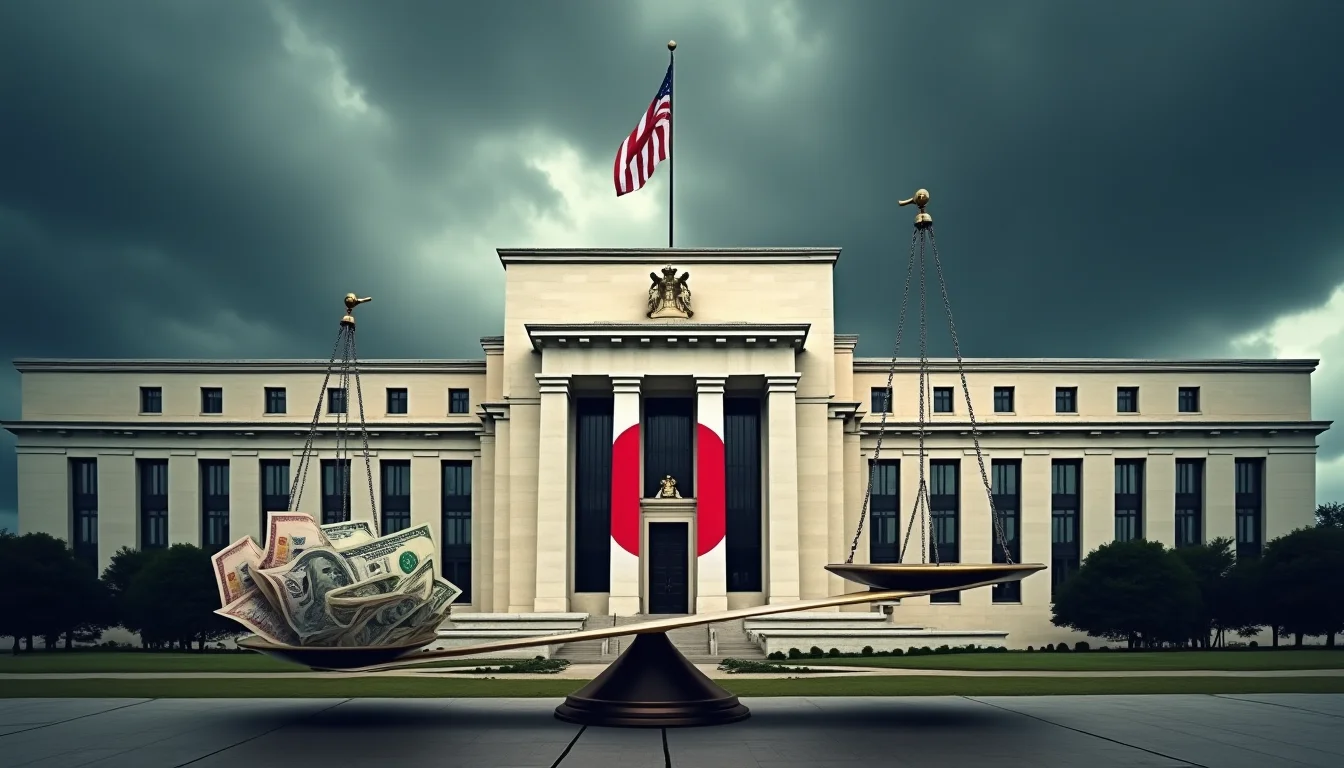
Fed's Balance Sheet Trap: Learning from Japan's 1991 Stagnation
The Federal Reserve's inability to meaningfully reduce its $7.4 trillion balance sheet despite inflation concerns parallels the Bank of Japan's failed normalization attempts during the Lost Decades, suggesting political capture of monetary policy.

Tether's $90B Meme Coin Bubble Fuels Treasury Concentration Risk
Tether's USDT stablecoin backing now exceeds $131 billion in Treasury securities and cash equivalents, creating systemic concentration risks that parallel Continental Illinois Bank's fatal dependency on energy-sector loans before its 1984 collapse.

Australia's 186% Household Debt-to-Income Ratio Matches Norway's 2007 Pre-Crisis Peak as Mortgage Stress Indicators Flash Warning
Australia's household debt-to-income ratio has reached 186%, matching the dangerous levels Norway experienced before its 2008 banking crisis, while current mortgage stress indicators suggest similar systemic vulnerabilities are building.

SpaceX $75B IPO Triggers Capital Rotation From Rival Space Companies
SpaceX's $75 billion IPO sparked immediate selloffs in competing space stocks as institutional investors redirected capital toward Musk's company, exemplifying concentration dynamics that passive index structures amplify systematically.

SPAC Sponsor Economics Return Through AI Infrastructure Funds as Complex Fee Structures Echo Blank Check Company Leverage Anatomy
New AI infrastructure investment vehicles are adopting SPAC-like sponsor economics with asymmetric fee structures that mirror the blank check company bubble's problematic incentive alignment.

Solana DEX Concentration Mirrors 1637 Amsterdam Tulip Exchange Monopoly
Solana's decentralized exchanges processed $47 billion in May 2026, creating dangerous single-chain concentration that parallels how Amsterdam's centralized tulip trading drove the 1637 mania to unsustainable heights.

Japan's 1989 Rental Yield Collapse Preceded Asset Bubble Peak as Australia's Property-Bond Gap Hits 380 Basis Points
Australia's rental yield-bond yield gap has widened to 380 basis points, matching the same warning signal that preceded Japan's catastrophic 1989 property bubble collapse when similar yield inversions signaled unsustainable asset valuations.

PIMCO Warns Financial Engineering Reaches Pre-2008 Crisis Levels as Central Bank Policy Divergence Fragments Global Liquidity
PIMCO's warning about pre-crisis financial engineering coincides with unprecedented central bank policy divergence, creating the same liquidity fragmentation that preceded the telecom bubble's $2 trillion infrastructure collapse.

Musk's SpaceX IPO Celebrity Influence Mirrors Dogecoin's Social Media Valuation Bubble as Retail Investors Chase Meme-Driven Assets
SpaceX's record-breaking IPO preparation demonstrates how celebrity endorsement can drive asset valuations beyond fundamentals, paralleling the meme coin bubble where Elon Musk's tweets created $90 billion in speculative value.