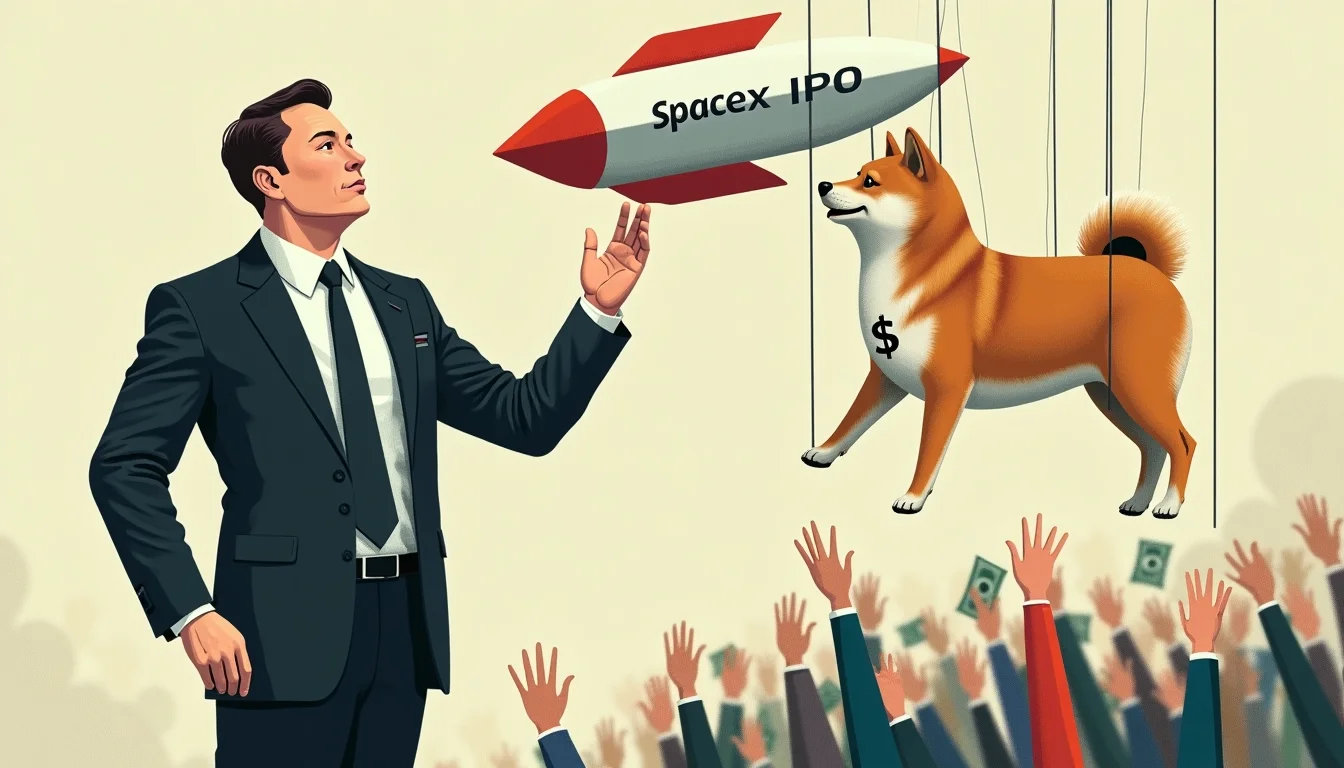
According to Bloomberg Markets, Elon Musk's SpaceX is preparing what could become the largest IPO in market history, with retail investors already positioning for what Marathon Asset Management's Bruce Richards calls the "biggest rising star of all time." The extraordinary pre-IPO enthusiasm surrounding SpaceX demonstrates a familiar pattern: celebrity influence driving asset valuations far beyond traditional fundamental analysis, creating speculative bubbles based on personality rather than performance metrics.
This dynamic mirrors precisely the mechanism that drove the meme coin bubble of 2020-2021, when Musk's social media presence transformed joke cryptocurrencies into multi-billion dollar assets. The structural parallel is unmistakable—both episodes demonstrate how modern markets can generate massive valuations through celebrity endorsement rather than underlying business fundamentals.
The Celebrity Valuation Mechanism
SpaceX's anticipated IPO valuation reflects the same celebrity-driven speculation that characterized the meme coin bubble. Marathon's Richards describes SpaceX debt as a "rising star," language that echoes the hyperbolic marketing surrounding Dogecoin during its surge. The fundamental issue remains identical: retail investors are purchasing exposure to Musk's personal brand rather than conducting rigorous analysis of business metrics.
During the meme coin bubble, Dogecoin reached a substantial market capitalization despite having no revenue, no business model, and originating as an internet joke. Musk's social media posts drove significant intraday price movements before major crashes following public appearances. The pattern demonstrates how celebrity influence can create and destroy billions in market value within hours, independent of any fundamental business development.
SpaceX exhibits similar celebrity-driven valuation dynamics. Bloomberg analysis notes that SpaceX's valuation appears "cheap for space peers but pricey as AI stock," highlighting the confusion surrounding how to properly categorize and value Musk's ventures. This valuation ambiguity mirrors the fundamental uncertainty that surrounded meme coins—assets that defied traditional financial categorization.
Retail Accessibility and Psychological Pricing
The meme coin bubble revealed how psychological pricing affects retail investment behavior. Shiba Inu's massive token supply created extremely low unit prices, making retail investors prefer owning large quantities of meme tokens over fractional amounts of Bitcoin despite identical dollar exposure. This psychological accessibility drove massive retail participation in assets with no fundamental value proposition.
SpaceX's IPO structure appears designed to capture similar retail enthusiasm. 1789 Capital's Abrahimzadeh warns that the SpaceX IPO "could test market" conditions, suggesting institutional awareness that retail demand may exceed rational valuation parameters. The celebrity premium embedded in SpaceX's anticipated pricing mirrors the social media premium that drove meme coin valuations to unsustainable levels.
"At peak, Dogecoin traded at substantial levels—retail investors preferred large quantities of meme tokens over fractional Bitcoin despite identical exposure. The psychological accessibility of owning 'whole' units drove participation far beyond rational investment analysis."
Historical Parallel: The Meme Coin Bubble
The meme coin bubble of 2020-2021 represents the purest example of celebrity-driven asset valuation in financial history. Read the full The Meme Coin Bubble — Dogecoin, Shiba Inu, and the Joke That Became a Multi-Billion Dollar Mania entry in the Bubblepedia Encyclopedia for comprehensive analysis of how internet culture and social media influence created speculative assets worth more than established corporations.
What began as Billy Markus and Jackson Palmer's satirical response to cryptocurrency proliferation evolved into a massive phenomenon that challenged fundamental assumptions about value and market rationality. The combined peak market capitalization of major meme coins exceeded that of many traditional industrial enterprises, demonstrating how celebrity endorsement can create valuations that dwarf established companies.
The structural mechanism remains identical in SpaceX's case: Musk's personal brand creates a valuation premium that extends far beyond the company's aerospace and satellite internet operations. Market analysis highlights how investors struggle to justify current technology valuations using traditional metrics, creating the same fundamental uncertainty that characterized meme coin speculation.
Market Structure and Contagion Risk
The meme coin bubble demonstrated how celebrity-driven assets can create systemic market distortions. When major meme coins crashed from their peaks, the collapse spread across cryptocurrency markets, affecting assets with legitimate use cases and business models. The celebrity premium that created the bubble became a contagion mechanism during the collapse.
SpaceX's anticipated IPO presents similar systemic risks. The company's massive anticipated valuation could distort pricing across aerospace, satellite, and technology sectors. If retail enthusiasm wanes or Musk's influence diminishes, the resulting repricing could affect valuations across multiple industries, creating the same contagion dynamics that characterized the meme coin bubble's collapse.
The fundamental lesson from both episodes remains consistent: when celebrity influence becomes the primary valuation driver, traditional risk management frameworks become inadequate. Investors purchasing SpaceX shares are effectively betting on Musk's continued cultural relevance rather than analyzing aerospace industry fundamentals or satellite internet market penetration.