
The Panic of 1907 — The Knickerbocker Trust Crisis and the Birth of the Fed
The 1907 financial panic exposed fatal flaws in America's decentralised banking system, triggering the first modern bank run through trust companies and forcing JP Morgan to act as a one-man central bank.
By Twin · @TwinTowerCity·
Key Takeaways
- →The 1907 panic caused a 50% stock market decline and forced half of New York's trust companies into insolvency.
- →Trust companies exploited regulatory gaps to engage in risky speculation while offering higher deposit rates than traditional banks.
- →The collapse of Knickerbocker Trust on October 22, 1907 triggered nationwide bank runs and credit market paralysis.
- →The crisis caused industrial production to fall 11% and unemployment to rise from 3% to 8% within months.
- →The panic's severity led directly to the Federal Reserve Act of 1913, establishing America's first permanent central bank.
Peak Year
1906
Crash Year
1907
Location
United States
Asset Class
Banking System
Severity
The Panic of 1907 stands as America's last great financial crisis before the establishment of the Federal Reserve. What began as a failed speculation in copper shares cascaded through New York's trust companies, paralysing the nation's financial system and revealing the fatal inadequacies of a banking structure that had outlived its frontier origins. The crisis forced the United States to confront an uncomfortable truth: the world's emerging industrial superpower was still relying on nineteenth-century financial infrastructure.
The panic's significance extends beyond its immediate devastation—a 50% stock market decline, frozen deposits of $65 million at the Knickerbocker Trust alone, and unemployment rising from 2.8% to 8%. It demonstrated how quickly confidence could evaporate in an interconnected financial system, how regulatory gaps could amplify systemic risk, and how the absence of a lender of last resort could transform localised problems into national catastrophe. The crisis ultimately birthed the Federal Reserve, making 1907 the pivotal moment when American finance was forced to modernise or collapse.
The Trust Company Boom
By 1907, trust companies had evolved from conservative estate managers into aggressive competitors to commercial banks, exploiting regulatory loopholes that allowed them to engage in high-risk activities while maintaining minimal reserves. These institutions, originally chartered to manage trusts and estates, had transformed themselves into full-service financial intermediaries that could underwrite securities, make speculative loans, and engage in real estate ventures—activities largely prohibited to national banks under the strict regulations imposed after the Civil War.
The structural advantage was compelling: while national banks faced reserve requirements of 25% in New York and stringent federal oversight, trust companies operated under state charters with reserve requirements as low as 5%. This regulatory arbitrage allowed trusts to offer higher returns to depositors while pursuing more aggressive lending strategies. By 1907, trust companies controlled approximately 40% of New York's total bank deposits, representing a massive shift of funds from the regulated to the unregulated sector.
The trust company boom embodied a classic regulatory arbitrage that would echo through financial history. These institutions discovered they could offer bank-like services while avoiding bank-like regulations, attracting deposits with higher returns funded by riskier investments. The same dynamic would later emerge with money market funds in the 1970s, structured investment vehicles before 2008, and numerous other 'shadow banking' innovations.
The trust companies' lending practices reflected their freedom from traditional banking constraints. They financed stock market speculation, real estate developments, and industrial consolidations that national banks could not touch. Many trusts became closely intertwined with specific industrial groups or stock market syndicates, creating webs of financial obligation that would prove catastrophic when markets turned. The Knickerbocker Trust, for instance, had extensive connections to copper mining interests through its leadership, while other trusts financed everything from subway construction to utility holding companies.
- Trust companies held 40% of New York deposits by 1907 despite operating with minimal oversight
- Reserve requirements for trusts were 5% compared to 25% for national banks in New York
- Trusts could engage in securities underwriting and speculative lending prohibited to national banks
- Many trust companies developed concentrated exposures to specific industries or market operators
- The regulatory gap created a shadow banking system that appeared stable until tested by crisis
The Copper Corner Attempt
The immediate trigger for the 1907 panic emerged from an audacious attempt to corner the copper market, orchestrated by F. Augustus Heinze and his associate Charles W. Morse. Heinze, a Montana copper magnate with a reputation for aggressive tactics, had built his fortune through a combination of mining ventures and legal battles with the Amalgamated Copper Company. His move to New York brought him into partnership with Morse, a financier known for assembling monopolies in ice, shipping, and banking through a web of holding companies and interlocking directorships.
The copper corner scheme centered on United Copper Company, a relatively small firm that Heinze and Morse believed they could manipulate through coordinated buying. Their plan relied on the classic corner mechanism: accumulate a controlling position in the stock while simultaneously cornering the available supply of shares for borrowing, forcing short sellers to buy at inflated prices. The scheme appeared feasible because United Copper's float was small, and Heinze's Montana connections provided credibility about the underlying mining assets.
On October 14, 1907, the corner attempt collapsed spectacularly when anticipated short covering failed to materialise. Instead of rising toward $100 per share as planned, United Copper plummeted from $37.75 to $10 in a single day. The failure revealed that Heinze and Morse had miscalculated both the extent of short interest and their ability to control the stock's supply. Worse, they had financed their speculation partially through Heinze's Mercantile National Bank, directly connecting the failed corner to the banking system.
The United Copper corner attempt exemplified the dangers of using financial institutions to fund speculative schemes. Heinze's use of his bank to finance stock manipulation violated both legal standards and prudential norms, but the regulatory system proved inadequate to prevent such conflicts of interest. Similar problems would recur throughout financial history whenever regulations failed to prevent financial institutions from becoming vehicles for their owners' speculative ambitions.
- Heinze and Morse attempted to corner United Copper through coordinated buying and supply control
- The corner collapsed on October 14 when United Copper fell from $37.75 to $10
- Heinze had used his Mercantile National Bank to help finance the speculation
- The failure exposed the dangerous mixing of banking and stock market manipulation
- Interlocking directorships connected the failed corner to multiple financial institutions
The Knickerbocker Trust Run
The Knickerbocker Trust, New York's third-largest trust company with $65 million in deposits, became the crisis's most visible casualty through its connections to the failed copper speculation. Charles T. Barney, the trust's president, had maintained close ties with Charles Morse through various business ventures and shared directorships. When news emerged of Barney's involvement with the copper corner conspirators, the Knickerbocker's board demanded his resignation on October 21, 1907.
Barney's dismissal, rather than reassuring depositors, instead signaled that the Knickerbocker faced serious problems. The situation deteriorated rapidly when the New York Clearing House, the city's most important financial institution, announced it would no longer provide clearinghouse services to the Knickerbocker Trust. This decision effectively declared the trust financially suspect and made it impossible for the institution to conduct normal business operations.
The run began in earnest on the morning of October 22, 1907, as depositors formed lines outside the Knickerbocker's main office at Fifth Avenue and 34th Street. Despite the trust's attempts to demonstrate liquidity by paying all withdrawal requests in gold, confidence had evaporated completely. Within three hours, depositors had withdrawn $8 million—more than 10% of the institution's total deposits. The trust's cash reserves, adequate under normal circumstances, proved woefully insufficient against the sustained assault of panic withdrawals.
| Institution | Total Deposits | Peak Daily Withdrawals | Days to Collapse |
|---|---|---|---|
| Knickerbocker Trust | $65 million | $8 million | 1 |
| Trust Company of America | $60 million | $13 million | 2 |
| Lincoln Trust | $30 million | $6 million | 1 |
| Mercantile National Bank | $15 million | $5 million | 1 |
The speed of the Knickerbocker's collapse shocked even experienced financiers. A institution that had appeared solid just days earlier found itself unable to meet depositor demands despite having substantial assets. The problem was not insolvency in the traditional sense—the trust's loans and investments retained value—but rather the fundamental mismatch between liquid liabilities (deposits payable on demand) and illiquid assets (loans and securities that could not be quickly converted to cash). This liquidity crisis would become the template for future bank runs, demonstrating how quickly confidence could transform a solvent institution into a failed one.
JP Morgan as De Facto Central Bank
John Pierpont Morgan, the 70-year-old titan of American finance, assumed the role that would normally belong to a central bank—a institution the United States still lacked. Morgan's emergence as the crisis's dominant figure began when he cut short his attendance at an Episcopal church convention in Richmond, Virginia, upon learning of the panic's severity. His return to New York on October 24 marked the beginning of the most extraordinary exercise of private financial power in American history.
Morgan's 36th Street library became the unofficial command center for the crisis response, where he orchestrated a series of rescue operations that demonstrated both his financial acumen and his unprecedented influence over the nation's banking system. The library's East Room, lined with rare manuscripts and Renaissance art, witnessed negotiations that determined the fate of major financial institutions and, ultimately, the American economy itself.
The first major test came with the Trust Company of America, which faced severe withdrawal pressure after the Knickerbocker's collapse. Morgan personally organised a $25 million rescue syndicate, using his reputation and connections to convince other financiers to contribute funds. When several trust company presidents proved reluctant to participate, Morgan employed his legendary forcefulness, reportedly locking the bankers in his library until they agreed to support the rescue effort.
Morgan's role in 1907 highlighted the profound constitutional and moral problems created by the absence of a central bank. While his interventions prevented a complete financial collapse, they also demonstrated the dangers of concentrating such enormous power in the hands of a single individual. The spectacle of an elderly private citizen effectively controlling the nation's monetary policy raised fundamental questions about democratic governance and financial stability that would drive the creation of the Federal Reserve.
Morgan's methods combined financial acumen with psychological insight into market dynamics. He understood that panic was as much about perception as reality, and his very involvement in rescue efforts often proved sufficient to restore confidence. His statement that 'this is the place to stop the trouble' regarding the Trust Company of America became a self-fulfilling prophecy as his backing convinced other institutions and depositors that the trust would survive.
- Morgan cut short a church convention to return to New York and manage the crisis
- His private library became the unofficial central bank of the United States
- Morgan organised a $25 million syndicate to rescue the Trust Company of America
- He physically locked reluctant bankers in his library until they agreed to participate
- His personal reputation proved crucial in restoring confidence to failing institutions
The Spread
The panic's contagion extended far beyond the original trust companies, demonstrating how interconnected the American financial system had become by 1907. Multiple trust companies faced simultaneous runs as depositors lost confidence in the entire sector. The Lincoln Trust Company suspended operations after massive withdrawals, while dozens of smaller institutions across New York faced varying degrees of pressure. The crisis revealed how quickly local problems could become systemic when financial institutions were linked through correspondent relationships, clearing arrangements, and shared exposures.
New York City itself nearly became a casualty when the municipal government found itself unable to roll over short-term debt. The city needed to refinance $30 million in bonds, but the panic had eliminated the normal market for municipal securities. Mayor George McClellan faced the prospect of municipal bankruptcy—a scenario that would have devastated confidence in government credit throughout the nation. Morgan again stepped into the breach, organizing a syndicate of banks and trust companies to purchase the city's bonds, preventing a government default that would have deepened the crisis substantially.
The brokerage firm Moore and Schley presented another systemic threat through its heavy borrowing secured by shares of Tennessee Coal and Iron Company. As stock prices fell during the panic, the firm faced margin calls it could not meet, threatening not only its own survival but also the stability of its lending banks. The potential failure of Moore and Schley could have triggered additional bank failures through the complex web of securities lending that connected Wall Street's major institutions.
Morgan's solution to the Moore and Schley crisis proved controversial and would later attract antitrust scrutiny. He arranged for U.S. Steel Corporation, which he had helped create, to acquire Tennessee Coal and Iron Company at a below-market price. This transaction required the tacit approval of President Theodore Roosevelt, despite his reputation as a trust-buster, because it would significantly increase U.S. Steel's already dominant market position. Roosevelt's agreement reflected the extraordinary circumstances—preventing financial collapse took precedence over antitrust enforcement.
The U.S. Steel acquisition of Tennessee Coal and Iron exemplified the moral hazard problems that emerge during financial crises. Morgan's solution saved Moore and Schley and prevented further contagion, but it also allowed U.S. Steel to acquire valuable assets at distressed prices while eliminating a potential competitor. The transaction raised enduring questions about whether crisis responses should prioritise financial stability over competitive markets—a dilemma that would recur in future bailouts.
Regional banks throughout the country felt the panic's effects as correspondent banking relationships transmitted distress from New York to smaller communities. Banks in the South and West, which relied on New York correspondent banks for check clearing and credit facilities, found themselves cut off from normal funding sources. The crisis demonstrated how the concentration of financial power in New York made the entire national banking system vulnerable to disruptions in the money center.
- Multiple trust companies faced runs as panic spread beyond the Knickerbocker
- New York City nearly defaulted on $30 million in municipal bonds
- Moore and Schley brokerage firm threatened additional bank failures through securities lending
- U.S. Steel acquired Tennessee Coal and Iron at below-market prices to prevent contagion
- Regional banks lost access to New York correspondent banking services
- The crisis revealed dangerous concentration of financial power in New York
The panic's reach extended to the broader economy as credit contraction forced businesses to curtail operations and delay investments. Manufacturing output fell sharply, and unemployment rose from 2.8% to 8% as companies responded to reduced demand and tightened credit conditions. The experience foreshadowed later crises where financial disruption would translate into real economic contraction, demonstrating the intimate connection between financial stability and economic growth in an advanced industrial economy.
The Roosevelt Response and its Limits
President Theodore Roosevelt's response to the 1907 crisis revealed both the federal government's limited tools for addressing financial panics and the political constraints that shaped policy during the Progressive Era. Roosevelt, despite his reputation as a trust-buster who had made his career attacking concentrated corporate power, found himself forced to rely on the very financial titans he had previously criticised. The irony was not lost on contemporary observers: the nation's most famous advocate for breaking up monopolies was compelled to seek help from the country's most powerful monopolist.
Treasury Secretary George Cortelyou implemented the most significant government intervention by depositing federal funds directly into national banks. This action, while unprecedented, had limited impact because it only reached institutions already regulated by the federal government. The trust companies—where the crisis had originated—remained beyond the federal government's direct reach, operating under state charters that limited Washington's ability to provide assistance.
The Roosevelt administration's response highlighted the fundamental inadequacy of the existing financial infrastructure. The Independent Treasury system, established in the 1840s, was designed for an agricultural economy with limited banking needs. It provided no mechanism for serving as a lender of last resort, no tools for injecting liquidity during panics, and no means of coordinating a system-wide response to financial crises. The government's monetary powers were largely passive—it could mint coins and issue currency, but it could not actively manage money markets or provide emergency lending.
Roosevelt's tacit approval of the U.S. Steel acquisition of Tennessee Coal and Iron represented the administration's most controversial decision. The President, who had built his political career on opposing corporate consolidation, agreed to allow America's largest corporation to acquire a significant competitor during a moment of distress. Roosevelt later defended the decision as necessary to prevent financial collapse, but critics argued that he had been manipulated by Morgan into sanctioning an anticompetitive transaction that would never have been approved under normal circumstances.
| Government Action | Amount/Scope | Effectiveness | Limitations |
|---|---|---|---|
| Treasury Deposits | $36 million to national banks | Moderate | Did not reach trust companies |
| Customs Revenue Acceleration | $15 million early payment | Limited | One-time measure only |
| U.S. Steel Approval | $45 million acquisition | High | Violated antitrust principles |
| Regulatory Investigation | System-wide review | Long-term | No immediate crisis impact |
The crisis exposed the political contradictions inherent in Progressive Era governance. Roosevelt's administration had spent years building a reputation for regulatory activism and corporate accountability, yet when faced with systemic financial crisis, it was forced to abandon these principles in favor of stability. The experience taught Roosevelt and his advisors that effective financial regulation required more than antitrust enforcement—it needed institutional mechanisms capable of preventing and managing crises.
The Aldrich-Vreeland Act and the Road to the Federal Reserve
The immediate legislative response to the 1907 panic came through the Aldrich-Vreeland Act of 1908, which created the National Monetary Commission and provided for emergency currency issuance during financial crises. While this act offered some short-term improvements, it was primarily significant for launching the comprehensive study that would ultimately produce the Federal Reserve System. The commission, chaired by Senator Nelson Aldrich of Rhode Island, received a mandate to investigate banking systems worldwide and recommend fundamental reforms to American financial infrastructure.
The National Monetary Commission's six-year investigation represented the most thorough examination of banking and monetary policy in American history. The commission sent delegations to Europe to study the Bank of England, the German Reichsbank, and the French banking system, seeking to understand how other advanced economies had solved the problems that plagued the United States. Their research revealed that America was virtually alone among major industrial nations in lacking a central bank capable of providing elastic currency and serving as a lender of last resort.
The famous Jekyll Island meeting of November 1910 marked the crucial turning point in the campaign for banking reform. Senator Aldrich invited a small group of Wall Street figures—including Paul Warburg of Kuhn, Loeb & Company and Frank Vanderlip of National City Bank—to a secret conference at his private retreat on Jekyll Island, Georgia. The meeting's secrecy was necessary because public association with Wall Street would have been politically toxic for any banking reform proposal, given the widespread suspicion of concentrated financial power that the 1907 crisis had intensified.
The Jekyll Island meeting embodied the fundamental political challenge of financial reform: the need to create effective institutions while managing public suspicion of elite control. The men who best understood the technical requirements for banking reform were precisely those whom the public most distrusted to design such reforms. This tension between expertise and legitimacy would shape not only the Federal Reserve's creation but also its governance structure and public accountability mechanisms.
The legislative battle that followed the commission's recommendations proved extraordinarily complex, involving three successive reform proposals and fundamental disagreements about the appropriate structure for American central banking. The Aldrich Plan, released in 1911, called for a single central institution modeled on European examples, but it was politically dead on arrival due to Aldrich's association with Wall Street and the Republican Party's declining influence.
The Democratic victory in 1912 brought Woodrow Wilson to the presidency with a mandate for financial reform, but also with deep suspicions about concentrated banking power. Wilson and his advisors, particularly Carter Glass, chairman of the House Banking Committee, insisted on a more decentralized structure that would prevent the dominance of Wall Street interests. The resulting Federal Reserve Act created a system of regional reserve banks overseen by a Washington-based board, attempting to balance technical effectiveness with geographical and political representation.
- The National Monetary Commission conducted a six-year study of global banking systems
- The secret Jekyll Island meeting in 1910 produced the initial Federal Reserve blueprint
- Three successive reform proposals reflected deep disagreements about central bank structure
- Wilson's election in 1912 shifted the debate toward more decentralized alternatives
- The Federal Reserve Act of 1913 created a regional system to limit Wall Street influence
- Political compromises embedded enduring tensions in the Federal Reserve's governance
Wilson signed the Federal Reserve Act into law on December 23, 1913, exactly six years and two months after the Knickerbocker Trust collapse. The legislation represented an extraordinary transformation in American financial infrastructure, creating institutions that would have prevented the 1907 panic's worst effects. However, the political compromises necessary to secure passage also embedded fundamental tensions within the new system—tensions between public and private control, between centralization and decentralization, and between financial stability and democratic accountability that continue to shape Federal Reserve operations today. For a long history of how central banks emerged from earlier crises, see WealthWatchPro →
Parallels
The structural parallels between the 1907 panic and subsequent financial crises reveal recurring patterns in the evolution of financial instability. Trust companies in 1907 occupied a position strikingly similar to money market funds in the late 20th century—both were deposit-taking institutions that offered bank-like services while avoiding bank-like regulations. Just as trusts could promise higher returns by maintaining lower reserves and taking greater risks, money market funds attracted investors by offering higher yields than bank deposits while maintaining the fiction that they were fundamentally different from banks.
The regulatory arbitrage that enabled the trust company boom became a permanent feature of financial innovation. The savings and loan crisis of the 1980s emerged from similar dynamics, as S&Ls exploited regulatory gaps to engage in risky commercial real estate lending while enjoying federal deposit insurance. The pattern repeated with structured investment vehicles before 2008, as banks moved assets off their balance sheets to avoid capital requirements while retaining the economic risks.
The Knickerbocker Trust's collapse bears particularly striking resemblances to the failures of Bear Stearns and Lehman Brothers in 2008. All three institutions appeared financially sound until confidence evaporated, at which point their reliance on short-term funding made survival impossible regardless of their underlying asset quality. The speed of collapse—measured in hours rather than days—demonstrated how quickly modern financial markets could destroy even large institutions once doubt emerged about their viability.
The recurring nature of regulatory arbitrage suggests that financial innovation will always seek to exploit gaps in the regulatory perimeter. Each crisis leads to new regulations that close the specific gaps that caused problems, but these same regulations create incentives for financial institutions to develop new ways of providing similar services while avoiding similar oversight. The cycle of innovation, crisis, and regulation appears to be a permanent feature of dynamic financial systems.
JP Morgan's role as a de facto central bank in 1907 foreshadowed the challenges that would confront policymakers during the 2008 financial crisis. Just as Morgan had to make rapid decisions about which institutions to save and which to let fail, 21st-century policymakers faced similar choices about Bear Stearns, Lehman Brothers, and AIG. The moral hazard problems that concerned critics of Morgan's interventions would reemerge as complaints about 'too big to fail' institutions that could count on government rescue during crises.
The international dimensions of financial contagion became even more pronounced over time, but the basic mechanisms remained similar. The Nordic banking crisis of the early 1990s demonstrated how real estate speculation and regulatory gaps could create systemic instability, while the speed of contagion had accelerated due to electronic markets and global capital flows. The same fundamental tension between financial integration and regulatory fragmentation that plagued the American system in 1907 continues to challenge policymakers managing global financial stability.
Perhaps most significantly, the 1907 crisis established the template for the political economy of financial crises that persists today. The pattern of private profits during good times followed by socialized losses during bad times created enduring debates about moral hazard, fairness, and the appropriate role of government in financial markets. The uncomfortable alliance between Theodore Roosevelt and JP Morgan prefigured similar partnerships between government officials and Wall Street figures during subsequent crises, raising persistent questions about regulatory capture and democratic accountability in financial policymaking.
- Trust companies in 1907 paralleled money market funds in their regulatory arbitrage strategies
- The Knickerbocker collapse resembled Bear Stearns and Lehman Brothers in speed and mechanism
- Morgan's role as private central bank foreshadowed 'too big to fail' dilemmas in 2008
- International contagion mechanisms have accelerated but retained similar fundamental dynamics
- The political economy of bailouts established in 1907 continues to shape crisis responses
- Regulatory perimeter problems persist as financial innovation exploits oversight gaps
Recommended Reading
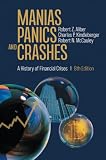
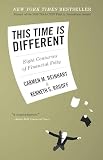
Key Statistics
Stock Market Decline
NYSE fell 50% from peak in 1907
Knickerbocker Trust Deposits
$65 million in deposits frozen
Bank Run Duration
Panic lasted approximately 3 weeks — October-November 1907
JP Morgan's Intervention
Morgan personally organised $25M bank rescue syndicate
Economic Contraction
US GDP fell approximately 11% in 1907-1908
Direct Legacy
Federal Reserve Act passed 1913 — direct response to the 1907 panic
Unemployment Peak
Rose from 2.8% to 8% during the crisis
Warning Signs
- Rapid growth of lightly regulated financial institutions offering bank-like services
- Regulatory arbitrage allowing higher returns through lower reserves
- Concentrated exposures to speculative ventures or single industries
- Interlocking directorships connecting banks to stock market operators
- Absence of lender of last resort or emergency liquidity facilities
- Overreliance on short-term funding and confidence-sensitive deposits
Timeline
1900-1906
Trust company boom - trusts grow to control 40% of New York deposits while avoiding strict banking regulations
October 14, 1907
United Copper corner attempt collapses - stock falls from $37.75 to $10 in one day
October 16-20, 1907
Runs begin on banks connected to copper speculation - Mercantile National Bank faces withdrawals
October 21, 1907
Knickerbocker Trust president Charles Barney resigns amid connections to failed copper corner
October 22, 1907
Massive run on Knickerbocker Trust begins - $8 million withdrawn in three hours, bank closes
October 24, 1907
JP Morgan returns from Virginia and begins organizing rescue operations from his private library
October 26, 1907
Morgan organizes $25 million syndicate to rescue Trust Company of America
November 2, 1907
U.S. Steel acquires Tennessee Coal and Iron with Roosevelt's approval to prevent Moore and Schley collapse
November 1907
Morgan organizes $30 million bond purchase to prevent New York City bankruptcy
May 30, 1908
Aldrich-Vreeland Act creates National Monetary Commission to study banking reform
November 1910
Secret Jekyll Island meeting produces initial Federal Reserve blueprint
December 23, 1913
President Wilson signs Federal Reserve Act into law
Lessons Learned
The Panic of 1907 demonstrated that financial innovation without corresponding regulatory adaptation creates systemic instability. Trust companies exploited regulatory gaps to offer higher returns through riskier strategies, creating a shadow banking system vulnerable to confidence shocks. The crisis revealed that interconnected financial institutions require coordinated oversight and emergency support mechanisms. Most critically, it showed that complex modern economies cannot rely on private individuals—however capable—to perform central banking functions during crises. The panic proved that financial stability is a public good requiring public institutions, leading directly to the Federal Reserve's creation and establishing the template for modern central banking responses to systemic crises.
Frequently Asked Questions
What caused the Panic of 1907?
The Panic of 1907 was triggered by a failed attempt to corner the copper market by F. Augustus Heinze and his associates. When their scheme collapsed, it exposed the financial weakness of trust companies, particularly the Knickerbocker Trust Company, leading to massive bank runs and a broader financial crisis throughout the decentralized American banking system.
How much did stock prices fall during the 1907 panic?
Stock prices plummeted approximately 37% from their 1906 peaks during the Panic of 1907. The Dow Jones Industrial Average fell from around 103 in January 1906 to a low of about 53 in November 1907, representing one of the most severe market crashes in early 20th century American financial history.
What were the warning signs before the 1907 financial crisis?
Key warning signs included excessive speculation in copper and railroad stocks, overleveraged trust companies operating with minimal reserves, a series of corporate scandals, and growing concerns about the stability of highly interconnected financial institutions. The failed Heinze copper corner attempt in October 1907 served as the immediate catalyst.
What lessons does the Panic of 1907 teach about financial systems?
The 1907 panic demonstrated the critical need for a central banking authority and formal lender of last resort. It exposed how interconnected financial institutions could create systemic risk and showed that relying on private financiers like J.P. Morgan was insufficient for crisis management, directly leading to the Federal Reserve's creation in 1913.
Current Relevance
The 1907 panic's lessons remain directly applicable to contemporary financial regulation. The trust company boom parallels modern regulatory arbitrage through money market funds, repo markets, and other shadow banking institutions that provide bank-like services while avoiding bank-like oversight. The speed of the Knickerbocker collapse—from confidence to closure in hours—mirrors the accelerated timeline of modern bank runs in electronic markets. Most importantly, the crisis demonstrates that regulatory perimeters must expand as financial systems evolve, and that the absence of adequate lender-of-last-resort facilities can transform manageable problems into systemic disasters. Today's debates about cryptocurrency exchanges, fintech lenders, and systemically important non-banks echo the same fundamental challenges that trust companies posed in 1907.
Sources & Further Reading
Explore gold storage options
Gold is not a guaranteed hedge against crashes. Prices can fall; storage fees and custody risks also matter.
Affiliate link: Bubblepedia may earn a commission. Not a recommendation; investment values can fall.
Recommended Reading
Recent Analysis
Anthropic Leveraged ETF Race Heats Up: When Volatility Becomes a Retail Product
20 Nov 2026
Social Security Reform: Structural Change Ahead
14 Nov 2026
Paraguay's Ueno Bank Scandal: Regulatory Capture Exposed
6 Nov 2026
Coinbase Dominance Mirrors 1911 Oil Monopoly
2 June 2026
Coinbase Dominance Mirrors 1907 Financial Crisis
27 May 2026
Get Bubblepedia in your inbox
Asset bubbles and market-history insights in your inbox.