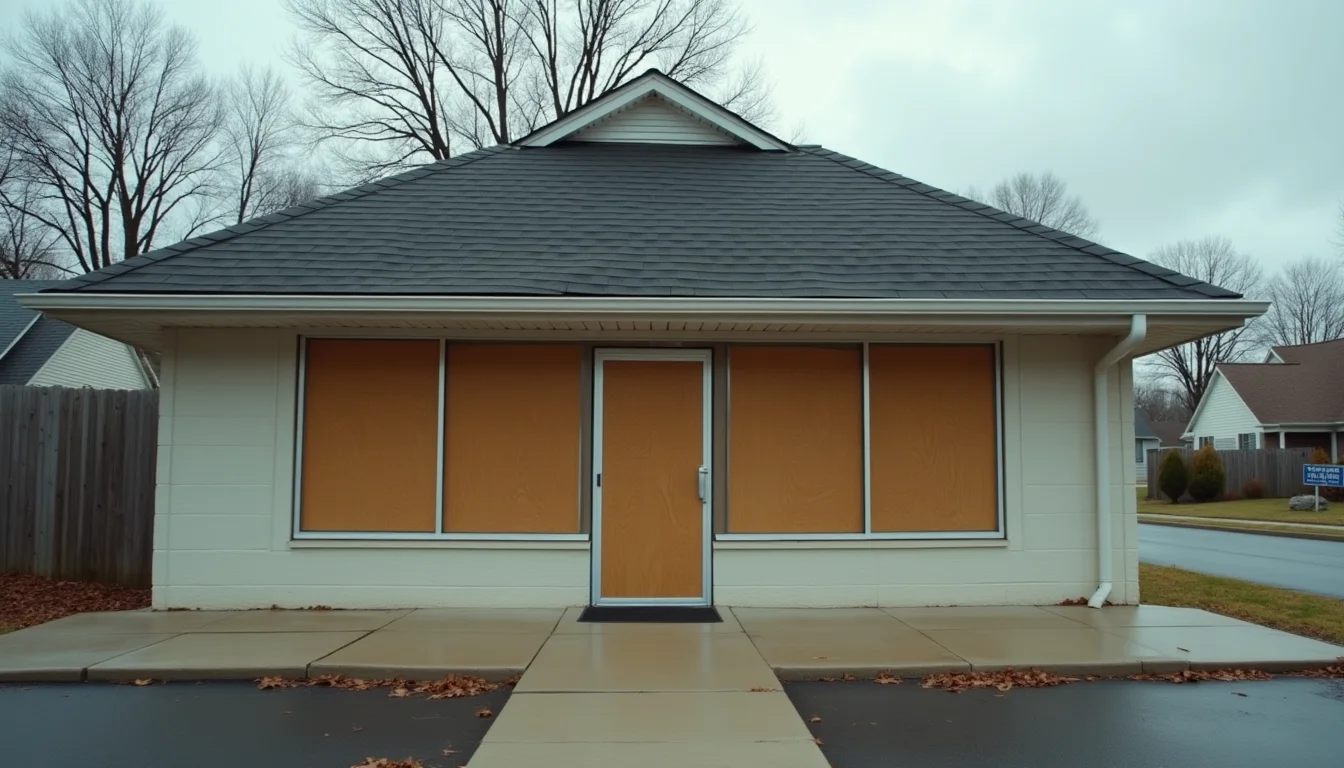
US Savings and Loan Crisis (1980s-1990s)
Deregulation of savings institutions led to reckless lending, fraud, and the failure of roughly 1,000 thrift institutions at an estimated cost of $160 billion.
By Twin · @TwinTowerCity·
Key Takeaways
- →The US Savings and Loan Crisis involved the failure of approximately 1,000 thrift institutions between the 1980s and 1990s.
- →Deregulation of savings institutions in the 1980s removed lending restrictions while maintaining federal deposit insurance coverage.
- →The crisis peaked in 1989 when widespread institutional failures exposed massive losses from risky real estate investments.
- →Taxpayers bore an estimated $160 billion cost to resolve failed savings and loan institutions through government bailouts.
- →The crisis demonstrated that deregulation without oversight creates moral hazard where profits privatize but losses socialize to taxpayers.
Peak Year
1989
Crash Year
1989
Location
United States
Asset Class
Real Estate
Severity
What Caused the US Savings and Loan Crisis?
The US Savings and Loan crisis was one of the largest financial scandals in American history, ultimately costing taxpayers approximately $124 billion and leading to the failure of over 1,000 savings institutions. Savings and Loan associations (S&Ls, also called 'thrifts') were established primarily to provide home mortgage lending, operating under a simple model: accept savings deposits at regulated interest rates and lend the money as fixed-rate mortgages at slightly higher rates. This model worked for decades but became unsustainable when the Federal Reserve, under Chairman Paul Volcker, raised interest rates dramatically in the late 1970s to combat inflation. By 1981, the federal funds rate had reached approximately 20%, while S&Ls were locked into long-term mortgages paying 5-8%.
The Mania Phase
Rather than allowing insolvent S&Ls to fail, Congress and regulators chose to deregulate the industry, hoping that expanded investment powers would allow thrifts to earn their way back to health. The Garn-St. Germain Act of 1982 allowed S&Ls to invest in commercial real estate, corporate bonds, and other assets far riskier than traditional home mortgages. Deposit insurance was simultaneously increased from $40,000 to $100,000 per account, eliminating depositor discipline. The combination was explosive: S&L operators — many of them new entrants who had purchased failing thrifts specifically to exploit the deregulated environment — used federally insured deposits to fund speculative real estate developments, junk bond purchases, and in some cases outright fraud. Charles Keating's Lincoln Savings and Loan invested heavily in undeveloped Arizona land and junk bonds. Vernon Savings and Loan in Texas, dubbed 'Vermin' by regulators, spent depositor funds on luxury properties, private aircraft, and extravagant parties.
Peak Conditions
By the mid-1980s, hundreds of S&Ls were technically insolvent but continued operating under regulatory forbearance — a policy of deliberately delaying enforcement action in hopes that conditions would improve. The Federal Savings and Loan Insurance Corporation (FSLIC), which insured S&L deposits, was itself insolvent by 1987 but continued to guarantee deposits. Texas was the epicentre: the state's oil-dependent economy had boomed in the early 1980s, driving commercial real estate development, then crashed when oil prices collapsed in 1986. Hundreds of Texas S&Ls that had funded speculative office buildings, shopping centres, and housing developments were left holding assets worth a fraction of their loan values. Nationally, S&L assets had grown from approximately $600 billion in 1980 to over $1.1 trillion by 1985, but the quality of those assets had deteriorated dramatically.
How Did the US Savings and Loan Crisis Crash?
The crisis peaked between 1986 and 1989 as regulators finally confronted the scale of the problem. The FSLIC ran out of money to close failed institutions and was itself abolished. Congress passed the Financial Institutions Reform, Recovery, and Enforcement Act (FIRREA) of 1989, which created the Resolution Trust Corporation (RTC) to manage the assets of failed S&Ls. The RTC ultimately seized and liquidated assets from 747 failed institutions. The commercial real estate markets in Texas, the Southwest, and parts of New England collapsed as the RTC flooded the market with foreclosed properties. In total, 1,043 S&Ls with total assets of approximately $519 billion failed between 1986 and 1995.
Aftermath and Recovery
The total cost of the S&L crisis has been estimated at approximately $160 billion, of which taxpayers bore approximately $124 billion. The remainder was absorbed by the thrift industry itself through higher insurance premiums. Criminal prosecutions were extensive: over 1,000 individuals were charged with S&L-related crimes, and over 800 were convicted, including Charles Keating (who was later partially acquitted on appeal). The 'Keating Five' scandal — involving five US Senators who had intervened with regulators on behalf of Lincoln Savings — became a landmark case in campaign finance ethics. The RTC's asset liquidation, while costly, was generally regarded as effective and became a model for subsequent banking crisis resolution efforts, including the TARP program during the 2008 crisis.
Lasting Legacy
The S&L crisis demonstrated several enduring lessons about financial regulation. First, deregulating asset powers without strengthening supervision creates an invitation to fraud and excessive risk-taking. Second, deposit insurance — while essential for financial stability — creates moral hazard when combined with weak regulation, as depositors have no incentive to monitor the institutions holding their savings. Third, regulatory forbearance — delaying enforcement action against insolvent institutions — consistently increases the ultimate cost of resolution, as insolvent institutions have incentives to 'gamble for resurrection' with increasingly risky bets. Fourth, the crisis showed how quickly a problem confined to a specialised sector (thrift institutions) could become a major fiscal and economic burden. These lessons were widely understood by the early 1990s — and then substantially forgotten by the time the conditions for the 2008 financial crisis were being created.
The Deregulation Trap
The savings and loan crisis began with two pieces of legislation that, taken together, created an institutional structure almost designed to fail. The Depository Institutions Deregulation and Monetary Control Act of 1980 phased out Regulation Q, which had capped the interest rates S&Ls could pay on deposits. The Garn-St Germain Depository Institutions Act of 1982 then expanded what S&Ls could do with the deposits they raised, allowing them to lend on commercial real estate, invest in junk bonds, take direct equity stakes in real estate developments, and engage in a range of activities previously restricted to commercial banks.
The combination was lethal. S&Ls now had to compete for deposits at market rates (which had risen to over 15% during the Volcker disinflation) while their existing loan books consisted of long-duration fixed-rate mortgages yielding 6% to 8% from earlier years. The interest rate squeeze made the existing business model immediately unprofitable. The expanded lending powers offered an escape route through higher-yielding speculative assets, and federal deposit insurance meant that any losses would ultimately fall on taxpayers rather than depositors. Institutions with casino incentives and a public backstop took the gamble that any rational actor would take in those circumstances.
The Texas Real Estate Collapse
The oil price collapse of 1986, when West Texas Intermediate fell from $27 to under $10 per barrel within months, devastated the Texas economy and exposed the speculative excess that S&Ls had funded across the state. Office vacancy rates in Houston exceeded 30% by 1987. Shopping centres built on the assumption of continued oil-driven population growth stood empty. Half-completed condominium towers in Austin and Dallas were demolished or sold at auction for fractions of their construction cost.
The institutional failures produced a parade of scandals that defined the era. Lincoln Savings and Loan, controlled by Charles Keating, collapsed with $3.4 billion in losses in 1989 after Keating had used insured deposits to fund speculative investments in undeveloped Arizona land and high-yield bonds underwritten by Michael Milken. Vernon Savings and Loan in Texas, known internally as Vermin Savings, failed in 1987 with 96% of its loan book classified as bad, having funded developments selected as much for the entertainment they provided to bank executives (yacht parties, prostitutes, fraudulent appraisals) as for any commercial logic. The fraud was systemic rather than incidental.
"The best way to rob a bank is to own one." — William K. Black, former S&L regulator and author of the book of the same title
The Political Capture
The Keating Five scandal exposed how completely the regulatory process had been captured by the institutions it was supposed to supervise. In April 1987, five United States senators (Alan Cranston, Dennis DeConcini, John Glenn, John McCain, and Donald Riegle) met with the chairman of the Federal Home Loan Bank Board to intervene on behalf of Lincoln Savings, which Keating had used to make over $1.3 million in campaign contributions to their political committees. The meeting delayed regulatory action against Lincoln Savings by approximately two years, during which the institution's losses grew from approximately $1 billion to the eventual $3.4 billion that taxpayers covered.
The Lincoln Savings case was extreme but not unique. Across the S&L industry, regulators knew by 1985 that hundreds of institutions were technically insolvent zombie banks, kept open through accounting fictions and forbearance from the Federal Savings and Loan Insurance Corporation. Closing them earlier would have crystallised losses and embarrassed politicians who had championed deregulation. The two-year delay in confronting the crisis, driven primarily by political considerations, increased the eventual taxpayer cost by an estimated $50 to $80 billion.
The Resolution
The Financial Institutions Reform, Recovery, and Enforcement Act of 1989 created the Resolution Trust Corporation to manage the disposal of failed S&Ls and their assets. By the time the RTC wound down in 1995, it had resolved 747 institutions holding $394 billion in assets, and the total cost to taxpayers of the S&L crisis had reached approximately $124 billion. Of the 3,234 S&Ls that existed in 1986, 1,043 had failed by 1995, a failure rate of nearly one in three.
The S&L crisis established the institutional template that would later govern the response to the 2008 financial crisis. The principle that systemically important financial institutions could not be allowed to fail in disorderly ways, the use of public balance sheets to absorb private losses, and the political acceptance of taxpayer-funded bailouts as a normal feature of financial regulation all originated in the 1980s S&L response. The 2008 crisis was bigger and more complex, but its institutional logic was identical to what Congress, regulators, and the Treasury had practiced two decades earlier on a smaller scale. The S&L crisis is the direct ancestor of Too Big To Fail.
Recommended Reading
Key Statistics
Failed Thrifts
~1,000 of 3,234 (FDIC)
Total Resolution Cost
~$160 billion ($124B taxpayer, per FDIC)
Fraud Prosecutions
Over 1,000 individuals convicted
Lincoln Savings Losses
$3.4 billion
Peak Year of Failures
1989
Warning Signs
- Deregulation of investment powers without corresponding oversight
- Federal deposit insurance creating moral hazard
- Political corruption — Keating Five scandal
- Rapid growth of individual thrift institutions far beyond historical norms
Timeline
1982
Garn-St. Germain Act deregulates thrift investment powers
1984-86
Thrifts pour money into speculative real estate and junk bonds
1987
First major thrift failures begin
1989
FIRREA Act creates Resolution Trust Corporation
1989
Lincoln Savings collapses — Keating Five scandal
1995
RTC completes resolution — total cost ~$160 billion
Lessons Learned
The S&L Crisis is the textbook case of moral hazard in financial regulation. When institutions can take risks with depositors' money while profits accrue to insiders and losses are socialised to taxpayers, the outcome is predictable. Deregulation without corresponding oversight is not deregulation — it is a transfer of risk from the private to the public sector. The crisis also demonstrates that financial fraud thrives in environments of lax supervision and political capture.
Frequently Asked Questions
What caused the US Savings and Loan Crisis of the 1980s?
The crisis was primarily caused by federal deregulation in the early 1980s that allowed S&Ls to engage in riskier investments while maintaining government deposit insurance. This led to speculative real estate lending, poor management decisions, and widespread fraud as institutions chased higher returns without proper oversight or risk controls.
How much did the Savings and Loan Crisis cost taxpayers?
The S&L Crisis cost an estimated $160 billion total, with taxpayers bearing approximately $124 billion of that burden through federal bailouts. Nearly 1,000 savings and loan institutions failed between 1986 and 1995, making it one of the most expensive financial crises in US history at that time.
What were the warning signs of the S&L Crisis?
Warning signs included rapid asset growth at S&Ls, concentration in high-risk commercial real estate loans, deteriorating loan quality, and regulatory forbearance that allowed insolvent institutions to continue operating. Many thrifts were paying above-market interest rates to attract deposits while making increasingly speculative investments.
What lessons does the Savings and Loan Crisis teach about financial regulation?
The crisis demonstrates that deregulation without proper oversight creates moral hazard, especially when institutions have government-backed deposit insurance. It shows the importance of adequate capital requirements, prompt corrective action for failing institutions, and the need for regulatory frameworks to evolve alongside financial innovation and market changes.
Current Relevance
The moral hazard dynamics of the S&L Crisis were replicated at larger scale in the 2008 Global Financial Crisis and arguably in the crypto industry, where exchanges operated with minimal oversight while customer funds were at risk (FTX collapse).
Explore gold storage options
Gold is not a guaranteed hedge against crashes. Prices can fall; storage fees and custody risks also matter.
Affiliate link: Bubblepedia may earn a commission. Not a recommendation; investment values can fall.
Recommended Reading
Get Bubblepedia in your inbox
Asset bubbles and market-history insights in your inbox.