Market Bubble Analysis & Commentary
Daily commentary on the speculative excesses, valuation extremes, and structural risks shaping global markets right now. Articles cover equities, property, crypto, commodities, and the macro forces that drive boom-and-bust cycles, with frequent reference to historical parallels documented in the encyclopedia. Each piece is written to translate complex market signals into clear, actionable context for long-term investors.
Analysis falls into four recurring categories — historical-parallel pieces that map a current market condition onto a documented past bubble; crypto-market-cycle notes that track halving positioning, stablecoin reserves, and exchange-concentration risk; property-market-risk pieces that examine credit availability, household debt, and rental-yield gaps; and global-market-risk articles that focus on yield-curve signals, central-bank divergence, and sovereign-debt sustainability. The category badge on each card identifies which lens the article uses.
Every article is written to a strict editorial standard. Specific numbers must be traceable to live indicator data or supplied source text. Speculative phrasing is avoided. Articles below an 800-word threshold are rejected and regenerated. Pieces flagged for review are held back rather than published with disclaimers. Use this feed to track how today's risks are evolving and where the next mania may already be forming.
The pipeline that produces these articles draws on a structured set of inputs: a daily-refreshed table of macro indicators (Shiller CAPE, Buffett Indicator, US 10-year yield, MOVE index, Bitcoin dominance, stablecoin reserves, household debt-to-GDP, and roughly forty others), a curated news feed scraped from central-bank statements, regulatory filings, and major financial outlets, and the full encyclopedia of historical bubbles for parallel-matching. The model is instructed to flag any indicator reading that crosses a documented historical threshold and to anchor its analysis in that signal rather than in sentiment or narrative.
Editorial independence matters. Bubblepedia does not accept sponsored placements inside analysis articles, and affiliate links — where they appear — are confined to clearly labelled blocks separated from the body copy. We do not short or hold leveraged positions in any asset discussed, and we do not publish price targets or trade recommendations. The goal is structural understanding: helping readers recognise the shape of a bubble before it bursts, and the shape of a recovery before it begins. Bookmark this page or subscribe to the weekly digest to follow the analysis as it evolves.

The Geopolitical Whipsaw Cycle: How Middle East Peace Optimism Mirrors the 1991 Gulf War Rally's False Dawn
Current market euphoria over Middle East peace prospects follows the same dangerous pattern as the February 1991 Gulf War rally, where geopolitical relief created temporary asset bubbles that collapsed when fundamental economic problems reasserted themselves.

The Valuation Ceiling Effect: How CAPE 40.0 Mirrors Japan's 1989 Property-Stock Nexus
The Shiller CAPE ratio hitting 40.0 creates dangerous property market conditions reminiscent of Japan's late-1980s bubble, where extreme equity valuations preceded a devastating real estate collapse that lasted three decades.
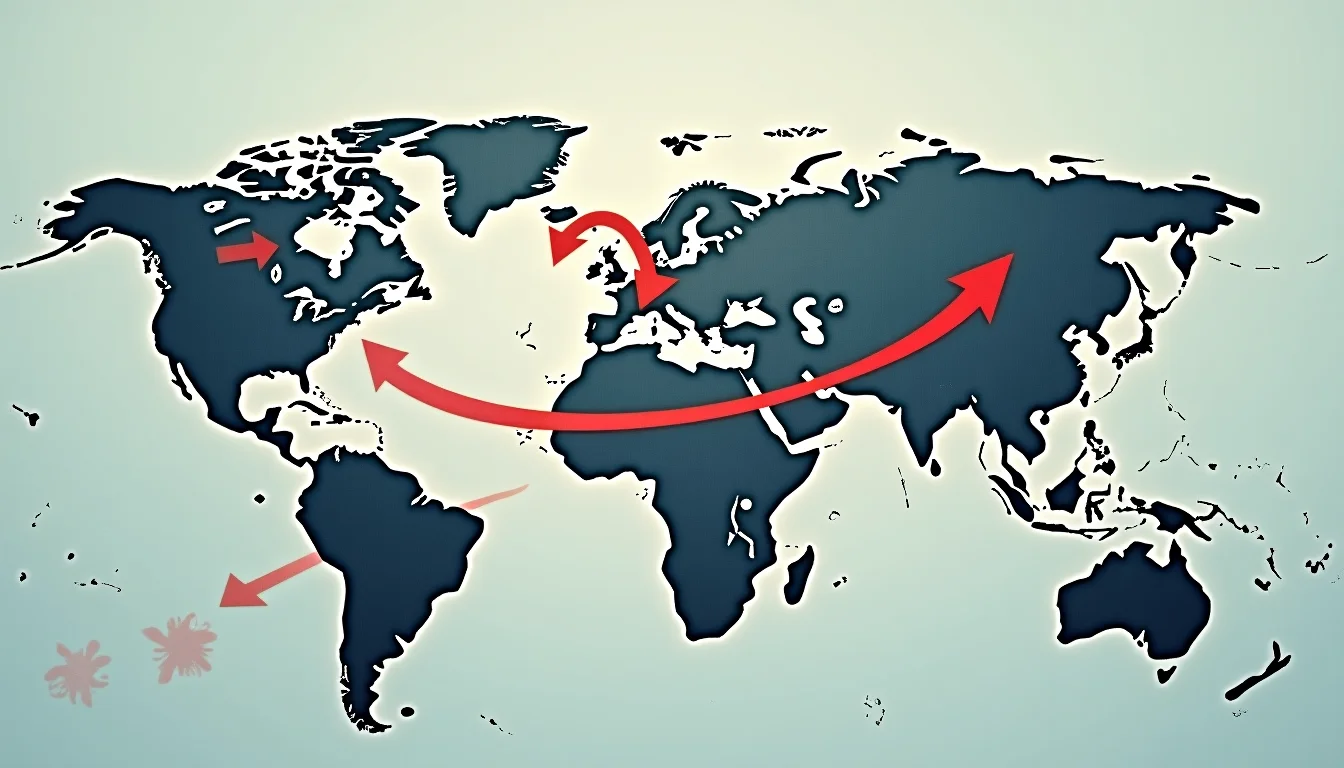
The Flight-to-Quality Paradox: How War-Driven Asset Rotations Echo the 1979 Iranian Revolution Market Fragmentation
Current war-driven capital flows into Chinese bonds and AI stocks mirror the dangerous asset rotation patterns that preceded the 1980 recession, when geopolitical shocks created false safe havens.

The Crypto Rehabilitation Cycle: How Bitcoin ETF Approval Mirrors the Dot-Com Institutional Embrace of 1999
The January 2024 Bitcoin ETF approval and subsequent price recovery follows the same dangerous pattern as the late-1990s dot-com bubble, where institutional legitimacy masked unresolved fundamental risks.

The Volatility Suppression Machine: How AI-Driven Risk Models Echo the Pre-2008 Quant Delusion
Modern AI-driven volatility suppression strategies, exemplified by concerns over Anthropic's Mythos model, mirror the dangerous over-reliance on quantitative risk models that preceded the 2008 financial crisis.

The Great Monetary Divergence: How Central Bank Policy Splits Are Recreating the 1980s Property Crash Conditions
Diverging central bank policies amid geopolitical uncertainty are creating dangerous property market distortions reminiscent of the early 1980s, when similar monetary fragmentation preceded a devastating real estate collapse.

The Energy Dependency Trap: How War-Driven Bond Divergence Echoes the 1973 Oil Crisis Fragmentation
The Middle East conflict is creating dangerous bond market divergences based on energy dependency, mirroring the fatal economic fragmentation that preceded the 1970s stagflation crisis.

From $17 to $483: How 2021 GameStop Patterns Repeat Today
Current market volatility driven by coordinated social media campaigns mirrors the dangerous retail speculation patterns that created the 2021 meme stock bubble, with geopolitical uncertainty providing fresh fuel for crowd-driven trading frenzies.

The Geopolitical Liquidity Paradox: How War Premiums Create Property Market Blind Spots
Rising geopolitical tensions and energy costs are paradoxically fueling property speculation as investors seek 'real asset' havens, mirroring the dangerous flight-to-real-estate patterns that preceded the 1979 oil crisis property bubble.

The Fragmentation Trap: How Regional Market Divergence Mirrors Pre-Crisis Vulnerability Patterns
Current global market fragmentation—with Asian IPOs thriving, European inflation surging, and emerging markets scrambling for liquidity—echoes the dangerous regional disconnects that preceded major financial crises throughout history.

The Yield Mirage Returns: How Crisis-Era Asset Flows Echo DeFi Summer's Unsustainable Returns
Current market conditions show striking parallels to DeFi Summer 2020, with investors chasing yield through increasingly complex strategies while ignoring fundamental sustainability questions.

The Private Credit Echo: How Institutional FOMO Mirrors the Shadow Banking Expansion of 2007
BlackRock's aggressive push into private credit amid retail investor flight reveals institutional risk appetite patterns strikingly similar to the shadow banking expansion that preceded the 2008 financial crisis.

The Liquidity Mirage: How Easy Money Distorts Property Risk Assessment in Crisis Periods
Record trading revenues and massive ETF inflows during geopolitical crisis mirror the dangerous liquidity-driven property speculation that preceded major housing bubbles throughout history.

The Decoupling Delusion: When Markets Ignore Fundamental Risks
Global markets are exhibiting dangerous complacency by maintaining bull market momentum despite escalating geopolitical tensions and supply chain vulnerabilities, echoing the selective risk blindness that preceded major historical crashes.

The Energy Chokepoint Crisis: How Strait of Hormuz Tensions Mirror the 1973 Oil Shock's Supply Disruption Cascade
Trump's planned Strait of Hormuz blockade is recreating the geopolitical supply shock dynamics that triggered the 1973 oil crisis, with similar patterns of panic hoarding, strategic reserve depletion, and cascading inflation risks across global markets.

The Crypto Maturation Paradox: How Today's Digital Asset Stability Mirrors Bitcoin's 2013 Post-Crash Institutional Foundation Phase
Current cryptocurrency market conditions, marked by reduced volatility and increasing institutional adoption, parallel the crucial foundation-building period that followed Bitcoin's 2013 collapse and preceded its next explosive cycle.

The Prediction Market Euphoria: How Event Betting Volumes Echo the 1929 Stock Pool Speculation Frenzy
Surging prediction market volumes reaching billions weekly mirror the speculative pool trading that characterized the final stages of the 1929 bubble, as retail investors chase event-driven returns with increasingly sophisticated financial instruments.

The Cross-Border Capital Mirage: How Currency Arbitrage Flows Mirror the 1980s Japanese Property Bubble's Foreign Investment Surge
Rising currency arbitrage activity and cross-border capital flows driven by monetary policy divergences are recreating the dangerous foreign investment dynamics that inflated Japan's catastrophic 1980s property bubble.

The Central Bank Divergence Trap: How Policy Fragmentation Echoes the 1997 Asian Crisis Prelude
Growing monetary policy divergence between major central banks, exemplified by Australia-US rate differentials and transparency gaps, mirrors the coordination failures that amplified capital flow volatility before the 1997 Asian Financial Crisis.

AI's 30% Grip: When the Nifty Fifty's 1973 Collapse Repeats
The current AI-driven market concentration, with seven tech giants commanding 30% of the S&P 500, replicates the dangerous institutional groupthink that drove the Nifty Fifty bubble to its 1973-74 collapse.

Safe Haven Bubbles: How 1979-1980 Gold Crisis Mirrors Today
Rising geopolitical tensions from the Iran conflict are driving unprecedented safe haven flows into both traditional assets and crypto, creating the same speculative feedback loops that fueled gold's 2,300% surge during the 1979-1980 crisis.

The Inequality-Fueled Asset Boom: How Wealth Concentration Mirrors Pre-1929 Property Speculation Patterns
Rising wealth inequality driving persistent equity valuations above historical norms creates the same dangerous feedback loop between asset prices and property speculation that characterized the late 1920s bubble.

The Great Treasury Liquidation: When $620 Billion Weekly Sales Echo Japan's Lost Decade Warning Signs
The US Treasury's unprecedented $620 billion weekly bond sales, combined with Fed acceptance of 3%+ inflation, mirror the sovereign debt dynamics that preceded Japan's 1990s asset bubble collapse.

The Private Credit Overhang: How Australia's Property Miracle Meets America's Shadow Banking Boom
The intersection of Australia's 33-year property bull run with America's $1.7 trillion private credit explosion creates unprecedented systemic risk that mirrors the institutional overconfidence preceding Japan's 1989 real estate collapse.