Market Bubble Analysis & Commentary
Daily commentary on the speculative excesses, valuation extremes, and structural risks shaping global markets right now. Articles cover equities, property, crypto, commodities, and the macro forces that drive boom-and-bust cycles, with frequent reference to historical parallels documented in the encyclopedia. Each piece is written to translate complex market signals into clear, actionable context for long-term investors.
Analysis falls into four recurring categories — historical-parallel pieces that map a current market condition onto a documented past bubble; crypto-market-cycle notes that track halving positioning, stablecoin reserves, and exchange-concentration risk; property-market-risk pieces that examine credit availability, household debt, and rental-yield gaps; and global-market-risk articles that focus on yield-curve signals, central-bank divergence, and sovereign-debt sustainability. The category badge on each card identifies which lens the article uses.
Every article is written to a strict editorial standard. Specific numbers must be traceable to live indicator data or supplied source text. Speculative phrasing is avoided. Articles below an 800-word threshold are rejected and regenerated. Pieces flagged for review are held back rather than published with disclaimers. Use this feed to track how today's risks are evolving and where the next mania may already be forming.
The pipeline that produces these articles draws on a structured set of inputs: a daily-refreshed table of macro indicators (Shiller CAPE, Buffett Indicator, US 10-year yield, MOVE index, Bitcoin dominance, stablecoin reserves, household debt-to-GDP, and roughly forty others), a curated news feed scraped from central-bank statements, regulatory filings, and major financial outlets, and the full encyclopedia of historical bubbles for parallel-matching. The model is instructed to flag any indicator reading that crosses a documented historical threshold and to anchor its analysis in that signal rather than in sentiment or narrative.
Editorial independence matters. Bubblepedia does not accept sponsored placements inside analysis articles, and affiliate links — where they appear — are confined to clearly labelled blocks separated from the body copy. We do not short or hold leveraged positions in any asset discussed, and we do not publish price targets or trade recommendations. The goal is structural understanding: helping readers recognise the shape of a bubble before it bursts, and the shape of a recovery before it begins. Bookmark this page or subscribe to the weekly digest to follow the analysis as it evolves.

FTX's Ghost Still Haunts Crypto: Exchange Concentration Risk Has Not Gone Away
Nearly three years after FTX's $32 billion collapse, the structural conditions that made it catastrophic — dominant exchanges holding customer assets with minimal oversight — remain embedded in crypto market architecture.

RBA Hike Bets Widen Asia-Pacific Rate Divergence — and Speculative Capital Is Chasing the Gap
With economists forecasting a Reserve Bank of Australia rate hike as early as September 2026 following hot CPI data, hedge funds are repositioning across the AUD/NZD cross while broader Asia-Pacific monetary divergence creates the kind of carry-trade distortions that historically

Nike's Worst Year Since 1993: When Stocks Disconnect From Reality
Five years after GameStop's 2,740% surge exposed dangerous structural vulnerabilities in US equity markets — extreme short interest, gamified trading apps, and payment for order flow — those mechanisms remain largely unreformed, leaving the conditions for a repeat squeeze quietly

Bitcoin's Fourth Halving Cycle Enters Month 16: Macro Headwinds Are Rewriting the Post-Halving Script
Sixteen months after Bitcoin's April 2024 halving, the expected price surge has been delayed by persistent macro uncertainty, echoing the chaotic post-halving environment that preceded the 2013 bubble's catastrophic collapse.

When Credit Dries Up: How Lending Availability — Not Prices — Signals the True Property Turning Point
Across every major property bust of the past four decades, the decisive inflection was not a price collapse but a quiet tightening in credit availability — and the structural indicators that precede that turn are now visible in Australian mortgage markets.

Australia's Second-Largest Pension Fund Makes Major Bullish Bet on Japanese Yen
AustralianSuper's largest yen position in years, combined with Stanley Druckenmiller's warning against bond buying, signals that sophisticated capital is repositioning around term premium risk — a pattern that historically precedes sharp sovereign debt repricing.

COMP Token & DeFi Summer: Real Innovation, 2020 Bubble
DeFi Summer 2020 began with a genuine financial innovation — programmable, permissionless lending — but the yield farming frenzy that followed turned circular tokenomics into a speculative bubble that erased most gains within eighteen months.

Dollar Weakness From Treasury's Bond Purchases Could Be Inflating Crypto Prices, SocGen Strategist Says
As the US dollar softens and institutional outflows quietly erode spot Bitcoin ETF holdings, crypto markets are flashing a familiar pattern: headline price strength masking structural fragility beneath.

Druckenmiller Calls Bessent's Treasury Bond Buyback Program a Mistake
As Stanley Druckenmiller condemns Treasury bond purchases and Apollo's Torsten Slok warns buybacks are casting a 'cloud' over markets, the mechanics of geopolitical supply shock transmission into sovereign debt dysfunction are following a historically recognisable pattern.

Bitcoin Miner Capitulation Explained: How Forced Selling and Hash Rate Drops Signal Market Bottoms
Converging on-chain distress signals among Bitcoin miners in mid-2026 echo the capitulation dynamics that historically precede crypto market recoveries — but this cycle's macro backdrop, including rising yields and dollar debasement fears, complicates the traditional playbook.

Private Credit Fills Australia's Construction Gap — and Inherits Its Risks
As private credit investors demand greater transparency into Australian property development loans amid a housing slump, the structural parallels to Spain's construction-GDP dependency before its 2008 collapse and China's Evergrande crisis are becoming difficult to dismiss.

Hedge Funds Ramp Up Dollar Short Bets as Bessent Unveils Fiscal Plan Details
As hedge funds aggressively short the US dollar ahead of Treasury Secretary Bessent's fiscal framework, the structural parallels to blank-cheque financing schemes — where promises of future value substitute for present discipline — are becoming impossible to ignore.

Australia's Household Debt Path Mirrors Japan 1990 and Denmark 2006 — Two Paths to Crisis, One Warning
Australia's household debt-to-income ratio has tracked a trajectory almost identical to Japan before its 1990 property collapse and Denmark before its 2006 peak, raising serious questions about whether the current plateau represents stability or the calm before a structural corre

When Governments Defend Currencies to Defend Asset Prices: A Structural Warning
Currency intervention regimes designed to protect equity and property valuations have a consistent historical record of amplifying the eventual correction — and today's managed exchange-rate environments show the same structural fingerprints.

Binance Dominates Crypto Order Book Depth, Raising Concentration Concerns
As exchange-concentration risk in crypto reaches levels unseen since before the FTX collapse, historical parallels to the 2020 DeFi yield-farming bubble reveal how single-point-of-failure infrastructure repeatedly precedes systemic crises.
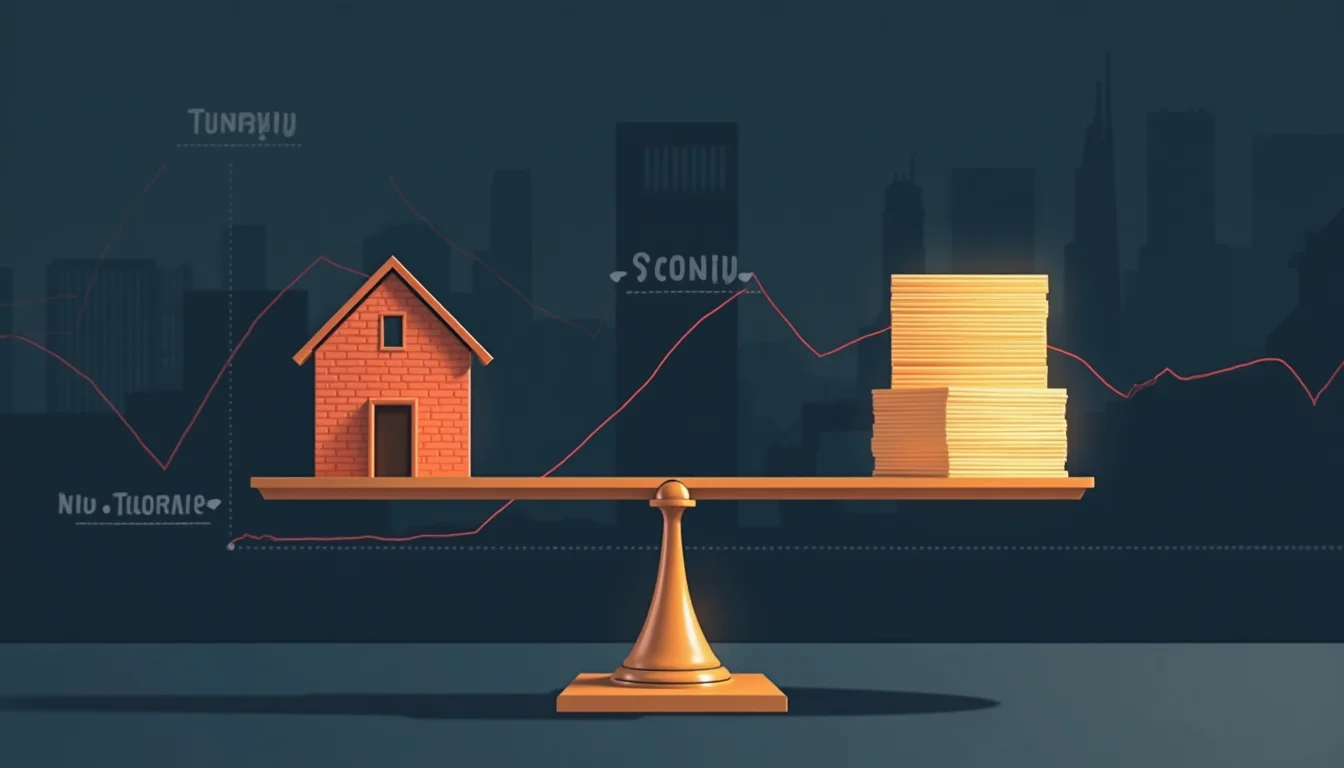
Negative Carry: Japan 1990, Ireland 2008, Australia's Warning
When residential property yields fall persistently below government bond rates, history shows that speculative capital — not income — is holding markets aloft, and the correction that follows is rarely gentle.

Jackson Hole 2026: Why Allspring's Miletti Sees the Central Bank Symposium as a Bigger Market Risk Than Nvidia
As Jackson Hole approaches, deepening divergence between the Fed, ECB, and Bank of Japan is creating cross-border capital flows and asset price distortions that mirror the policy-driven instability that preceded China's catastrophic 2015 equity crash.

How 50 Stocks Drove the S&P 500: A 1972 Parallel
The Magnificent Seven's 33%-plus grip on the S&P 500 — reinforced by passive investing mechanics and a Shiller CAPE above 40 — mirrors the Nifty Fifty concentration of the early 1970s, but with a structural self-reinforcement mechanism that history has never before seen at scale.
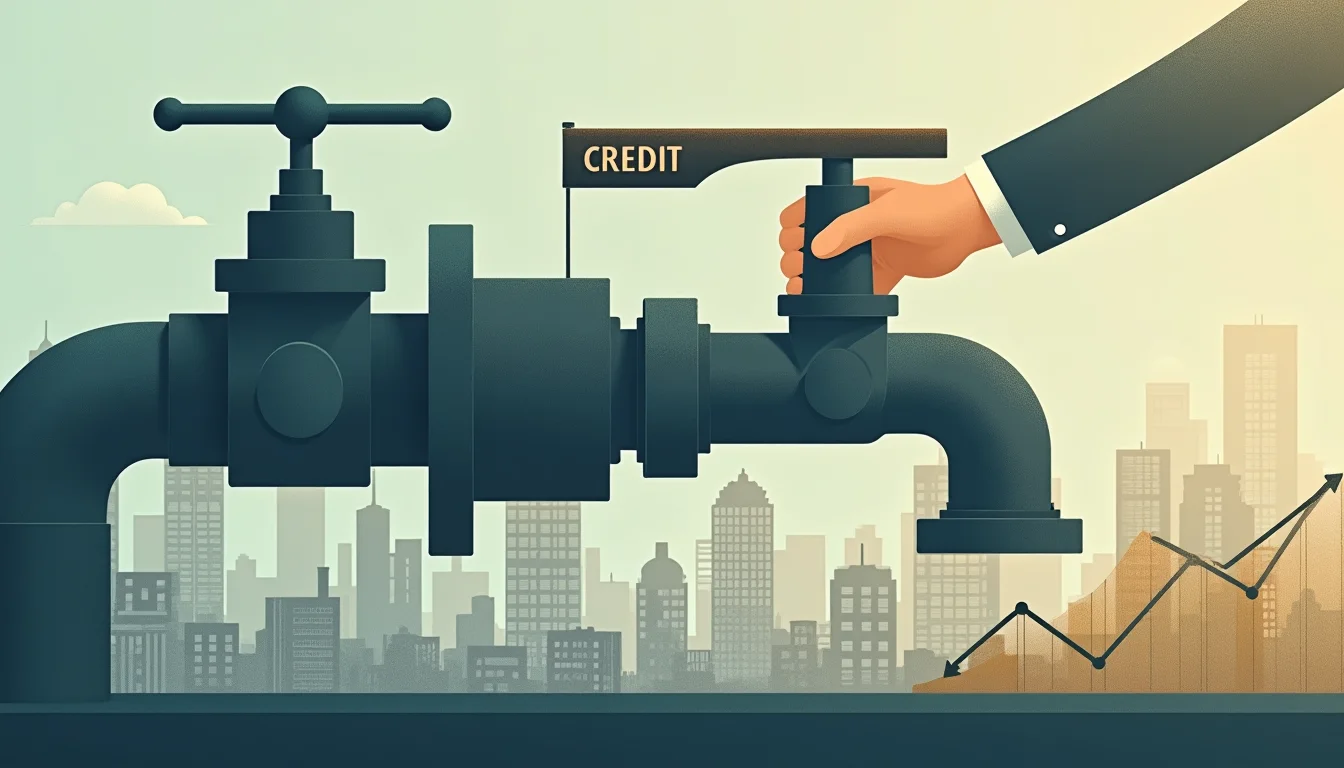
Loan-to-Value Caps, Debt Serviceability Tests, and the Quiet Machinery That Ends Property Booms
When regulators tighten lending standards and banks quietly raise credit hurdles, property markets historically follow a predictable arc from stall to correction — and the indicators that matter most rarely make front pages.

Bill Dudley Warns US Stocks Are in Bubble Territory, Citing Rising Bond Yields
Former New York Fed President Bill Dudley's public warning that US equities are in bubble territory coincides with a rising term premium and Treasury selloff risk that bond markets have not priced into equity valuations.

AI Infrastructure Spending Echoes 1999 Telecom Overbuild as Evergrande Founder Sentenced to Life in Prison
With hyperscalers on track to spend $500 billion on AI infrastructure in 2026 against only $100 billion in enterprise AI revenue, the gap between capital deployment and economic return has grown to a scale that dwarfs every previous technology overbuild in history.

CFTC Chair Warns Crypto Will Face Market Structure Rules With or Without Congressional Action
With the CFTC signalling that crypto rules are coming regardless of industry preference, and spot Bitcoin ETF flows showing signs of institutional fatigue, August 2026 marks a critical juncture in crypto's fourth major boom-bust cycle.

When the Migration Tide Turns: Property Bubbles Built on Demographic Assumptions That Proved Wrong
History shows that property markets which price in perpetual population growth are among the most vulnerable to correction — and Australia's current cycle is following a familiar script.

China's Luxury Tax Deepens Global Brand Crisis Since 2010
A simultaneous demand collapse in Chinese luxury consumption, surging global bond yields, and geopolitical supply disruptions are converging into a transmission mechanism that could expose the fragility of an S&P 500 dominated by seven stocks.