According to Bloomberg Markets, Nike's stock is on pace for its worst annual performance since Michael Jordan's first retirement in 1993 — a period when the company's fortunes were tightly bound to a single cultural phenomenon. The parallel is instructive: when a stock's narrative becomes untethered from its operational fundamentals, price movements stop reflecting business reality and start reflecting sentiment, positioning, and the mechanics of who is on which side of a trade. That dynamic is also what turned GameStop from a struggling mall retailer into the defining financial spectacle of 2021.
The Mechanism, Not the Meme
Most retrospectives on the GameStop episode treat it as a story about Reddit, retail investors, and populist rage against hedge funds. That framing, while compelling, misses the more durable lesson: the event was primarily a story about structural fragility in market plumbing. The specific asset — a video game retailer with declining revenues — was almost incidental. What mattered was the configuration of short interest, options market dynamics, and the concentration of retail order flow through a handful of platforms.
For macro context on how structural market vulnerabilities interact with liquidity conditions, the GameStop episode belongs to a broader pattern in which low interest rates, stimulus-driven retail participation, and concentrated institutional positioning create conditions where a single crowded trade can cascade into systemic stress.
What Has Changed Since 2021 — and What Has Not
The immediate regulatory response was muted. Congressional hearings produced memorable theatre — Roaring Kitty's testimony, Robinhood CEO Vlad Tenev's explanations of margin requirements — but little structural reform. Payment for order flow (PFOF), the practice by which commission-free brokers sell retail order flow to market makers such as Citadel Securities, remained legal in the United States. The Securities and Exchange Commission's subsequent review of equity market structure produced proposed rules on PFOF disclosure and best execution, but as of mid-2026, the regulatory environment governing the core mechanics of the squeeze remains substantially unchanged.
Short interest reporting, which played a central role in enabling the coordinated squeeze, still operates on a lagged, twice-monthly disclosure schedule. Real-time short interest data — which might allow regulators and market participants to identify dangerous concentrations before they become systemic — remains unavailable. The options market structure that amplified GameStop's move through dealer gamma hedging has not been reformed. And the mobile trading platforms that gamified equity investing — push notifications, confetti animations, simplified interfaces that obscured the complexity of options trading — continue to operate largely as they did in 2021.
Periodically since 2021, heavily shorted names have experienced sharp, short-lived surges that bear the structural fingerprints of the original episode. These episodes — sometimes called "mini-squeezes" — tend to attract less sustained attention because they lack the cultural narrative of the original GameStop moment. But they confirm that the underlying mechanism is not dormant. It is simply waiting for the right configuration of short interest, retail coordination, and market conditions to produce another significant event.
What distinguishes the GameStop episode from these historical precedents is scale of participation and speed of coordination. r/WallStreetBets grew from a substantial membership at the start of January 2021 to a much larger community by the end of the month. The coordination was not secret or conspiratorial in any traditional sense — it happened in public, on a platform indexed by search engines, in real time. This transparency was both the movement's strength and its eventual legal vulnerability, as regulators struggled to distinguish between protected speech and market manipulation.
Read the full Meme Stock Bubble — GameStop and WallStreetBets (2021) entry in the Bubblepedia Encyclopedia for a detailed account of the mania phase, the platform interventions, and the aftermath that reshaped retail investing's relationship with institutional markets.
For those tracking current market structure risks, the Bubblepedia bubble risk indicators and the full bubble encyclopedia provide ongoing context for how these structural vulnerabilities evolve across different asset classes and market cycles.
Why the Structural Analogy Matters More Than the Story
"The most dangerous market conditions are not those in which everyone is afraid, but those in which a specific group is maximally exposed and a specific mechanism exists to force their hand." — Bubblepedia editorial synthesis of post-mortem analyses of the January 2021 episode.
The meme stock episode is frequently categorised as an anomaly — a once-in-a-generation collision of pandemic conditions, stimulus money, and social media that could not be replicated. This categorisation is comforting but probably wrong. The pandemic conditions were unusual; the underlying structural vulnerabilities were not. Excessive short interest in individual names, concentrated retail order flow through a small number of platforms, and the amplifying role of the options market in driving gamma squeezes are all features of current market structure, not relics of a unique historical moment.
Nike's difficult 2026, to return to the opening data point, is a reminder that individual stocks can become disconnected from fundamentals in both directions — not only through irrational exuberance but through sustained institutional pessimism expressed through short positions. Any heavily shorted name with sufficient retail visibility carries, in the current unreformed market structure, at least some residual vulnerability to the mechanism that destroyed Melvin Capital in January 2021.
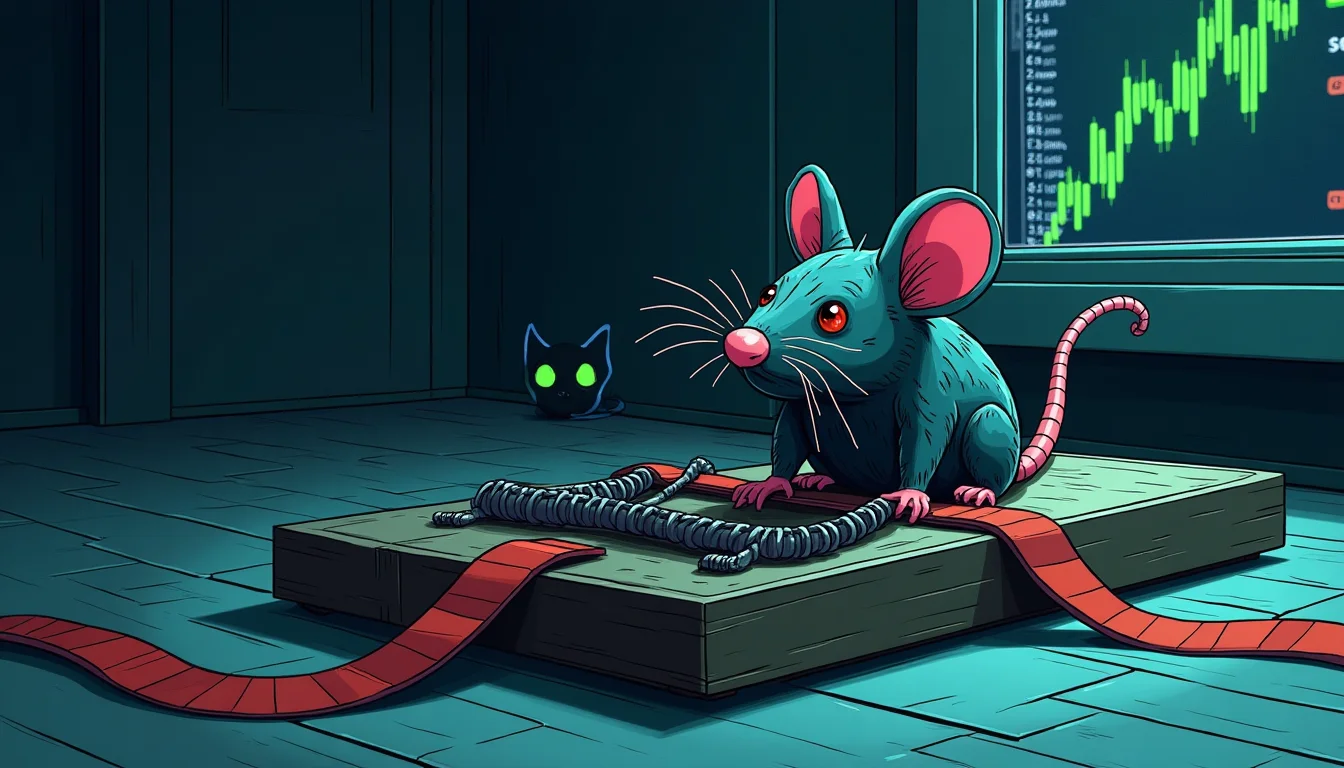
The lesson of GameStop is not that retail investors can beat hedge funds. Most of those who bought at elevated prices lost money. The lesson is that when market structure creates a mechanical trap — a short position that cannot be exited without catastrophic loss if enough buyers appear — the trap will eventually be sprung. Five years on, the trap has been reset. The bait has not yet been identified.