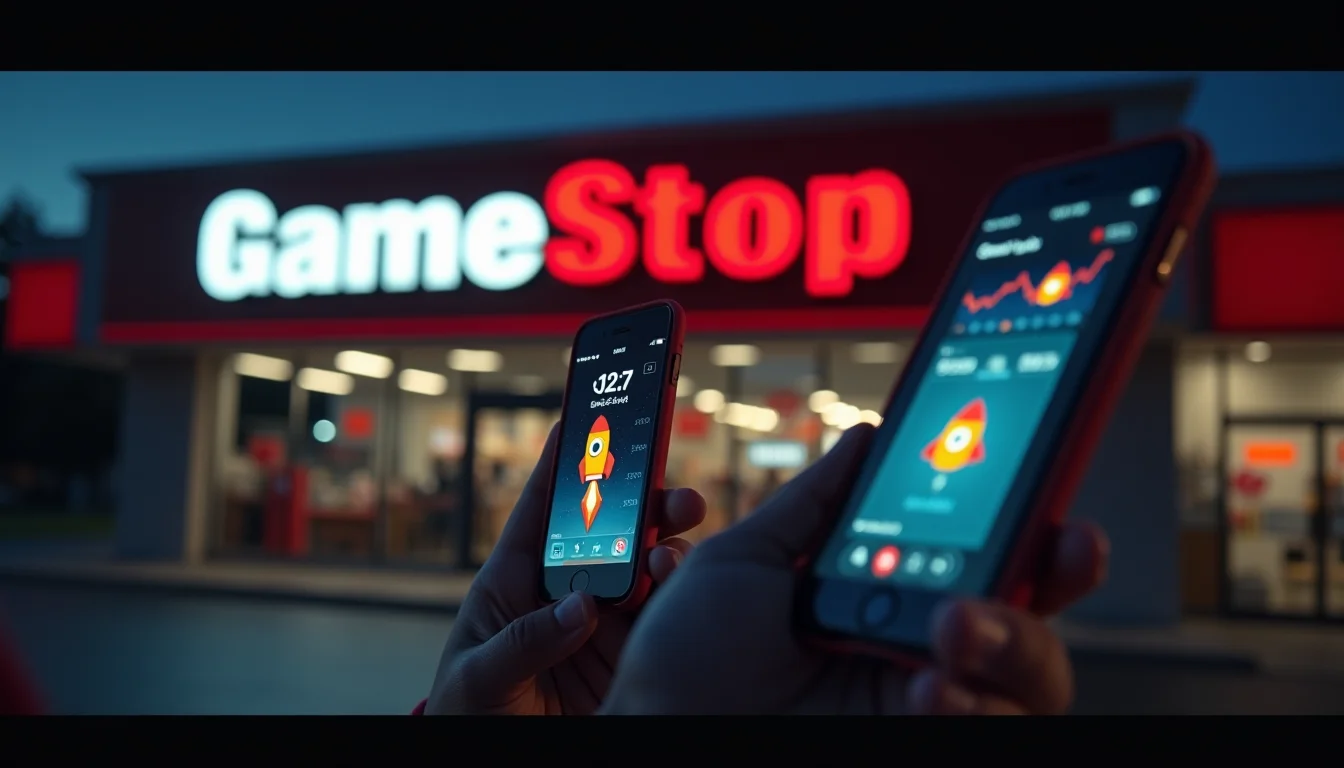
Meme Stock Bubble — GameStop and WallStreetBets (2021)
Reddit's WallStreetBets community drove GameStop shares from $17 to $483 in a coordinated short squeeze that challenged Wall Street and spawned a cultural movement.
By Twin · @TwinTowerCity·
Key Takeaways
- →GameStop's stock price soared from $17 to $483 in January 2021, representing a 2,741% increase in weeks.
- →Reddit's WallStreetBets community coordinated retail investors to trigger a short squeeze against heavily shorted GameStop shares.
- →Robinhood's trading restrictions on January 28, 2021 halted buying momentum and caused GameStop's price to collapse.
- →Hedge funds including Melvin Capital suffered billions in losses, with Melvin requiring a $2.75 billion bailout.
- →The episode revealed that retail trading platforms can restrict market access during volatility, contradicting democratization claims.
Peak Year
2021
Crash Year
2021
Location
United States
Asset Class
Equities
Severity
What Caused the Meme Stock Bubble?
The meme stock phenomenon of January 2021 was an unprecedented collision between social media-driven retail investing and the mechanics of institutional short selling. Its immediate trigger was the discovery by members of the Reddit forum r/WallStreetBets that GameStop — a struggling video game retailer — had a short interest exceeding 100% of its publicly available shares. This meant that hedge funds had borrowed and sold more shares than actually existed in the market, creating a theoretical vulnerability to a 'short squeeze' if enough buyers could drive the price up and force short sellers to buy back shares at higher prices. The conditions were set by the pandemic-era confluence of stimulus payments, commission-free trading via platforms like Robinhood, and a population of bored, homebound young people seeking both entertainment and financial opportunity.
The Mania Phase
GameStop shares began 2021 trading at approximately $17. The r/WallStreetBets campaign to squeeze short sellers gained momentum through January, and by January 27 the stock had reached an intraday high of approximately $483 — a gain of over 2,700% in less than a month. Trading volume in GameStop shares exceeded that of Apple, the world's most valuable company. The phenomenon rapidly spread to other heavily shorted stocks: AMC Entertainment rose from approximately $2 to over $20 within days, BlackBerry, Nokia, and Bed Bath & Beyond also surged. The movement developed an ideological dimension: retail investors framed their buying as a populist uprising against hedge funds and Wall Street, using slogans like 'diamond hands' (refusing to sell) and 'to the moon' (expectations of unlimited price appreciation). Melvin Capital, the hedge fund with the largest GameStop short position, lost approximately 53% in January and required a $2.75 billion emergency investment from Citadel and Point72.
Peak Conditions
At the peak of the mania, GameStop's market capitalisation briefly exceeded $30 billion — more than many profitable Fortune 500 companies. The company's fundamental business — physical retail of video games in an increasingly digital market — justified a valuation of perhaps $1-2 billion at most. But fundamentals were explicitly irrelevant to the meme stock thesis; the trade was about market mechanics and collective action. Trading activity was so intense that the Depository Trust & Clearing Corporation raised collateral requirements for brokers, which led Robinhood to restrict purchases of GameStop and other meme stocks on January 28. This decision triggered public outrage, congressional hearings, and conspiracy theories about collusion between Robinhood and Citadel Securities (which paid for Robinhood's order flow and also had a financial relationship with Melvin Capital).
How Did the Meme Stock Bubble Crash?
GameStop shares fell from their peak of approximately $483 to below $50 within two weeks of the trading restrictions. The decline was rapid but uneven, with several violent rallies creating the impression that the squeeze might resume. AMC followed a similar pattern before staging a second, even larger rally in June 2021, eventually reaching approximately $72. The meme stock phenomenon never fully ended in the traditional sense — both GameStop and AMC maintained valuations far above fundamental levels for extended periods, supported by a dedicated base of retail shareholders who viewed holding as an ideological commitment rather than a financial calculation. However, most participants who bought during the January and June peaks suffered significant losses as prices gradually declined through 2022 and 2023.
Aftermath and Recovery
The meme stock episode prompted multiple congressional hearings and regulatory reviews. The SEC published a detailed staff report in October 2021 analysing the GameStop events, concluding that the price surge was driven primarily by retail buying rather than a classic short squeeze, though short covering contributed. Robinhood's IPO in July 2021, valued at approximately $32 billion, quickly lost value as the retail trading boom faded and regulatory scrutiny intensified. Melvin Capital, which had recovered some losses by mid-2021, ultimately closed in May 2022 after losing approximately 39% that year. GameStop and AMC both used their elevated share prices to raise billions in new equity — GameStop raised approximately $1.7 billion, which it deployed into various new ventures including an NFT marketplace that was later shut down.
Lasting Legacy
The meme stock bubble represented something genuinely new in financial history: a mass-coordination event enabled by social media that deliberately exploited market microstructure vulnerabilities. It demonstrated that retail investors, when coordinated through platforms like Reddit and communicating through options markets, could generate price movements that overwhelmed institutional strategies. The episode also revealed the fragility of market plumbing — the clearinghouse collateral requirements that triggered Robinhood's trading restrictions were not well understood by the public or even by many market participants. The populist narrative — small investors versus hedge funds — resonated far beyond the financial markets and contributed to broader discussions about wealth inequality, market fairness, and the democratisation of finance. Whether the meme stock movement represented a genuine shift in market power or a temporary anomaly exploited by sophisticated actors remains debated.
The Reddit Mechanics
The GameStop short squeeze of January 2021 originated not in a hedge fund war room but in a Reddit forum called r/WallStreetBets, where amateur investors had spent months identifying the unusual structural vulnerability of GameStop's short interest. By mid-January 2021, short interest in GameStop exceeded 140% of the available public float, meaning that more shares had been borrowed and sold short than actually existed in the freely tradeable market. The arithmetic created an obvious squeeze opportunity: if buyers could push the price up enough to force short sellers to cover their positions, the resulting buying pressure would feed on itself.
The squeeze was amplified by a gamma squeeze in the options market. As retail traders bought call options at strike prices above the current share price, market makers who sold those options had to hedge their exposure by buying the underlying stock, pushing the price higher and forcing further hedging in a self-reinforcing loop. The combination of short covering and gamma hedging took GameStop from $20 on 12 January to an intraday peak of $483 on 28 January, a 2,300% move in three weeks that reportedly inflicted losses of approximately $19 billion on short-selling hedge funds including Melvin Capital, which received a $2.75 billion emergency capital injection to remain solvent.
The Robinhood Trading Halt
On the morning of 28 January 2021, Robinhood and several other retail brokerages restricted buying in GameStop, AMC, and a handful of other meme stocks while continuing to allow selling. The decision triggered an immediate political firestorm, with retail traders accusing the brokerage of colluding with hedge funds to protect Wall Street short sellers. Conspiracy theories that Citadel Securities, which paid Robinhood for order flow and was simultaneously a major investor in Melvin Capital, had ordered the trading halt circulated widely.
The actual reason was more prosaic and more revealing about the structural fragility of modern retail trading. The Depository Trust and Clearing Corporation, which clears US equity trades on a T+2 basis, calculates collateral requirements based on the volatility of stocks being traded. As GameStop's volatility exploded, DTCC raised Robinhood's collateral requirement to approximately $3 billion, against equity that the brokerage simply did not possess. Restricting buying was the only way Robinhood could reduce its collateral obligation enough to remain operational. The episode produced Congressional hearings in February 2021, the eventual SEC GameStop report of October 2021, and a broader regulatory push to shorten settlement to T+1 (which took effect in May 2024).
The Broader Meme Stock Universe
The GameStop squeeze was the most dramatic event in a broader speculative wave that included AMC Entertainment (which rose from $2 to $72), Blackberry (a 280% rally), Nokia (a 100% rally), Bed Bath and Beyond (later bankrupt despite a similar squeeze attempt), and dozens of other heavily shorted small and mid-cap stocks. Running alongside the meme stock phenomenon was the SPAC boom (special purpose acquisition companies raised $162 billion in 2021, more than the prior decade combined) and the cryptocurrency boom that took Bitcoin from $10,000 to $69,000 and Dogecoin from less than a cent to 73 cents on Elon Musk tweet momentum alone, a 12,000% rise in a token explicitly created as a joke.
The period represented the fullest expression of retail speculation enabled by three converging technologies: social media coordination through Reddit, Discord, and Twitter; zero-commission trading made possible by payment-for-order-flow business models; and stimulus cheques from the COVID-era American Rescue Plan that provided the marginal capital. The combination produced trading volumes and option activity that exceeded anything in American market history, including the 1999 to 2000 dot-com peak. Retail equity trading reached approximately 25% of total US market volume in early 2021, roughly double its 2019 share.
"The stock market has, in fact, become a Reddit forum where the asylum is run by the inmates." — Jeremy Grantham, GMO co-founder, January 2021
The Retail Investor Reality
The narrative of retail investors defeating Wall Street short sellers was largely a media construction. Academic research published in 2022 and 2023 by researchers including Eric Zwick at Chicago Booth and Brad Barber at UC Davis tracked the actual performance of retail accounts during the GameStop squeeze and found that the median retail investor who bought GameStop above $100 lost money. The traders who made fortunes were a small minority of early entrants who had positioned themselves before the squeeze became public knowledge; the majority of retail participants bought near the peak as media coverage drove a second wave of FOMO-driven buying.
GameStop fell from its January 2021 peak of $483 to under $20 by August 2024, a 96% decline (adjusted for the 4-for-1 stock split). AMC fell from $72 to under $4 over the same period. Most of the meme stocks that had been celebrated as victories for retail investors had wiped out the savings of the ordinary participants who held them past the initial squeeze. The lesson, consistent with the broader pattern documented in the dot-com era and earlier speculative episodes, was that media narratives about retail empowerment tend to obscure the financial reality that retail investors as a class consistently transfer wealth to institutional traders during speculative manias rather than the reverse.
Recommended Reading
Key Statistics
Price Range
$17 → $483 → ~$40
Peak Gain
2,740% in weeks
Short Interest
140% of float
Melvin Capital Loss
53% in January
Melvin Bailout
$2.75 billion
Warning Signs
- Short interest exceeding 100% of available shares
- Retail investor coordination through social media
- Commission-free trading platforms gamifying speculation
- Narrative-driven trading disconnected from fundamentals
Timeline
2020
WallStreetBets identifies GameStop as heavily shorted
Early Jan 2021
GameStop at $17 — coordinated buying begins
27 Jan 2021
Stock reaches $347 — Melvin Capital bailout announced
28 Jan 2021
GameStop peaks at $483 — Robinhood restricts buying
29 Jan-Feb
Stock crashes as buying restricted — Congressional hearings called
Feb 2021
Keith Gill (DeepF***ingValue) testifies before Congress
Lessons Learned
The GameStop saga exposed structural vulnerabilities in modern markets: short interest exceeding available shares, the conflicts of interest in payment for order flow, and the power of coordinated retail trading. Robinhood's decision to restrict buying while allowing selling — ostensibly for capital requirements but perceived as protecting hedge funds — demonstrated that market access is not as democratised as platforms claim.
Frequently Asked Questions
What caused the GameStop meme stock bubble in 2021?
The GameStop bubble was caused by Reddit's WallStreetBets community coordinating a short squeeze against hedge funds. Retail investors discovered GameStop had over 140% short interest, meaning more shares were shorted than existed. The community rallied to buy shares and call options, forcing short sellers to cover positions at increasingly higher prices, creating a feedback loop.
How much did GameStop stock price rise during the 2021 bubble?
GameStop stock skyrocketed approximately 2,700% during the bubble, rising from around $17.25 in early January 2021 to an intraday peak of $483 on January 28, 2021. The stock then crashed back to around $40 within weeks, representing a decline of over 90% from its peak price.
What were the warning signs of the GameStop meme stock bubble?
Warning signs included GameStop's stock price disconnecting from fundamental business metrics, extreme volatility with daily swings exceeding 50%, unprecedented retail trading volumes, social media hype drowning out financial analysis, and trading halts due to price volatility. The company's struggling brick-and-mortar business model didn't justify the astronomical valuation increases.
What lessons does the GameStop bubble teach investors?
The GameStop bubble demonstrates how social media can rapidly mobilize retail investors to impact markets, the risks of excessive short selling, and that fundamentals eventually matter. It shows bubbles can form around social movements rather than just economics, emphasizes the importance of risk management, and highlights how market democratization can challenge traditional Wall Street dynamics.
Current Relevance
Meme stock dynamics continue to influence markets, with periodic surges in heavily shorted names. The structural issues exposed — extreme short interest, payment for order flow, and the gamification of trading through mobile apps — remain largely unresolved.
Explore gold storage options
Gold is not a guaranteed hedge against crashes. Prices can fall; storage fees and custody risks also matter.
Affiliate link: Bubblepedia may earn a commission. Not a recommendation; investment values can fall.
Recommended Reading
Recent Analysis
Morgan Stanley: S&P 500 9% Dip Offers Buying Opportunity
1 Nov 2026
AI Boom Masks $35 Trillion Sovereign Debt Crisis
4 Oct 2026
Hedge Funds Slash Bullish Yen Bets as BOJ Stays Cautious
26 Sept 2026
Gold Slips as Iran Crisis, Oil Surge Boost Fed Hike Bets
25 Sept 2026
Radiant Capital's $1B Assets Under Scrutiny
23 Sept 2026
Get Bubblepedia in your inbox
Asset bubbles and market-history insights in your inbox.