Market Bubble Analysis & Commentary
Daily commentary on the speculative excesses, valuation extremes, and structural risks shaping global markets right now. Articles cover equities, property, crypto, commodities, and the macro forces that drive boom-and-bust cycles, with frequent reference to historical parallels documented in the encyclopedia. Each piece is written to translate complex market signals into clear, actionable context for long-term investors.
Analysis falls into four recurring categories — historical-parallel pieces that map a current market condition onto a documented past bubble; crypto-market-cycle notes that track halving positioning, stablecoin reserves, and exchange-concentration risk; property-market-risk pieces that examine credit availability, household debt, and rental-yield gaps; and global-market-risk articles that focus on yield-curve signals, central-bank divergence, and sovereign-debt sustainability. The category badge on each card identifies which lens the article uses.
Every article is written to a strict editorial standard. Specific numbers must be traceable to live indicator data or supplied source text. Speculative phrasing is avoided. Articles below an 800-word threshold are rejected and regenerated. Pieces flagged for review are held back rather than published with disclaimers. Use this feed to track how today's risks are evolving and where the next mania may already be forming.
The pipeline that produces these articles draws on a structured set of inputs: a daily-refreshed table of macro indicators (Shiller CAPE, Buffett Indicator, US 10-year yield, MOVE index, Bitcoin dominance, stablecoin reserves, household debt-to-GDP, and roughly forty others), a curated news feed scraped from central-bank statements, regulatory filings, and major financial outlets, and the full encyclopedia of historical bubbles for parallel-matching. The model is instructed to flag any indicator reading that crosses a documented historical threshold and to anchor its analysis in that signal rather than in sentiment or narrative.
Editorial independence matters. Bubblepedia does not accept sponsored placements inside analysis articles, and affiliate links — where they appear — are confined to clearly labelled blocks separated from the body copy. We do not short or hold leveraged positions in any asset discussed, and we do not publish price targets or trade recommendations. The goal is structural understanding: helping readers recognise the shape of a bubble before it bursts, and the shape of a recovery before it begins. Bookmark this page or subscribe to the weekly digest to follow the analysis as it evolves.

Australian Property Yields Inverted: Sweden's 1990 Crisis Parallel
Australia's property rental yields have fallen 180 basis points below 10-year government bonds, creating the worst yield inversion since 1989 as new tax reforms echo the deregulation shocks that triggered Sweden's banking crisis.

ECB Rate Cuts Meet Fed Hawkishness as Policy Divergence Reaches 1971 Bretton Woods Breakdown Levels
Central bank policy divergence has reached levels not seen since the 1971 Bretton Woods collapse, as the ECB cuts rates while the Fed maintains hawkish stance, creating destabilizing capital flows reminiscent of the fixed exchange rate system's final breakdown.

Ethereum Staking Creates Yield Compression Trap Like Japan's Bubble
Ethereum's staking mechanism has locked $78 billion worth of ETH as yields compress to 3.2%, creating liquidity constraints and yield-chasing behavior that mirrors the bond market dynamics that preceded Japan's 1989 asset bubble collapse.

China Shadow Banking Retreat Echoes 1985-1992 Nordic Crisis
China's shadow banking sector has reduced mortgage lending by 43% year-over-year as regulatory crackdowns mirror the credit availability reversals that triggered Sweden's 1990 property collapse.

Treasury Term Premium Turns Negative as 2-10 Yield Curve Inverts
The US Treasury term premium has turned negative for the first time since 2019 while the 2-10 year yield curve inverts to levels not seen since the 1981 recession, creating conditions that preceded Black Monday's 1987 crash.

Market Concentration Echoes 1973-74 Nifty Fifty Bubble
The concentration of seven tech giants controlling over 33% of the S&P 500 through passive index fund mechanics mirrors the Nifty Fifty concentration that preceded the 1973-74 market collapse.

Grayscale Bitcoin Trust Collapse Mirrors 1929-1932 Investment Crisis
Grayscale Bitcoin Trust has lost 65% of its assets to spot ETF competition since January 2024, echoing the structural collapse that destroyed closed-end investment trusts during the Great Depression.
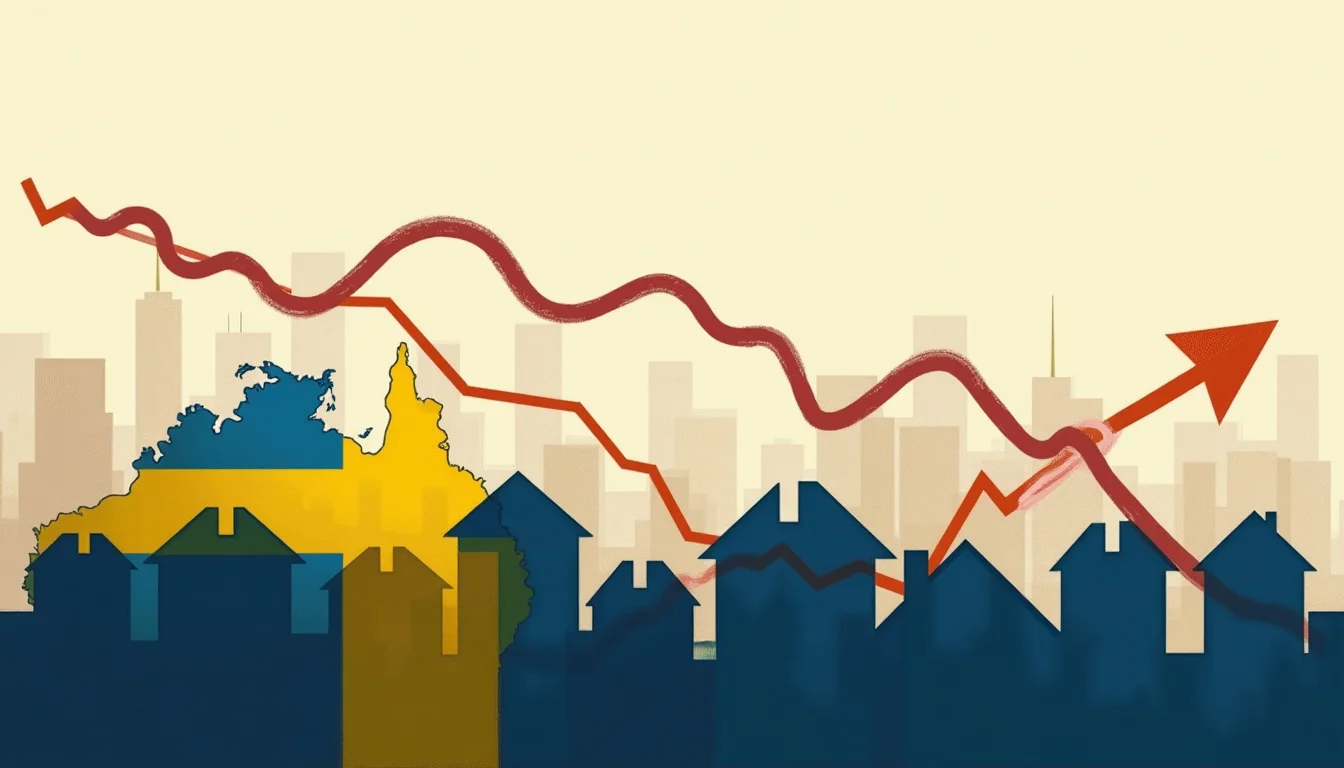
Australia's Migration Decline Echoes Sweden's 1992 Housing Crisis
Australia's net migration has dropped 25% from peak levels as housing affordability forces demographic policy reversals, mirroring the population-driven property corrections that preceded Sweden's 1990 banking crisis.

Taiwan Chip Crisis Mirrors 1973 Oil Embargo Supply Shock
Taiwan's semiconductor dominance creates the same systemic supply shock vulnerabilities that transformed regional oil disruptions into global economic crises during the 1970s.

Foreign Trusts Dominate Sydney Premium Properties Above $3M
Foreign investment trusts now control nearly half of Sydney's premium property market, mirroring the offshore capital patterns that drove Japan's catastrophic real estate bubble to its 1991 peak.

Bitcoin Miners Signal Capitulation as Hash Rate Falls
Major mining operations are shutting down unprofitable rigs as Bitcoin's hash rate falls 12% from peak levels, creating the same capitulation signals that marked the bottom of previous crypto cycles and historical commodity busts.

Poland's Construction Dependency: A 2026 Economic Warning
Poland's construction sector now represents 8.2% of GDP while economic growth disappoints, creating the same dangerous infrastructure dependency that preceded Spain's catastrophic property market collapse.

India's Foreign Bond Tax Cuts Meet ECB Pause as Emerging Market Debt Dynamics Echo Pre-1998 Russian Default Conditions
India's proposed foreign bond tax reductions coincide with ECB policy uncertainty, creating the same dangerous capital flow patterns that preceded Russia's 1998 sovereign debt crisis.

30-Year Treasury Auction Yields Cross 5% for First Time Since August 2007
The Biden administration's massive antitrust enforcement against AI giants parallels the regulatory aftermath of the dotcom crash, while market concentration metrics match those preceding the 1929 collapse.

USDC's Treasury Concentration Since 2008 and 2020
Circle's overwhelming concentration of USDC reserves in US government bonds creates the same catastrophic single-point-of-failure risk that destroyed the Knickerbocker Trust Company during the 1907 financial panic.

Australia's Debt Crisis Mirrors Sweden's 1985-1992 Banking Collapse
Australia's household debt burden reaches dangerous levels while global trade tensions create the same external shock conditions that triggered Sweden's catastrophic property collapse in 1990.

China's Soybean Import Collapse Triggers Currency Defense Crisis as Agricultural Trade Wars Echo 1997 Asian Financial Contagion
China's declining soy imports are forcing agricultural exporters into currency interventions while commodity price volatility creates the same dangerous feedback loops that destroyed Asian economies in 1997.

Energy Debt Crisis: 2010-2021 Leverage Mirrors Canada's Mortgage Trap
Soaring US electricity costs and massive infrastructure debt burdens create the same payment shock dynamics that threaten to collapse Canada's overleveraged housing market.

Crypto Exchange Oligopoly Mirrors 1929 Investment Trust Crash
The crypto market's dependence on just two major exchanges creates systemic risk patterns identical to the investment trust concentration that amplified the 1929 Wall Street crash.

Federal Reserve Inflation Surge Meets ECB Dovish Stance as Policy Divergence Recreates Weimar Republic's Fatal Monetary Discord
Rising US inflation forcing hawkish Fed positioning while European Central Bank maintains dovish stance creates dangerous policy divergence echoing the catastrophic monetary coordination failures of 1920s Europe.

South Korea's AI Tax Proposal Triggers Global Policy Concerns
South Korea's proposed AI taxation threatens global tech valuations while widening central bank policy gaps create the same dangerous coordination failures that preceded the 1929 crash.

Australia's 2.1% Rental Yield Premium Over 10-Year Bonds Collapses to Lowest Since 1989 as Borrowing Costs Surge
Australia's rental yield advantage over government bonds has collapsed to levels not seen since the 1989 property crash, as rising bond yields expose the fundamental mispricing in residential property markets.

Bank of Japan's Rate Normalization Collides with Federal Reserve Pause as Policy Discord Recreates 1985 Plaza Accord Tensions
The widening gap between Japan's gradual rate hikes and the Federal Reserve's extended pause is creating the same dangerous capital flow imbalances that required coordinated intervention during the 1985 Plaza Accord crisis.

Developer Pre-Sale Financing Returns as US Housing Market Adopts China's Fatal Evergrande Model
American homebuilders increasingly rely on pre-construction sales to finance new projects, mirroring the high-leverage deposit-funded model that destroyed China Evergrande and triggered the world's largest property crisis.