Market Bubble Analysis & Commentary
Daily commentary on the speculative excesses, valuation extremes, and structural risks shaping global markets right now. Articles cover equities, property, crypto, commodities, and the macro forces that drive boom-and-bust cycles, with frequent reference to historical parallels documented in the encyclopedia. Each piece is written to translate complex market signals into clear, actionable context for long-term investors.
Analysis falls into four recurring categories — historical-parallel pieces that map a current market condition onto a documented past bubble; crypto-market-cycle notes that track halving positioning, stablecoin reserves, and exchange-concentration risk; property-market-risk pieces that examine credit availability, household debt, and rental-yield gaps; and global-market-risk articles that focus on yield-curve signals, central-bank divergence, and sovereign-debt sustainability. The category badge on each card identifies which lens the article uses.
Every article is written to a strict editorial standard. Specific numbers must be traceable to live indicator data or supplied source text. Speculative phrasing is avoided. Articles below an 800-word threshold are rejected and regenerated. Pieces flagged for review are held back rather than published with disclaimers. Use this feed to track how today's risks are evolving and where the next mania may already be forming.
The pipeline that produces these articles draws on a structured set of inputs: a daily-refreshed table of macro indicators (Shiller CAPE, Buffett Indicator, US 10-year yield, MOVE index, Bitcoin dominance, stablecoin reserves, household debt-to-GDP, and roughly forty others), a curated news feed scraped from central-bank statements, regulatory filings, and major financial outlets, and the full encyclopedia of historical bubbles for parallel-matching. The model is instructed to flag any indicator reading that crosses a documented historical threshold and to anchor its analysis in that signal rather than in sentiment or narrative.
Editorial independence matters. Bubblepedia does not accept sponsored placements inside analysis articles, and affiliate links — where they appear — are confined to clearly labelled blocks separated from the body copy. We do not short or hold leveraged positions in any asset discussed, and we do not publish price targets or trade recommendations. The goal is structural understanding: helping readers recognise the shape of a bubble before it bursts, and the shape of a recovery before it begins. Bookmark this page or subscribe to the weekly digest to follow the analysis as it evolves.

Strategy's Bitcoin Machine: 2026 Parallels to 2021-2022 NFT Bubble
Strategy's latest round of stock-and-note issuance to fund Bitcoin accumulation echoes the leveraged speculation that inflated — and ultimately destroyed — the NFT market in 2021-2022, raising urgent questions about what happens when institutional flows reverse.

Australia's Migration Boom Has Already Peaked — but Property Markets May Not Have Caught Up
Australia's property market has absorbed record immigration-driven demand since 2022, but demographic inflection points — including normalising net overseas migration and an ageing population — expose structural vulnerabilities that markets are not pricing.

SPAC Bubble 2021: How Retail Absorbed Losses While Sponsors Won
The SPAC bubble of 2020–2021 was not a failure of markets in the abstract — it was a specific failure of participant composition, where retail investors absorbed losses that institutional sponsors had structurally insulated themselves from.

Bitcoin Miner Capitulation in August 2026: What Hashrate Collapse and Coin-Days Destroyed Tell Us About Cycle Turning Points
On-chain miner capitulation signals are flashing across Bitcoin's network in August 2026, echoing the pattern of speculative exhaustion that preceded the collapse of the 2021 meme coin mania — and raising serious questions about where this cycle ends.

Construction GDP Dependency: Ireland's 2008 Crisis and Australia's Risk
When construction activity becomes a structurally outsized share of GDP, history shows the unwinding is rarely gradual — Spain and Ireland offer the most instructive post-mortems.

Sovereign Debt at the Breaking Point: How AI-Era Fiscal Deficits Are Recreating the Conditions That Preceded Historic Debt Crises
Governments that binged on deficit spending to fund AI-adjacent industrial policy are now confronting the same structural trap that has historically preceded sovereign debt crises — rising term premiums, revenue shortfalls, and a technology sector that cannot yet pay its own way.

Australia's Household Debt-to-Income Ratio Has Plateaued Before — Each Time, the Plateau Broke
Australia's household debt-to-income ratio has stalled near historic highs, but history shows that apparent stabilisation in over-leveraged housing markets has consistently preceded — not prevented — sharp corrections.

Dollar Weakness, Fading Rate-Hike Bets, and the Currency Intervention Trap That Preceded Asia's 1997 Collapse
As the US dollar slides to its lowest level since May 2026 and Fed rate-hike expectations evaporate on soft jobs data, the conditions are forming that historically force emerging-market central banks into currency defence regimes — a dynamic with direct parallels to the speculati

Quant Funds, Shadow Margin, and the Debt Architecture Behind China's 2015 Collapse — Lessons the 2026 Selloff Is Repeating
A quant-driven crash in Chinese markets in August 2026, which sent funds linked to DeepSeek's founder down 20%, echoes the credit anatomy of China's catastrophic 2014–2015 stock bubble, when margin debt quintupled and $5 trillion in value evaporated in three months.

Exchange Concentration Risk in 2026: Crypto's Custodial Chokepoint
With a single exchange controlling roughly half of global crypto spot volume in mid-2026, the concentration risk embedded in crypto's custodial architecture has reached a threshold that historical bubble patterns suggest is both predictable and dangerous.

Yield Inversion at the Property Level: When Rental Returns Fall Below Risk-Free Rates, History Gets Uncomfortable
When gross rental yields on residential property fall below prevailing government bond yields, investors are effectively paying a premium to own an asset that earns less than a term deposit — a condition that has preceded every major property correction of the past four decades.

Asia-Pacific Share Sales Shatter Records While Fed's Musalem Pushes for Rate Hikes: Central Bank Divergence Is Repricing Global Risk
Record Asia-Pacific equity issuance and a hawkish Federal Reserve signal are colliding with European climate-driven market strain, creating a central bank divergence dynamic that mirrors the policy fragmentation preceding China's 2015 stock market collapse.

Eurozone Crisis 2010–2012: Structural Flaws Never Fixed
The structural flaws that nearly destroyed the euro in 2010–2012 — a monetary union without fiscal union, no common deposit insurance, and no genuine adjustment mechanism — remain embedded in the eurozone's architecture in 2026, with Italy's debt-to-GDP ratio above 150% serving a

Bitcoin's Post-Halving Altcoin Rotation and the NFT Playbook: How Speculative Capital Migrates in Cycle Peak Phases
As Bitcoin's fourth halving cycle matures in mid-2026, the familiar pattern of speculative capital rotating from large-cap crypto into higher-risk altcoins and narrative-driven tokens echoes the dynamics that inflated and then destroyed the NFT market between 2021 and 2022.

Commercial Property's Credit Cliff: What Happens When Lenders Reprice Risk Across an Entire Asset Class
As commercial property valuations face a structural repricing driven by tightening credit conditions and rising bond yields, history shows that when lenders collectively reassess risk across an asset class, the correction is rarely orderly.

US 10-Year Yields Near 4.70% as Term Premiums Rise and Kevin Warsh Calls for Fed Policy Reset
As 10-year Treasury yields hold near 4.70% and term premiums rebuild to levels not seen since the early 2000s, bond markets are sending a warning that equity and credit investors appear structurally unprepared to receive.

Dubai's 2009 Collapse: When External Capital Abandons Property
A new report showing foreign home purchases in the US have plunged 76% from their peak offers a timely lens through which to re-examine Dubai's 2004–2009 property bubble — a case study in what happens when prestige-driven real estate markets lose the external demand that created
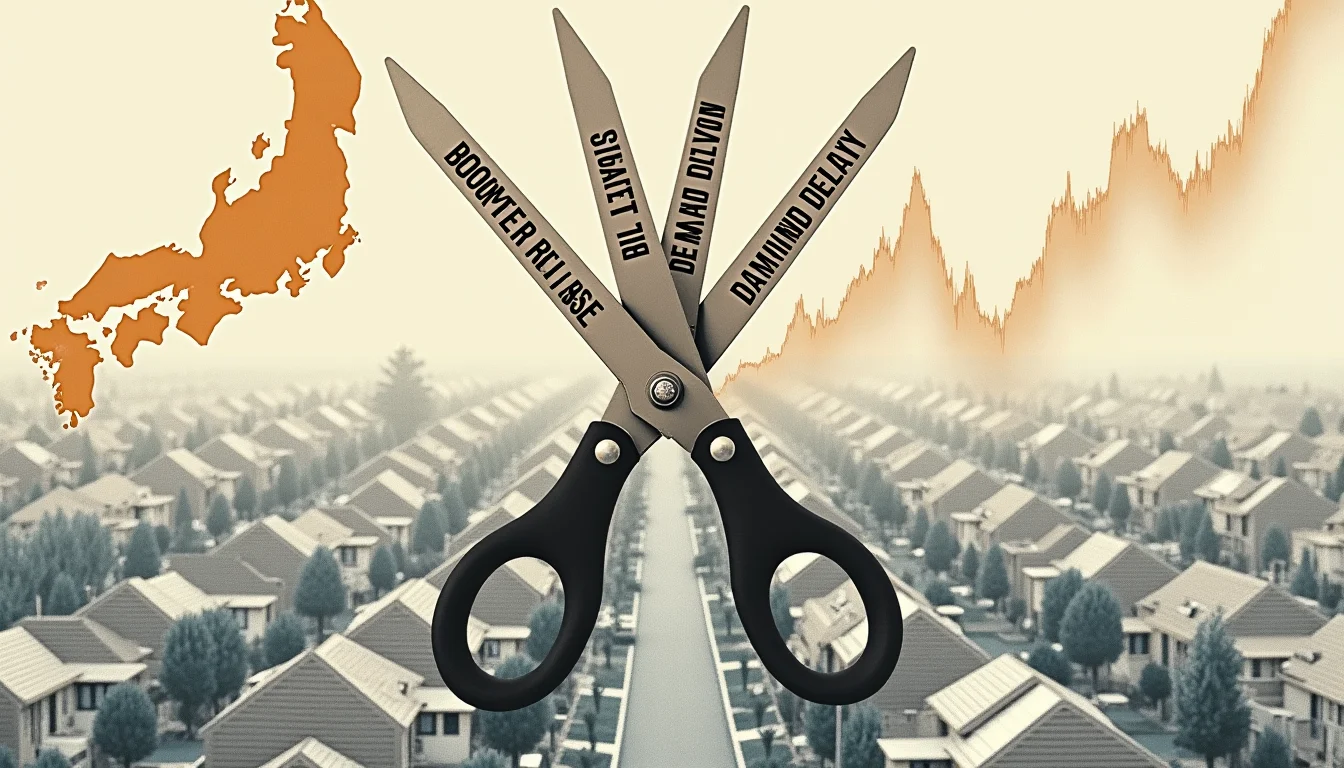
Australia's Demographic Scissor: The 2026 Property Reckoning
Australia's housing market faces a structural inflection as baby boomer downsizing accelerates, Generation Z homebuying stalls, and net overseas migration approaches a policy-driven slowdown — a demographic scissor with direct historical parallels to Japan's post-1990 property co

Gold Rises a Third Day as Hormuz Progress Trims Rate-Hike Bets; Whale Rock's AI Losses Highlight Concentrated Market Risks
As Strait of Hormuz tensions ease slightly and gold holds near historic highs, the 22% collapse of AI-heavy hedge fund Whale Rock exposes how geopolitical supply shocks transmit fastest and hardest through markets already distorted by extreme equity concentration.

Cajas, Construction Workers, and Coastal Speculators: Who Was Buying at Spain's Property Peak — and Where That Buyer Profile Reappears Today
Spain's 1997–2008 property bubble was driven by a distinctive coalition of first-time buyers, regional savings banks, foreign retirees, and domestic speculators — a participant composition whose echoes are visible in overbuilt markets from China to parts of Southern Europe today.
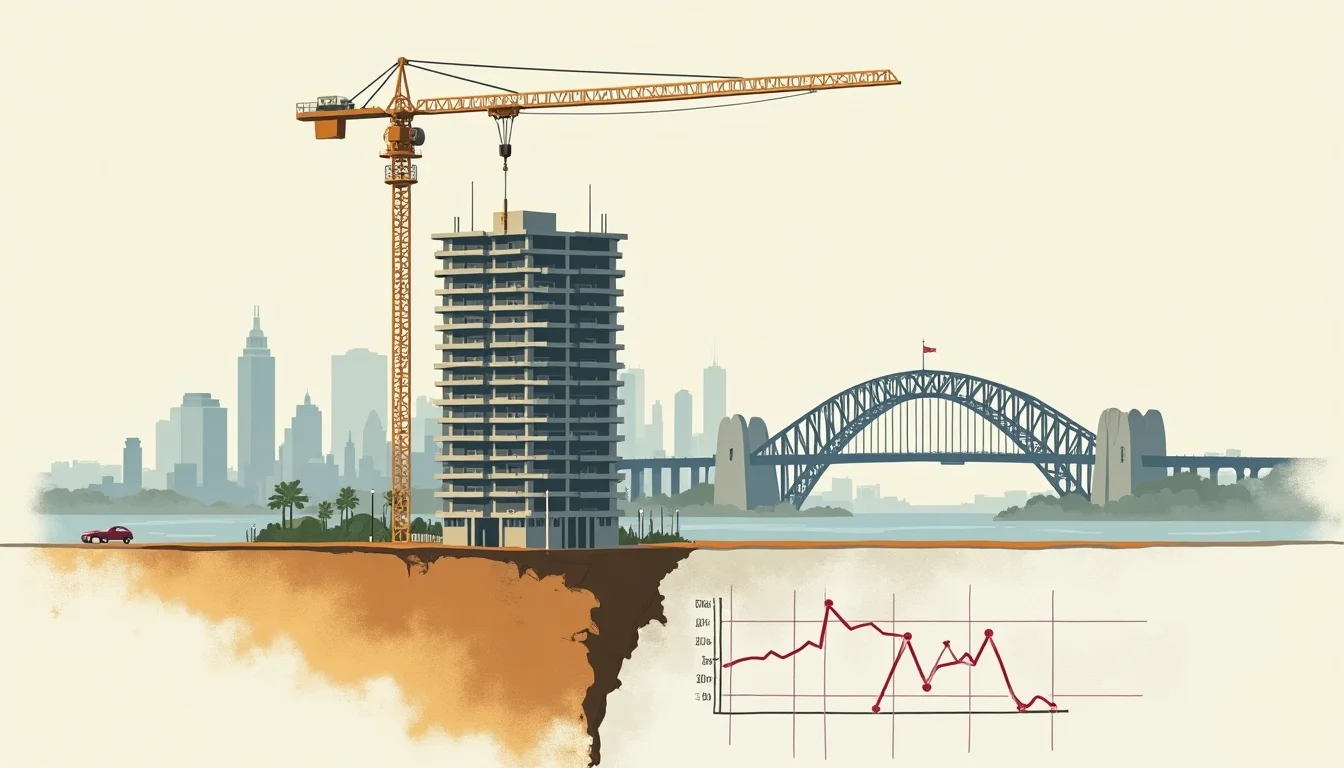
Australia's Housing Market Is Worsening — and Construction GDP Tells You Why That Matters
As Bloomberg reports Australia's housing market is deteriorating further, the country's deep dependency on construction-driven GDP growth is flashing the same warning signals seen in Ireland before 2008 and Spain before 2012.

India's Diaspora Bond Rush and the Sovereign Debt Mirage: When Capital Inflows Mask Structural Fragility
India's aggressive courting of diaspora capital to fund its bond and loan markets echoes the debt-fuelled confidence of past sovereign borrowing booms — and raises pointed questions about what happens when the inflows reverse.

Dollar-Pegged, But at What Cost? Stablecoin Reserve Mechanics and the Fractional Trust Problem
As stablecoin market capitalisation surpasses $200 billion, the opacity of reserve structures underpinning dollar pegs is recreating the same fractional-trust vulnerabilities that have destabilised crypto markets in every prior cycle.
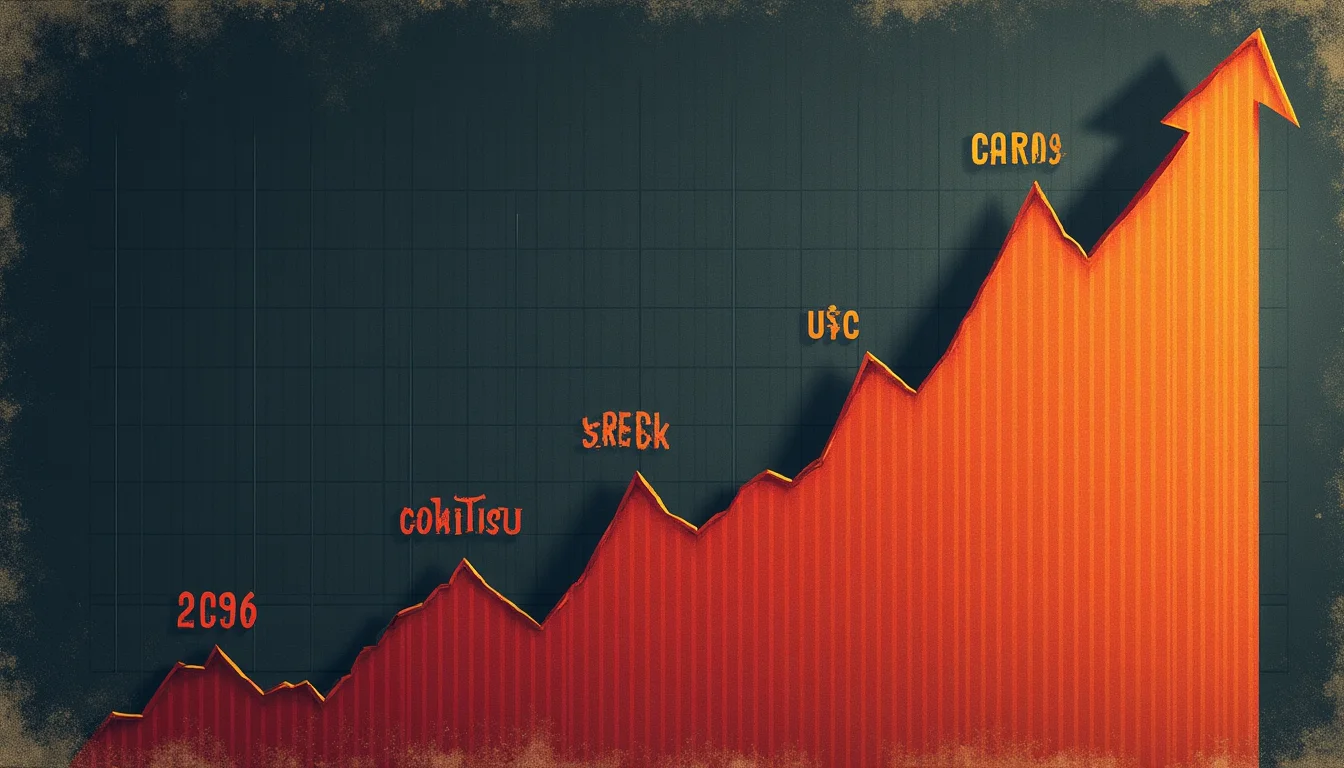
186% and Climbing: Australia's Household Debt Path Compared to Japan 1989, Sweden 1992, and the US in 2006
Australia's household debt-to-income ratio has followed a trajectory that closely mirrors the pre-crash accumulation phases of three of the most destructive property collapses in modern economic history.