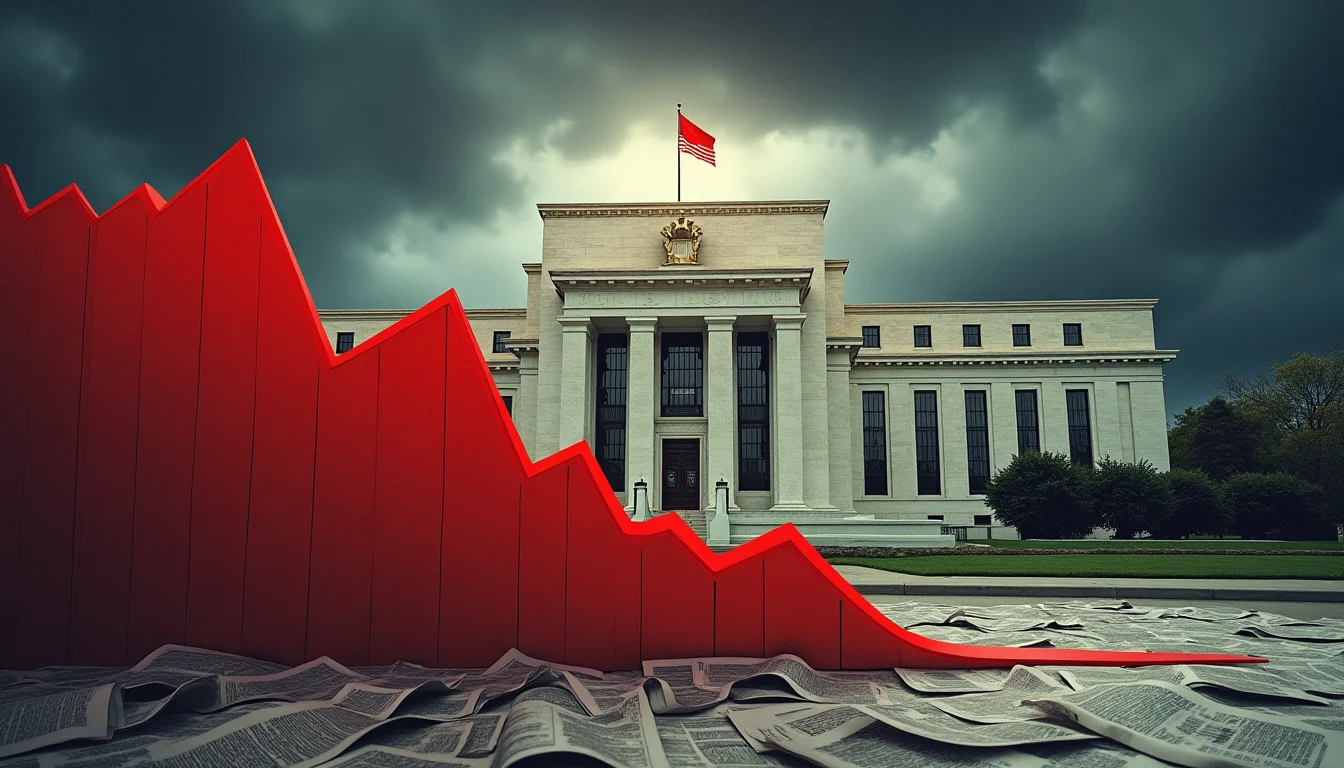
According to Bloomberg Markets, KPMG's chief economist has raised concerns about Federal Reserve rate hike expectations amid a term premium inversion that has reached extreme levels—among the most severe since the 2008 financial crisis. The warning comes as yield curve dynamics increasingly mirror the monetary policy tightening cycle that preceded the 1929 market crash.
Term Premium Collapse Signals Market Distortion
The term premium—the extra compensation investors demand for holding longer-term bonds—has plunged into deeply negative territory, indicating severe market distortions. The current inversion exceeds levels seen during the dot-com bubble collapse and approaches the extreme readings recorded during the 2008 subprime crisis.
This inversion occurs when short-term rates rise faster than long-term yields, compressing the compensation for duration risk. The phenomenon typically emerges when central banks aggressively tighten policy while markets anticipate economic weakness ahead. Current Federal Reserve policy expectations suggest additional rate increases, despite mounting evidence of economic fragility.
The yield curve inversion has persisted for many consecutive months, with the 2-year/10-year spread remaining deeply inverted. Historical analysis shows that inversions of this magnitude and duration have preceded every major recession since 1970, with the notable exception being false signals during the 1966 credit crunch.
1929 Parallel: When Monetary Policy Amplified Bubble Risk
Current conditions bear striking resemblance to the monetary policy environment that preceded the Wall Street Crash and the Roaring Twenties (1924-1929). In the late 1920s, the Federal Reserve raised rates significantly in response to speculative excess, creating a yield curve inversion that persisted before the October 1929 crash.
The parallel extends beyond rate levels to the underlying market dynamics. In 1929, the Fed's tightening cycle occurred against a backdrop of elevated asset valuations, margin speculation, and corporate leverage—conditions that mirror today's environment. The S&P 500 trades at elevated multiples compared to historical averages, while corporate debt-to-GDP ratios have reached concerning levels, approaching previous peaks.
Benjamin Strong, Federal Reserve Bank of New York president during the 1920s, initially dismissed concerns about speculative excess, arguing that monetary policy should focus on price stability rather than asset prices. This philosophy contributed to the delayed policy response that ultimately amplified the bubble's collapse. Current Fed communications suggest similar confidence in the central bank's ability to engineer a "soft landing" despite mounting systemic risks.
Jobs Data Masks Underlying Fragility
Recent employment data has provided temporary market relief, with Bloomberg Markets reporting that strong job growth has lowered immediate recession risks. However, the underlying dynamics reveal concerning trends that echo pre-crash employment patterns from previous bubble episodes.
Wage growth continues to lag inflation significantly, representing one of the largest gaps in decades. This real wage decline occurs despite headline employment strength, suggesting that job creation is concentrated in lower-productivity sectors. Historical analysis shows this pattern preceded major economic downturns, including the 2001 recession and the 2008 financial crisis.
The combination of negative term premiums, persistent yield curve inversion, and real wage decline creates concerning conditions that have historically preceded major market corrections. The Fed's confidence in engineering a soft landing mirrors the policy overconfidence that characterized monetary policy approaches in previous bubble periods.
Tech Sector Stress Tests Market Resilience
Technology sector volatility has intensified pressure on retail investors, with Bloomberg Markets noting that tech selloffs and Bitcoin crashes are testing retail investor strength ahead of the SpaceX IPO. The Nasdaq has declined significantly from recent peaks, while Bitcoin has experienced substantial losses over recent weeks.
This retail investor stress occurs against a backdrop of elevated margin debt levels. The combination of leveraged positions and declining asset prices creates forced selling dynamics that can amplify market corrections. Similar patterns emerged in 1929, when margin calls triggered cascading liquidations that accelerated the market's collapse.
The term premium inversion compounds these risks by reducing the cushion that longer-term bonds typically provide during equity market stress. With Treasury yield curves inverted, traditional portfolio diversification strategies face exceptional challenges. This dynamic mirrors the yield curve environment that preceded the 1929 crash, when bond markets provided little refuge during the equity collapse.
Policy Misstep Risk Escalates
Current Federal Reserve policy faces the classic central banking dilemma of addressing speculative excess without triggering systemic collapse. The extreme term premium inversion suggests markets are pricing significant recession risk, even as policymakers maintain hawkish rhetoric about inflation control.
Historical precedent suggests that monetary policy tightening cycles during bubble periods create binary outcomes: either speculative excess deflates gradually, or asset price corrections accelerate into systemic crises. The 1929 experience demonstrates how aggressive rate increases can transform manageable market corrections into devastating crashes that persist for years.
The current environment's similarity to 1929 extends beyond monetary policy to include elevated valuations, widespread speculation, and policy overconfidence. As term premium inversions deepen and yield curve distortions persist, the risk of repeating the Federal Reserve's most consequential policy misstep continues to escalate.