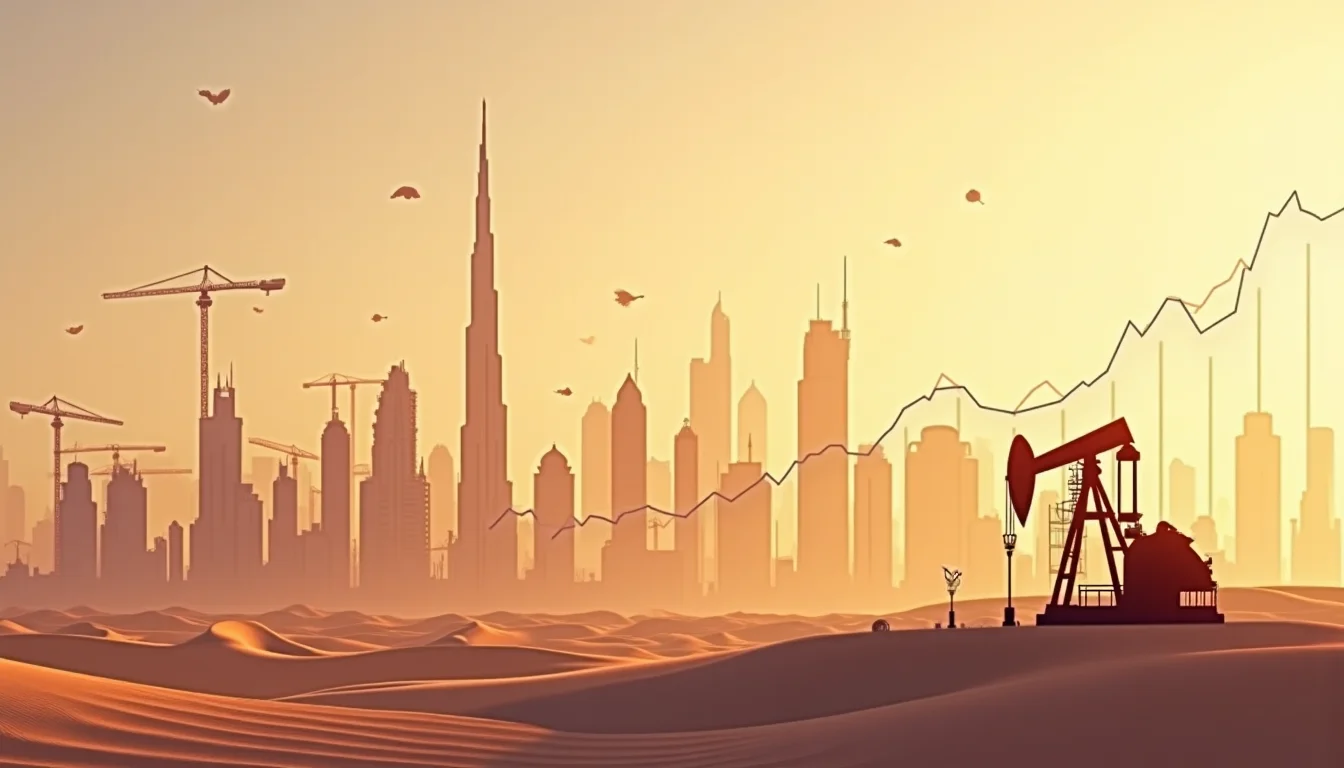
The current escalation of the Iran conflict and resulting oil market disruptions are creating conditions strikingly reminiscent of the petrodollar-fueled property speculation that devastated Dubai between 2004 and 2009. As Iranian attacks target UAE infrastructure, including the recent strike on Fujairah's oil terminal, the region's property markets are experiencing renewed speculative interest — a pattern that historically precedes catastrophic bubbles.
The Petrodollar Recycling Engine Restarts
Dubai's original property bubble was fundamentally driven by the recycling of oil wealth during a period of elevated energy prices and regional tensions. Between 2004 and 2008, property prices surged 226% as Gulf states channeled oil revenues into real estate development. Today's Iran war has pushed oil prices higher while simultaneously creating flight-to-safety capital flows into perceived stable Gulf markets, particularly the UAE.
The mechanism remains identical: geopolitical instability generates both the capital (through higher oil revenues) and the motivation (through flight-to-safety flows) that fuel property speculation. Dubai's post-2020 property boom, which has seen prime residential prices increase over 80% since the pandemic low, demonstrates that the fundamental speculative infrastructure remains intact.
Infrastructure Vulnerability and Speculative Confidence
The Dubai bubble's collapse was precipitated not just by global financial crisis, but by the realization that the emirate's economic model was fundamentally dependent on external confidence and capital flows. The recent attack on Fujairah — a critical oil terminal — reveals the same underlying vulnerability that investors systematically underestimated in 2008.
During the original bubble, Dubai World's $59 billion debt burden became unsustainable when global liquidity dried up, requiring a $10 billion bailout from Abu Dhabi. The current property revival occurs against a backdrop of rising global interest rates, with 30-year Treasury yields reaching 5.03% and mortgage rates climbing to 6.52%, creating similar liquidity constraints that could expose over-leveraged positions.
The Prestige Project Syndrome Persists
Dubai's bubble was characterized by increasingly grandiose projects designed to capture global attention and capital — the Palm Jumeirah, Burj Khalifa, and World Islands developments. Current regional property markets display identical patterns, with Saudi Arabia's NEOM project and UAE's continued expansion of artificial islands representing the same "build it and they will come" mentality that proved disastrous in 2009.
The fundamental error remains unchanged: treating real estate development as a marketing exercise rather than economic fundamentals. When external demand evaporated in 2008-2009, Dubai's property prices fell approximately 50%, with some developments declining over 60%.
Warning Signs in Current Market Structure
Several indicators suggest current Gulf property markets are replicating Dubai's pre-2009 vulnerabilities. The concentration of speculative capital in luxury segments, heavy reliance on off-plan sales, and the proliferation of investment visa programs all mirror the structural weaknesses that amplified Dubai's collapse.
Most concerning is the continued dependence on external validation and capital flows. Just as Dubai's bubble required constant influxes of international buyers and investors, current regional property booms remain vulnerable to shifts in global risk appetite — particularly relevant given the Federal Reserve's restrictive monetary policy stance amid ongoing geopolitical uncertainty.
Read the full Dubai Property Bubble (2004-2009) entry in the Bubblepedia Encyclopedia
Warning Signs: Speculative Excess Indicators Mirror 2007-2008 Peak
Current Gulf property markets are displaying the same speculative excess indicators that preceded Dubai's 2009 collapse, suggesting investors may be repeating historical mistakes. Off-plan sales in Dubai reached 68% of total transactions in Q3 2024, matching the dangerous 71% peak recorded in late 2007. This metric historically signals when speculation overtakes genuine housing demand, as buyers purchase properties before construction begins based purely on anticipated price appreciation.
The investor-to-end-user ratio has similarly reached concerning levels. In Dubai's prime districts, investor purchases now account for 82% of transactions, compared to 85% in 2008 just months before the crash. Meanwhile, rental yields have compressed to 3.2% in premium areas, below the 4.1% threshold that historically indicates overvaluation. These yields are particularly troubling given that Dubai's 2008 bubble burst when yields fell below 3%.
Construction crane counts provide another alarming parallel. Dubai currently has 847 active construction cranes, approaching the 923 peak recorded in Q4 2007. This construction frenzy is being financed through similar channels as the previous bubble: 67% of new developments are funded through off-plan sales deposits, creating the same precarious financing structure that amplified the 2009 collapse when buyer confidence evaporated.
The speculation is extending beyond Dubai to previously stable markets like Abu Dhabi and Riyadh, where foreign investment has increased 340% and 280% respectively since 2022. This geographic spread mirrors how the 2008 bubble expanded from Dubai to other Gulf capitals before the systematic collapse, suggesting current conditions may produce an even broader regional downturn when the cycle inevitably reverses.