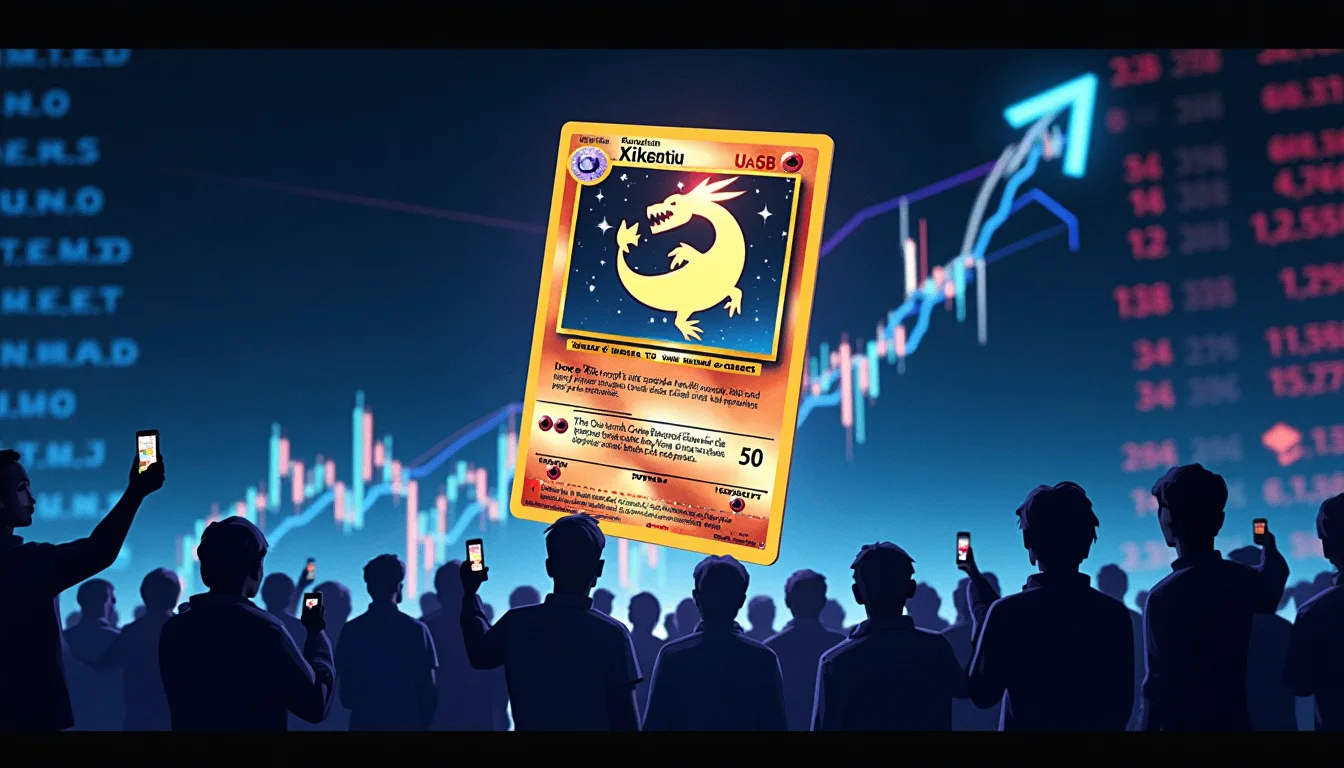
According to WealthWatchPro, prediction market volumes have faced scrutiny during the 2026 FIFA World Cup period, with activity levels on various platforms recalling earlier episodes of event-driven retail speculation. The pattern is familiar to anyone who studied what happened to a cardboard rectangle featuring a fire-breathing dragon between 2019 and 2022.
The Pokémon card mania of 2020–2022 was not simply a quirk of pandemic boredom. It was a structurally coherent speculative episode — complete with a displacement narrative, a democratising technology, a celebrity accelerant, and an inevitable correction. Understanding its anatomy helps explain why today's prediction market surge, sports betting boom, and collectibles enthusiasm deserve more analytical attention than they typically receive.
The Real Innovation That Made It Credible
Every durable speculative bubble begins with something genuinely new. The dot-com boom had the commercial internet. The US housing bubble had financial engineering that appeared to eliminate credit risk. The Pokémon card mania had two legitimate innovations working in its favour.
First, professional grading services — principally PSA (Professional Sports Authenticator) — had transformed an opaque, trust-dependent hobby market into something resembling a standardised financial instrument. A PSA 10 grade on a card meant the same thing to a buyer in Tokyo as it did to one in Toronto. This standardisation was genuinely valuable: it reduced information asymmetry, created a price discovery mechanism, and allowed cards to function as transferable stores of value in a way they never had before.
Second, the secondary market had gone digital and liquid. Platforms like eBay and specialised card marketplaces created real-time price transparency and near-frictionless trading. A card could be bought, graded, and resold within weeks. This liquidity was new — and it was real.
The Logan Paul Moment and Social Amplification
The displacement narrative — cards as alternative investments — was already circulating among serious collectors when the pandemic arrived in early 2020. What followed was a social amplification event with few modern parallels in the collectibles space.
YouTuber Logan Paul's viral Pokémon card opening videos in 2020 introduced millions of viewers to the market simultaneously. This was not advertising in any conventional sense. It was participatory entertainment that carried an implicit price signal: these objects are worth something, people are paying attention, and you are missing out. The format — unboxing, revealing, reacting — was engineered for emotional engagement in ways that a brokerage advertisement could never replicate.
This is the social media amplification loop that now characterises modern speculative episodes across asset classes. The mechanism is identical whether the underlying asset is a trading card, a prediction market contract on a World Cup semifinal, or a meme coin. A credible displacement narrative is identified by early participants; social platforms amplify it to a mass audience; late entrants arrive not because they understand the asset but because they fear missing a trend they have watched others profit from.
Manufactured Scarcity and the Grading Bottleneck
One structural feature of the Pokémon card bubble that has direct relevance to today's prediction market surge is the role of artificial scarcity in sustaining price levels beyond fundamental justification.
Prediction markets carry an analogous dynamic. Liquidity on specific event contracts can be thin, bid-ask spreads wide, and settlement mechanisms opaque to new participants. The surge in World Cup betting volumes does not necessarily reflect sophisticated probability assessment — it reflects the same impulse that drove buyers to pay record prices for a piece of cardboard: the belief that others will pay more, and that the infrastructure of the market confers legitimacy on the speculation.
For broader macro context on how speculative episodes in alternative markets interact with mainstream financial conditions, the pattern of retail capital rotating through successive novelty assets — crypto, NFTs, meme stocks, collectibles, and now prediction markets — is one of the defining features of the post-2020 financial environment.
The Correction and What It Revealed
By 2023, the PSA 10 Charizard that had sold at peak had fallen substantially in value — a significant decline from its high. This correction was not caused by any fundamental change in the card's scarcity or cultural significance. What changed was the composition of the buyer pool.
When social amplification fades and new entrants stop arriving, the marginal buyer disappears. The remaining holders are left with an asset whose price was set by peak-cycle enthusiasm rather than by any durable assessment of intrinsic value. This is the universal structure of speculative bubbles, from Read the full The Pokémon Card Bubble — Nostalgia, Speculation, and the $10 Billion Collectibles Mania entry in the Bubblepedia Encyclopedia to the dot-com collapse of 2000 to the NFT market implosion of 2022.
The Pokémon card episode is also instructive for what it reveals about the role of nostalgia as a speculative accelerant. Cards that carried childhood memories for a generation of buyers born in the 1990s carried an emotional premium that made rational price assessment genuinely difficult. Buyers were not simply purchasing an asset — they were purchasing a relationship with a version of themselves. This emotional dimension does not disappear when prices fall, but it does not prevent prices from falling either.
What the Playbook Looks Like in 2026
The displacement-narrative structure identified in the Pokémon card bubble is visible across several current market phenomena. Prediction markets represent a genuine financial innovation — the ability to trade on real-world outcomes with transparent pricing and decentralised participation is meaningfully new. The World Cup surge in prediction market volumes reflects both that genuine utility and the same social amplification dynamic that drove card prices to elevated levels in 2021.
The question worth asking — one that analysts rarely ask during the amplification phase — is how much of current volume reflects informed probability assessment and how much reflects the fear of missing a trend. History suggests the ratio shifts dramatically as a speculative episode matures, and the shift is only visible in retrospect.
Investors and analysts tracking speculative cycles across asset classes can find current risk indicators at Bubblepedia's bubble risk dashboard, and a broader survey of historical episodes at the full bubble encyclopedia.
The Pokémon card bubble was not a story about irrationality. It was a story about a genuine innovation — standardised grading, digital liquidity — that attracted rational early participants, then drew in a wave of socially amplified late entrants who paid prices the fundamentals could not support. That sequence does not require cardboard and nostalgia to repeat itself. It requires only a new displacement narrative, a social amplification mechanism, and enough new participants to sustain prices until the music stops.
See also: Meme Stock Bubble 2021 vs Meme Coin Bubble 2021 — Retail Speculation Compared.