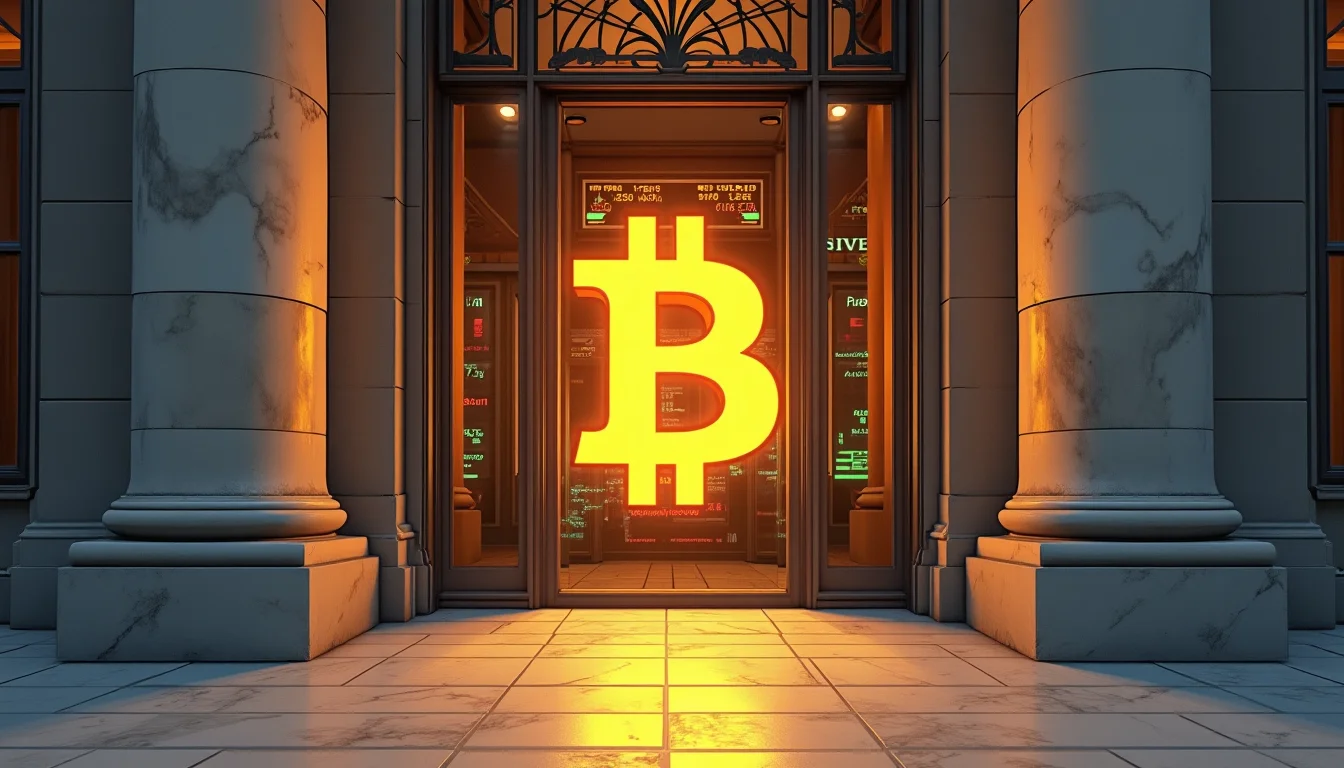
According to Bloomberg Markets, the London Stock Exchange is preparing to roll out tokenized stocks as part of a deliberate push into digital assets — a development that, in isolation, reads as measured institutional progress. In the context of where Bitcoin's fourth halving cycle currently sits, it reads as something else: the arrival of a legitimacy narrative precisely when one is most needed.
Halving cycles have a well-documented structure. The supply shock occurs. Miners absorb pain. Prices eventually rise, often with a lag. Then, somewhere in the second year of the cycle, a story emerges — not just about scarcity, but about adoption, about infrastructure, about the world finally taking crypto seriously. That story becomes the fuel for the blow-off phase. The question serious analysts should be asking right now is whether the LSE announcement is that story arriving on cue, or whether it is genuine structural progress that happens to coincide with cycle timing.
What makes this cycle structurally distinct is the macro backdrop. Global bond yields have returned to their highest levels since 2008, with oil price pressures from escalating tensions in the Strait of Hormuz adding an inflationary dimension that complicates the Federal Reserve's path. Evercore ISI has characterised the current Fed posture as "inflation first" — meaning rate cuts that historically provided tailwinds for risk assets are not arriving on the schedule that halving-cycle models assumed. This is not a small variable. The 2020–2021 cycle's extraordinary gains were substantially amplified by zero interest rate policy and quantitative easing. That environment no longer exists.
When Legitimacy Arrives at the Peak
The LSE tokenization announcement fits a pattern that students of financial history will find familiar. Major traditional financial institutions tend to enter new asset classes not at the beginning of their development, but near the end of the speculative phase — when the risk of being left out finally outweighs the reputational risk of participation. This is not cynicism; it is an observable regularity.
Consider the Bitcoin First Bubble (2013), in which prices rose from very low levels to over a thousand dollars before collapsing sharply in the wake of Mt. Gox's failure. The period immediately preceding that peak was characterised by a surge in mainstream media coverage, early merchant adoption announcements, and the first serious discussions of Bitcoin as a legitimate store of value. Each of those developments was real. None of them were wrong. And yet they arrived precisely as the market was transitioning from price discovery to speculative excess. The narrative of legitimacy and the peak of the bubble were not in conflict — they were the same event, viewed from different angles.
The LSE is not Mt. Gox. Tokenized stocks are not the same product as unregulated exchange-traded Bitcoin in 2013. But the structural dynamic — a credentialed institution lending legitimacy to a digital asset thesis at a moment of cycle maturity — deserves scrutiny rather than celebration. Our current bubble risk indicators are tracking several signals relevant to this question.
What the Macro Overlay Changes
The intersection of halving-cycle positioning with a genuine macro stress environment is the feature that most distinguishes September 2026 from prior cycle peaks. In 2017, the macro backdrop was benign. In 2021, it was actively stimulative. Today, crypto market cycle data must be read against a backdrop of sovereign yields at multi-decade highs, an oil price shock in progress, and a Federal Reserve that has explicitly prioritised inflation control over growth support.
This creates a genuine analytical problem for halving-cycle models. Those models are derived from a small sample — three prior cycles — and none of those cycles occurred in a rising-rate, high-yield environment. Extrapolating from three data points to a confident prediction was always intellectually fragile. Doing so while ignoring a materially different macro regime is more fragile still.
"This is an inflation-first Fed right now" — Evercore ISI's Krishna Guha, characterising Federal Reserve policy priorities as of September 2026, in remarks cited by Bloomberg Markets.
That characterisation matters for crypto in a specific way. Bitcoin's narrative has bifurcated: it is simultaneously pitched as a risk asset (correlated with equities and liquidity conditions) and as an inflation hedge (inversely correlated with fiat credibility). In a high-inflation, high-rate environment, both narratives face headwinds simultaneously. Risk assets sell off as rates rise. Inflation hedges face competition from real yields turning positive. The LSE tokenization story offers a third narrative — utility and adoption — but utility narratives have historically been the last refuge of bull markets running out of simpler arguments.
What Comes Next in the Cycle
None of this constitutes a prediction that a crash is imminent. Halving cycles have surprised to the upside before, and the structural reduction in new supply is a genuine fundamental. Institutional adoption through regulated products — spot ETFs, tokenized securities, custodial infrastructure — does represent a different market structure than existed in 2013 or even 2017. The full bubble encyclopedia documents numerous cases where assets that were genuinely overvalued remained overvalued for longer than sceptics expected.
What the historical record does consistently show is that the arrival of major institutional legitimacy signals — particularly from traditional financial infrastructure like stock exchanges — has more often marked the late stage of a speculative cycle than its early stage. That does not make the LSE announcement bearish in isolation. It makes it a data point worth weighting carefully alongside cycle timing, macro conditions, and the persistent human tendency to mistake the story of an asset for the asset itself.
For a direct comparison of how infrastructure narratives played out across different speculative cycles, see Dot-Com Bubble vs. AI Infrastructure (2024). The pattern of credentialed institutions arriving late to significant technologies is not unique to crypto — and its resolution has rarely been comfortable for those who arrived last.