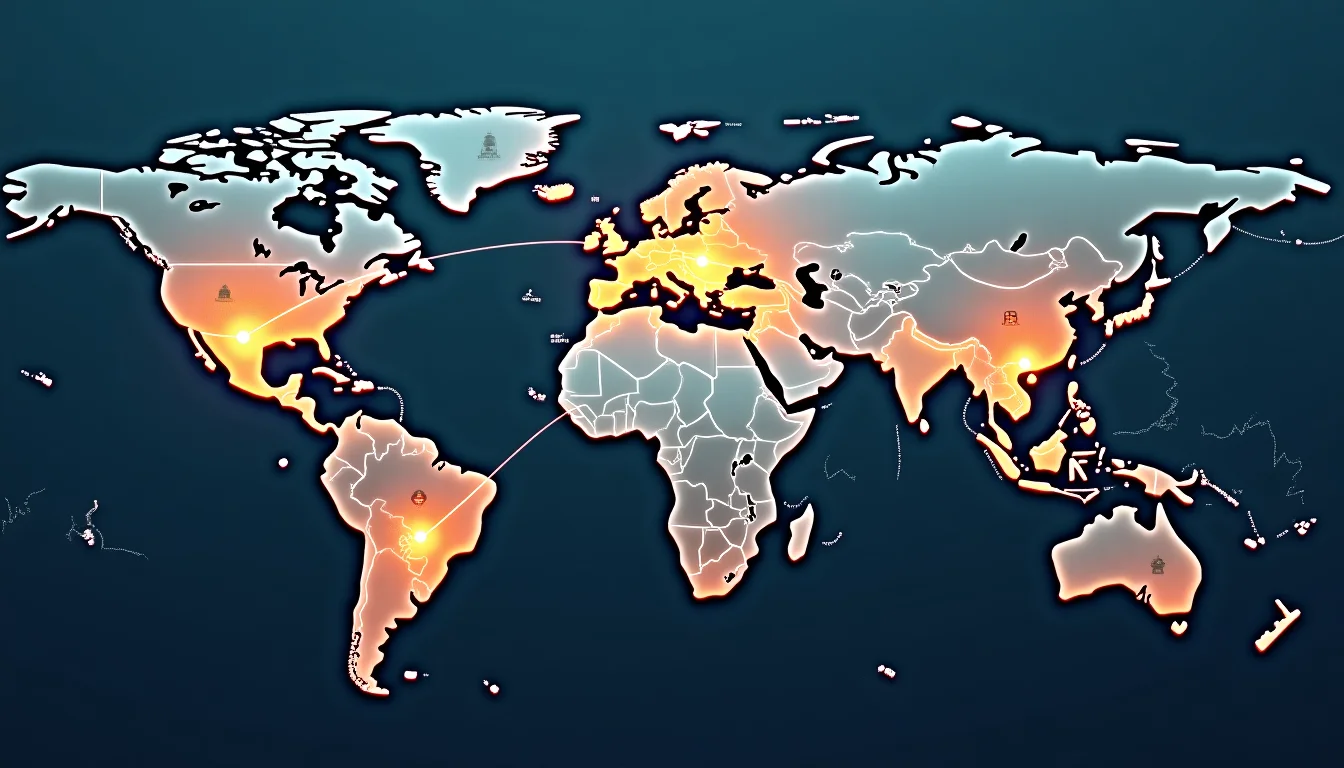
The Anatomy of Modern Supply Shock Transmission
The ongoing Iran conflict has unleashed a supply shock transmission mechanism that bears striking resemblance to the catastrophic oil crisis of 1979. As Representative Ro Khanna observed, "lowering the cost of fertilizer and reopening the Strait of Hormuz are critical for the US economy," highlighting how a single geopolitical chokepoint now threatens multiple sectors simultaneously. The Strait of Hormuz, through which roughly 21% of global petroleum liquids transit, has become the modern equivalent of the Suez Canal during the 1973 crisis. However, today's supply chains are far more interconnected than those of the 1970s, creating amplification effects that dwarf historical precedents. The current crisis demonstrates how energy disruptions now cascade through fertilizer production, food systems, and manufacturing networks within days rather than months.European Market Fragmentation Echoes 1979 Patterns
European equities have faced significant pressure, with the Euro Stoxx 50 declining 1.02% as divergent monetary policies create a 77 basis point yield advantage for USD assets. This fragmentation mirrors the European response to the 1979 oil shock, when individual nations pursued contradictory policies that amplified rather than mitigated the crisis. The Federal Reserve's positioning relative to European central banks has created capital flow distortions reminiscent of the dollar strength that characterized the early 1980s. However, unlike the Volcker era's deliberate policy coordination, today's divergence appears accidental—a product of different inflation trajectories rather than strategic design. This lack of coordination amplifies supply shock transmission by preventing effective multilateral responses. Germany's industrial sector, heavily dependent on energy imports, faces particular vulnerability. Manufacturing output has contracted 2.8% year-over-year as energy costs surge, echoing the industrial recession that followed the 1979 crisis. The similarity extends to policy responses: European governments are implementing energy subsidies that mirror the price controls attempted during the Carter administration, with similarly distortive effects on market signals.Asian Manufacturing Networks Under Strain
The supply shock has exposed critical vulnerabilities in Asian manufacturing networks that parallel the industrial disruptions of 1979. China's position as both a major energy importer and global manufacturing hub creates unique transmission risks. As Khanna noted, "China is just watching" the Iran conflict, benefiting from Western distraction while positioning itself to exploit supply chain disruptions. South Korea's chemical industry, which relies heavily on Middle Eastern feedstocks, has seen production costs surge 34% since the conflict began. This mirrors the petrochemical industry disruptions of 1979, when similar cost pressures triggered a wave of plant closures and industrial restructuring. The difference lies in scale: today's integrated supply chains mean that disruptions in Korean chemical production immediately impact electronics manufacturing across Southeast Asia. Japan's experience offers the clearest parallel to 1979. Energy import costs now consume 4.2% of GDP, approaching the 4.8% peak reached during the second oil shock. However, Japan's current account position is far weaker than in 1979, with a structural deficit of 1.1% of GDP limiting the country's ability to absorb external shocks. This vulnerability has forced the Bank of Japan into defensive currency interventions that echo the unsuccessful attempts to maintain fixed exchange rates during the 1970s crisis.Fertilizer Crisis Amplifies Food System Vulnerabilities
The current supply shock has revealed dangerous dependencies in global fertilizer markets that create food security risks exceeding those of 1979. Russia and Belarus account for roughly 40% of global potash exports, while Iran supplies critical phosphate intermediates. The conflict has disrupted these flows precisely when spring planting seasons demand peak fertilizer application. Global fertilizer prices have surged 67% since the conflict began, approaching the inflation-adjusted levels reached during the 1973-74 crisis. However, today's agricultural system operates with far lower inventory buffers than in the 1970s. Just-in-time supply chains mean that fertilizer shortages translate into reduced crop yields within a single growing season, rather than being absorbed by strategic reserves. India's wheat production, already stressed by climate factors, faces additional pressure from fertilizer shortages that could reduce yields by 8-12%. This mirrors the cascading food crises that followed the 1979 oil shock, when energy-intensive agricultural inputs became prohibitively expensive. The similarity extends to policy responses: India has implemented fertilizer export restrictions that echo the export controls attempted during the 1970s food crisis.Financial Market Transmission Mechanisms
The supply shock has created financial transmission mechanisms that amplify real economic disruptions. Commodity futures markets now display the same backwardation patterns that characterized the 1979 crisis, with near-term contracts trading at substantial premiums to longer-dated futures. This price structure reflects genuine supply constraints rather than speculative positioning, making the disruptions more persistent than purely financial bubbles. Energy sector credit spreads have widened to levels not seen since the 2020 crisis, as investors price in geopolitical risk premiums. However, unlike previous energy crises, today's market structure includes significant exposure through passive investment vehicles and algorithmic trading systems that can amplify price movements. Exchange-traded funds holding energy commodities have experienced unprecedented inflows, creating potential for forced selling if redemptions accelerate. The interaction between supply shocks and monetary policy creates additional complications absent in 1979. Central banks face the same impossible choice between fighting inflation and supporting growth, but quantitative easing programs have created asset price dependencies that constrain policy responses. The Federal Reserve's balance sheet, still expanded from pandemic interventions, limits the aggressive tightening that characterized the Volcker response to the 1979 crisis.Structural Vulnerabilities Exceed 1979 Precedents
Today's global economy displays structural vulnerabilities that exceed those present during the 1979 oil crisis. Supply chain concentration has increased dramatically, with single points of failure capable of disrupting multiple industries. The Strait of Hormuz closure would affect not only energy markets but also the semiconductor supply chains that underpin modern economic activity. Financial system interconnectedness creates additional amplification mechanisms absent in 1979. Derivative markets now link energy prices to credit conditions through complex instruments that can trigger forced deleveraging. The shadow banking system's exposure to commodity financing means that supply shocks can rapidly translate into credit contractions, as occurred during the 2008 crisis but with energy rather than housing as the trigger. The policy response toolkit has also been compromised by previous crisis interventions. Interest rates remain near historical lows despite rising inflation, while government debt levels constrain fiscal responses. This combination of limited monetary and fiscal space means that supply shock responses must rely more heavily on market mechanisms, potentially amplifying rather than dampening economic disruptions.See also: 1970s Oil Crisis vs 2020s Energy Transition — Two Commodity Supercycles.