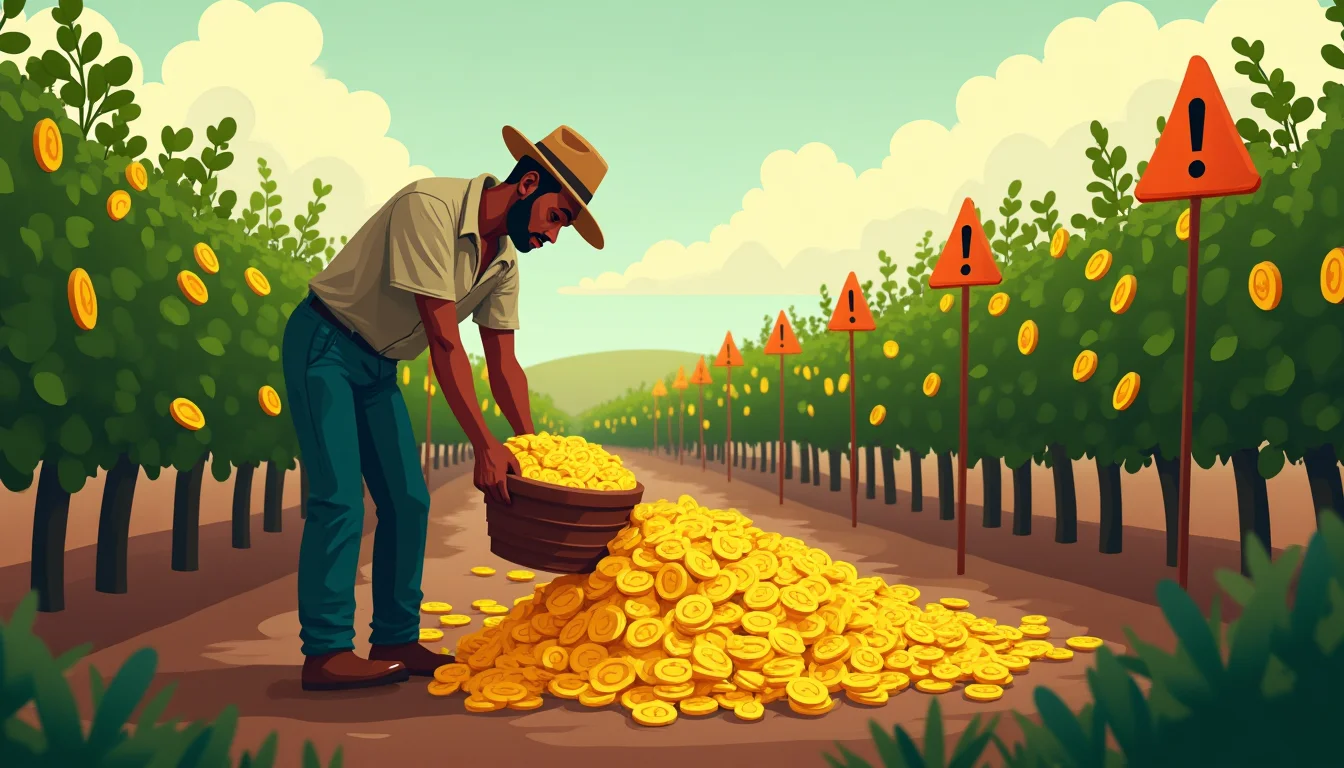
Decentralised finance protocols are once again advertising high annualised percentage yields through governance token distributions, reviving the yield farming strategies that defined the 2020 DeFi Summer bubble. According to Zero Hedge, global food price inflation concerns are driving investors toward alternative yield sources, including cryptocurrency protocols that promise returns through token emissions rather than genuine economic activity.
The Innovation That Justified Initial Gains
The fundamental innovation behind DeFi — automated smart contracts replacing traditional financial intermediaries — represented a genuine technological breakthrough. When Compound launched its COMP token distribution in 2020, it introduced liquidity mining as a mechanism to bootstrap network effects without requiring centralised marketing or customer acquisition. Early adopters could earn substantial yields on stablecoin deposits while simultaneously receiving COMP tokens worth additional returns.
This displacement narrative held genuine merit. Traditional banks offered near-zero interest rates on deposits while charging significant spreads on loans. DeFi protocols demonstrated they could eliminate much of this intermediation cost through automated market makers and algorithmic lending pools. The composability of these "money legos" allowed sophisticated users to stack yields across multiple protocols, creating complex but profitable strategies.
Similar to how the internet genuinely revolutionised commerce before the dot-com bubble's excesses, decentralised finance solved real problems in financial infrastructure. Cross-border payments, 24/7 trading, and programmable money represented clear improvements over legacy systems.
From Innovation to Speculation
The transformation from utility to speculation followed the classic bubble pattern. Total value locked in DeFi protocols exploded dramatically following COMP's launch, driven primarily by yield farming rather than organic demand for decentralised financial services. New protocols launched weekly, often as direct forks of existing code, competing solely on token emission rates rather than technological innovation.
Governance tokens became the primary value proposition, with yields frequently exceeding substantial APY rates through circular tokenomics. Users borrowed assets to farm tokens, then used those tokens as collateral to borrow more assets, creating leveraged exposure to token prices rather than the underlying protocol economics. The Read the full DeFi Summer and Yield Farming Bubble (2020) entry in the Bubblepedia Encyclopedia documents how this recursive borrowing amplified both gains and eventual losses.
Smart contract exploits became increasingly common as protocols rushed to market without adequate security audits. Major hacks occurred during this period, while flash loan attacks demonstrated how complex DeFi interactions could be manipulated for profit. These technical vulnerabilities, combined with unsustainable token emission schedules, began undermining confidence in the sector's long-term viability.
Current Market Parallels
Today's DeFi landscape exhibits troubling similarities to 2020's pre-collapse conditions. New protocols are again advertising high yields through governance token distributions, while technological tensions between major economies drive demand for decentralised alternatives to traditional finance.
The current environment differs in scale but not substance. Where 2020 saw billions flowing into experimental protocols, today's market shows retail investors seeking yield alternatives amid persistent inflation. Food price concerns and energy market volatility are pushing savers toward any asset class promising real returns, regardless of underlying risk.
Protocol governance tokens trading at significant discounts from their peaks now offer the appearance of "value" investing, similar to how internet stocks seemed cheap in early 2001. However, the fundamental question remains unanswered: can decentralised finance generate sustainable returns without circular token incentives?
The Sustainability Question
Most current DeFi yields remain subsidised through token emissions rather than generated by genuine economic activity. Lending protocols pay depositors more than they collect from borrowers, making up the difference through governance token distributions that dilute existing holders. This model requires continuous growth in new participants to remain viable — a characteristic shared with classic Ponzi schemes.
Unlike 2020's retail-driven mania, institutional participation has increased significantly. However, sophisticated investors primarily seek short-term arbitrage opportunities rather than long-term protocol adoption. This creates additional volatility as large positions can exit rapidly during market stress.
The current bubble risk indicators suggest caution is warranted. While DeFi's core innovations remain valuable, the return of unsustainable yield farming suggests the sector has not learned from its previous excesses. Smart contract risk persists, regulatory clarity remains limited, and token economics continue prioritising short-term growth over long-term sustainability.
Investors should distinguish between DeFi's legitimate technological contributions and the speculative excess that periodically surrounds them. The protocols that survive future downturns will likely be those generating real economic value rather than relying on perpetual token subsidies to attract capital.