A New Wrapper for an Old Pattern
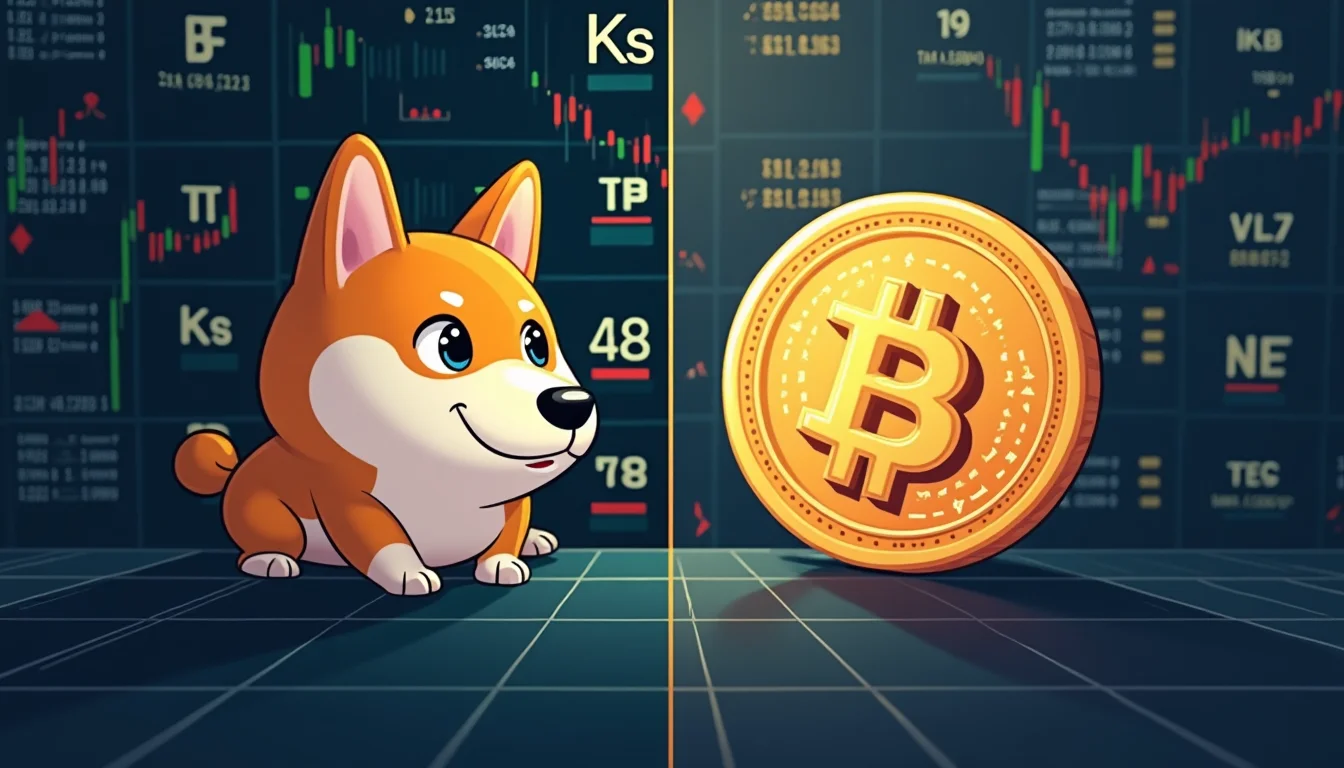
Since the U.S. Securities and Exchange Commission approved the first spot Bitcoin exchange-traded funds in January 2024, ETF structures have become the dominant channel through which mainstream capital reaches crypto markets. What began as a mechanism to bring Bitcoin into retirement accounts and brokerage platforms has, in the two years since, expanded well beyond Bitcoin and Ethereum. Issuers have filed for, and in some cases launched, exchange-traded products tracking Solana, XRP, and — most tellingly — Dogecoin, the joke cryptocurrency that once traded almost entirely on internet humor and celebrity tweets.
This is worth pausing on. An ETF is, at its core, a trust and legitimacy mechanism. It signals to a financial advisor, a pension trustee, or a retail investor scrolling a brokerage app that an asset has cleared enough regulatory and custodial hurdles to be treated as a normal, if volatile, portfolio holding. When that wrapper is applied to an asset whose origin story is an internet meme, the wrapper does not change what the asset is — it changes who can now access it, and how respectable buying it feels.
What the Meme Coin Bubble Already Showed
According to the Bubblepedia The Meme Coin Bubble — Dogecoin, Shiba Inu, and the Joke That Became a $90 Billion Mania entry, Dogecoin and Shiba Inu — cryptocurrencies with no underlying technical innovation — reached a combined peak market capitalization exceeding $90 billion in 2021 before collapsing more than 90 percent. That mania was driven by three forces: Elon Musk's social media activity, retail investors' preference for cheap, high-unit-count tokens (the so-called unit-bias effect, where a coin priced at fractions of a cent feels more attainable than a $60,000 Bitcoin), and a flood of pandemic-era stimulus liquidity looking for a home.
None of those three drivers required institutional participation. The 2021 meme coin bubble was, almost definitionally, a retail phenomenon — proof that speculative mania does not need Wall Street's blessing to reach tens of billions of dollars in valuation. The question the current ETF cycle raises is what happens when that same psychological pattern gets a professional distribution channel layered on top of it.
Institutional Flow as Narrative, Not Just Capital
Financial commentary often treats institutional ETF inflows as a stabilizing force — the implicit argument being that professional capital allocators bring discipline, due diligence, and longer holding periods that retail-driven manias lack. There is some truth to this for large-cap assets with genuine institutional research coverage. But the extension of ETF structures into meme coins complicates that narrative considerably. A Dogecoin ETF does not import fundamental analysis into a token whose value proposition remains, by design, a joke about currency itself. It imports distribution.
This is the same dynamic that recurs across speculative history: legitimizing infrastructure arrives not because the underlying asset has changed, but because demand has grown large enough that intermediaries — brokers, custodians, index providers — find it profitable to serve it. The infrastructure follows the mania; it does not precede or restrain it. Bubblepedia's broader encyclopedia documents this pattern across episodes from the 1720s onward — new financial vehicles built specifically to channel capital toward assets that would otherwise be difficult for mainstream investors to access.
The risk in the current cycle is not that ETFs make meme coins more dangerous in isolation, but that they make speculative participation feel procedurally normal — filed with the SEC, custodied by regulated entities, ticker-symbol accessible — while the underlying volatility and lack of fundamental value remain unchanged.
What the Data Can and Cannot Tell Us
Precise, verified figures on how much capital has flowed into meme-coin-linked ETFs specifically are not yet available in a form suitable for citation here, and readers should treat any round numbers circulating in crypto media with caution until confirmed by fund issuers' own disclosures or SEC filings. What can be said with confidence is structural: the regulatory pathway that took roughly a decade to open for Bitcoin (from the first ETF applications in 2013 to approval in 2024) has compressed dramatically for follow-on assets, with meme coin products reaching market in a fraction of that time. That compression itself is a signal worth tracking — it suggests competitive pressure among issuers to capture retail attention is now outweighing the historical caution regulators once applied to novel or narrative-driven assets.
Why It Matters
For readers assessing crypto market cycle risk broadly, the lesson from the meme coin episode is not that Dogecoin or Shiba Inu were uniquely irrational — it is that speculative assets with no cash flow, no earnings, and no clear utility can sustain tens of billions of dollars in valuation purely on attention and access. ETF wrappers lower the friction of access further. Investors evaluating current bubble risk indicators should weight institutional flow data alongside, not instead of, fundamental valuation questions — a framework equally applicable to crypto market cycle data tracking exchange volumes and derivatives positioning across the broader digital asset space.
The parallel between meme stock and meme coin manias is instructive here too: both showed that democratized access to speculative instruments — whether through commission-free trading apps or ETF wrappers — tends to accelerate mania formation rather than temper it. Institutional infrastructure has proven remarkably good at scaling access to speculative assets. It has proven far less good, historically, at scaling investor discipline alongside it.
The Open Question
Whether the current wave of altcoin and meme-linked ETF filings represents a durable maturation of crypto markets or simply a more efficient delivery mechanism for the next speculative cycle remains genuinely uncertain. The historical timeline of financial manias suggests that legitimizing wrappers arrive at every stage of a bubble's life cycle — sometimes marking early institutional validation of a genuinely useful innovation, and sometimes marking the final broadening of access before a mania exhausts its pool of new buyers. Distinguishing between the two in real time has never been easy, and nothing about ETF technology changes that underlying difficulty.