
Behavioural Finance — The Psychology of Bubbles
Behavioural finance challenges the efficient market hypothesis by documenting the systematic cognitive biases — overconfidence, herding, anchoring, loss aversion — that drive rational individuals to participate in collectively irrational markets. From Kahneman and Tversky's prospect theory to Shiller's narrative economics, this body of work provides the most coherent explanation for why bubbles recur despite centuries of cautionary history.
By Twin · @TwinTowerCity·
Key Takeaways
- →Behavioral finance emerged in the 1970s-1980s through Kahneman and Tversky's research, revolutionizing understanding of market psychology.
- →Systematic cognitive biases including overconfidence, herding behavior, and anchoring cause rational individuals to create collectively irrational markets.
- →Market bubbles typically collapse when reality conflicts with prevailing narratives that sustained irrational investor behavior patterns.
- →Behavioral finance research demonstrates that efficient market hypothesis fails to explain recurring bubble formation despite historical warnings.
- →Understanding psychological drivers of bubbles remains crucial since cognitive biases persist regardless of investor education or experience.
Peak Year
2000
Crash Year
Ongoing
Location
Global (academic)
Asset Class
Multi-Asset
Severity
The Psychology of Bubbles — Why Rational People Create Irrational Markets
The most puzzling aspect of financial bubbles is not their eventual collapse — gravity eventually claims all objects tossed too high — but rather why intelligent, well-informed individuals repeatedly create them. From the tulip merchants of 1637 Amsterdam to the cryptocurrency evangelists of 2021, each generation of speculators demonstrates the same cognitive patterns, as if following an invisible psychological script written by evolution rather than education.
The answer lies in behavioural finance, the field that emerged in the 1980s to explain why markets often behave in ways that traditional economic theory deemed impossible. Nobel laureates Daniel Kahneman and Amos Tversky first demonstrated that humans systematically deviate from rational decision-making in predictable ways. When these individual biases aggregate across thousands of market participants, they create the collective irrationality that defines speculative manias.
The Minsky-Kindleberger Model Revisited
The classic five-stage bubble model developed by economist Hyman Minsky and refined by Charles Kindleberger provides the structural framework, but behavioural finance reveals the psychological machinery that powers each stage. Rather than viewing these phases as merely descriptive, we can now understand them as predictable manifestations of cognitive biases operating at scale.
The displacement stage begins when some genuine innovation or policy change creates new investment opportunities. The availability heuristic — our tendency to judge probability by how easily examples come to mind — explains why early participants overweight recent positive news while discounting historical warnings. The internet in 1995 was genuinely formative, making it easy to recall success stories while forgotten failed technologies remained buried in memory.
During the boom phase, the representativeness bias takes control. Investors extrapolate from small samples, assuming that early winners represent the entire category. When Netscape's IPO rose 108% on August 9, 1995, investors used this single data point to represent all internet stocks. This bias explains why bubble participants ignore base rates — the historical frequency of similar ventures failing — in favour of vivid recent examples.
Euphoria marks the psychological peak, driven by overconfidence and the illusion of control. Participants believe they can time their exit perfectly, that their analysis is superior, and that "this time is different." The overconfidence bias peaks here because rising prices provide apparent confirmation of superior judgment, creating a feedback loop of increasing self-assurance.
Distress begins when reality intrudes, but loss aversion — the psychological principle that losses feel roughly twice as painful as equivalent gains — causes many participants to hold deteriorating positions rather than crystallize losses. This behavioral pattern explains why bubble deflation often occurs in stages rather than sudden crashes, as investors repeatedly convince themselves that temporary setbacks will reverse.
The final revulsion stage sees the availability heuristic operating in reverse. Recent losses are now most easily recalled, leading to systematic undervaluation of assets and missed opportunities for contrarian investors. The same cognitive mechanism that fueled the bubble's rise now powers its overcorrection.
Herding and Social Proof
Robert Cialdini's principle of social proof — we determine correct behaviour by observing what others do — operates with particular force in financial markets where uncertainty runs high. When investors lack confident private information, following the crowd becomes individually rational even as it creates collectively irrational outcomes.
Informational cascade theory, developed by economists Abhijit Banerjee and Douglas Fudenberg in the 1990s, formalizes this phenomenon. Each investor assumes that others possess relevant information, making it rational to ignore private signals and follow crowd behavior. The tragedy lies in the fact that everyone may be following everyone else, with no one actually possessing the superior information that all assume exists.
"The idea that a few people can be right and the market wrong is intellectually appealing but practically dangerous. When surrounded by intelligent people all reaching the same conclusion, the social pressure to conform becomes almost irresistible, even when private information suggests otherwise." — Financial behavioural researcher examining dot-com era decision-making
Modern technology has amplified herding behavior through social media platforms that serve as digital versions of 1720's coffeehouse speculation. During the GameStop saga of January 2021, Reddit's WallStreetBets community created real-time informational cascades, where users rapidly adopted positions based on others' posts rather than independent analysis. Similarly, "Crypto Twitter" during the 2020-2021 bull market functioned as a continuous social proof mechanism, where the loudest voices attracted the largest followings regardless of analytical accuracy.
The meme stock phenomenon represents herding behavior in its purest form. Participants explicitly acknowledged that fundamental analysis was irrelevant — the goal was simply to move together as a group. Discord channels and Telegram groups replaced traditional research, creating echo chambers where dissenting voices were actively discouraged rather than merely ignored.
NFT markets in 2021-2022 demonstrated how social proof operates in purely speculative assets with no underlying cash flows. Participants purchased based primarily on community membership and social signaling rather than any expectation of future utility. Floor prices became social proof mechanisms themselves — higher prices attracted more participants seeking social validation rather than investment returns.
Overconfidence and the Illusion of Knowledge
Ola Svenson's landmark 1981 study found that 74% of drivers rated themselves as above average — a statistical impossibility that reveals the overconfidence bias at the heart of human psychology. Subsequent research by finance professor Brad Barber and Terrance Odean demonstrated this same pattern among investors, finding that the most confident traders performed worst after accounting for transaction costs.
The planning fallacy compounds overconfidence during speculative ventures. Entrepreneurs systematically underestimate the time and resources required for success while overestimating their probability of achieving optimistic scenarios. During the dot-com bubble, countless business plans projected exponential growth curves while dismissing potential obstacles as minor implementation details.
The modern information age has paradoxically increased overconfidence rather than reducing it. Easy access to data creates an illusion of knowledge — investors feel informed because they can instantly access company financials, analyst reports, and real-time news. However, information availability correlates weakly with predictive accuracy. Studies consistently show that investors with access to more information trade more frequently and perform worse than those with limited data who trade less often.
"The confidence people have in their beliefs is not a measure of the quality of evidence but of the coherence of the story that the mind has managed to construct. Confidence is a feeling, not a judgment." — Daniel Kahneman, reflecting on decades of decision-making research
Technology bubbles particularly attract overconfident participants because technical expertise in one domain creates false confidence in another. During the 1990s internet boom, software engineers and computer scientists often assumed their technical knowledge translated into investment acumen. This pattern repeated during the blockchain enthusiasm of 2017-2018, where understanding cryptographic principles led many participants to overestimate their ability to identify winning projects or time market movements.
| Cognitive Bias | Bubble Stage Where It Dominates | Behavioural Symptom | Defensive Practice |
|---|---|---|---|
| Loss Aversion | Distress | Refusing to sell declining positions | Pre-set stop-loss levels |
| Overconfidence | Euphoria | Excessive trading, position concentration | Mandatory waiting periods before trades |
| Herding | Boom | Following crowd momentum | Independent research requirements |
| Recency Bias | Displacement | Overweighting recent positive news | Historical context analysis |
| Anchoring | All stages | Fixating on irrelevant reference points | Multiple valuation methodologies |
Narrative Economics
Robert Shiller's 2019 book "Narrative Economics" argues that viral stories drive economic cycles more powerfully than quantitative data. These narratives function like epidemics, spreading through populations and shaping behavior on a massive scale. Each major bubble is associated with a compelling story that explains why traditional valuation methods no longer apply.
The South Sea Bubble of 1720 was powered by the narrative of "trade with all the world" — a story that Britain would monopolize commerce with Spanish colonies and generate unlimited wealth. This story was compelling precisely because it was partly true; the South Sea Company did hold exclusive trading rights. The narrative became dangerous when participants stopped questioning whether these rights would translate into proportional profits.
The dot-com bubble relied on the narrative that "the internet changes everything" — that digital networks would eliminate traditional business constraints and create winner-take-all markets with unlimited growth potential. Again, the story contained truth; the internet was indeed formative. The problem arose when investors assumed all internet companies would benefit equally from this transformation.
Bitcoin's multiple narratives demonstrate how stories evolve to maintain psychological appeal as circumstances change. Initially promoted as "peer-to-peer electronic cash," the narrative shifted to "digital gold" when transaction costs made payments impractical, then to "store of value" during inflation fears, and finally to "hedge against currency debasement" during monetary expansion. Each narrative attracted new participants while allowing existing holders to maintain conviction despite changing fundamentals.
"The human brain is fundamentally a story-processing machine. We don't think in statistics and probabilities; we think in narratives and causal relationships. When markets rise, we unconsciously construct stories to explain why they should continue rising. When they fall, we create equally compelling stories explaining why the decline was inevitable." — Robert Shiller, examining the psychological foundations of market cycles
Recognizing when narrative has replaced analysis requires examining the story's internal logic and supporting evidence. Warning signs include: narratives that require abandoning traditional valuation metrics entirely; stories that assume competitive advantages will remain permanent; explanations that rely on increasingly complex theories to account for contradictory evidence; and narratives that discourage questioning by labeling skeptics as "not understanding" the new framework.
The Pain of Missing Out
Fear of missing out (FOMO) represents a distinct psychological phenomenon from simple greed. While greed seeks absolute gains, FOMO reflects social comparison — the anxiety of watching others profit while remaining on the sidelines. This emotion produces some of the worst-timed investment decisions, as FOMO typically peaks precisely when bubbles reach maximum vulnerability.
FOMO operates through relative rather than absolute thinking. Investors don't simply want to make money; they want to make more money than their peers. This competitive dynamic explains why bubble participants often increase position sizes as prices rise rather than taking profits. The fear of making "only" 50% returns while others make 200% can override rational risk management.
Social media amplifies FOMO by providing constant updates on others' apparent success. During the 2021 meme stock and cryptocurrency rally, platforms like TikTok and Reddit continuously broadcast stories of ordinary people generating extraordinary returns. These platforms create a distorted sample where success stories receive maximum visibility while failures remain private, creating the illusion that exceptional returns are normal rather than exceptional.
The timing of media coverage consistently follows FOMO patterns rather than informational value. Magazine covers featuring market themes appear at peaks, not at the beginning of trends when the information would be most useful. Time magazine's "Committee to Save the World" cover featuring Federal Reserve officials appeared in February 1999, near the dot-com peak. Similarly, Bitcoin received maximum mainstream media attention in late 2017 and early 2021, coinciding with price peaks rather than optimal entry points.
FOMO-driven decisions exhibit characteristic patterns: increasing investment amounts as prices rise; abandoning predetermined investment criteria; borrowing money or using margin to increase position sizes; and switching from long-term investments to short-term speculation. These behaviors typically concentrate at bubble peaks when FOMO reaches maximum intensity and downside risk reaches maximum levels.
Building Personal Defences Against Bubble Psychology
Understanding cognitive biases intellectually provides limited protection against their influence. Knowing about optical illusions doesn't prevent us from seeing them; similarly, awareness of psychological biases doesn't automatically prevent their operation. Effective defense requires systematic processes that counteract these biases through external constraints rather than relying on willpower alone.
An investment policy statement serves as a pre-commitment device, establishing rules during calm periods that constrain behavior during emotional extremes. This document should specify asset allocation targets, maximum position sizes, rebalancing triggers, and criteria for selling. The key is creating specific rules that remove discretionary decision-making during periods when psychology is most likely to be compromised.
The ten-question bubble checklist synthesizes insights from Minsky, Kindleberger, and modern behavioral research: (1) Are new investors entering who lack experience in the asset class? (2) Is credit easily available to finance purchases? (3) Are participants dismissing traditional valuation metrics as obsolete? (4) Do conversations focus on price movements rather than underlying fundamentals? (5) Are success stories receiving disproportionate attention compared to failures? (6) Is the prevailing narrative too simple to explain complex market dynamics? (7) Are respected skeptics being dismissed rather than answered? (8) Is leverage increasing as prices rise? (9) Are participants confident they can time their exit perfectly? (10) Does questioning the trend result in social pressure or ridicule?
Systematic rebalancing provides forced contrarian action by requiring sales of appreciated assets and purchases of declining ones. This mechanical process counteracts both overconfidence during rising markets and loss aversion during declining ones. The key is establishing fixed triggers — such as 5% deviations from target allocations — that remove emotional decision-making from the process.
A mandatory cooling-off period before making significant investment changes prevents impulsive decisions driven by recent events. Warren Buffett's rule of writing down investment reasoning and waiting 24 hours before acting provides time for initial emotional reactions to subside and analytical thinking to resume.
Studying bubble history remains the strongest defense against repeating historical patterns. Each generation of investors believes their circumstances are different, but behavioral patterns remain remarkably consistent across centuries and asset classes. The purpose of Bubblepedia.org is to provide this historical context, demonstrating that while the assets and technologies change, the underlying psychology remains constant. Investors who understand that they are susceptible to the same cognitive biases that affected their predecessors are better equipped to recognize and resist these patterns when they inevitably recur.
The irony of bubble psychology is that awareness of these patterns doesn't eliminate their influence but can reduce their impact. Markets will continue to experience speculative excess because human psychology remains unchanged. However, individual investors who understand these forces and implement systematic defenses can avoid the worst consequences while occasionally benefiting from others' predictable mistakes.
Recommended Reading

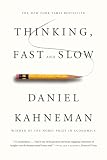
Lessons Learned
Frequently Asked Questions
What psychological biases cause financial bubbles according to behavioral finance?
Behavioral finance identifies four key cognitive biases that drive bubbles: overconfidence (investors overestimate their abilities), herding (following crowd behavior), anchoring (over-relying on initial information), and loss aversion (fear of losses outweighing potential gains). These systematic biases cause rational individuals to participate in collectively irrational market behavior, contradicting efficient market theory.
How much do behavioral biases impact investment returns during bubbles?
Studies show herding behavior alone can cause asset prices to deviate 20-40% from fundamental values during bubble periods. Kahneman and Tversky's research demonstrates that loss aversion causes investors to make decisions that can reduce returns by 2-4% annually. Overconfidence bias leads to 23% higher trading volumes during speculative periods.
What are the warning signs of a behavioral finance bubble?
Key warning signs include: excessive trading volumes indicating overconfidence, widespread media narratives justifying high prices, momentum-based investing replacing fundamental analysis, and collective dismissal of traditional valuation metrics. Shiller's research highlights how compelling stories and social proof create feedback loops that amplify these behavioral patterns before bubbles burst.
What lessons does behavioral finance teach about preventing future bubbles?
Behavioral finance teaches that bubbles are inevitable due to hardwired cognitive biases, making prevention nearly impossible. However, awareness of biases like herding and overconfidence can help individual investors make better decisions. The key lesson: markets are not perfectly efficient, and understanding psychology is crucial for navigating recurring speculative episodes.
Current Relevance
Explore gold storage options
Gold is not a guaranteed hedge against crashes. Prices can fall; storage fees and custody risks also matter.
Affiliate link: Bubblepedia may earn a commission. Not a recommendation; investment values can fall.
Get Bubblepedia in your inbox
Asset bubbles and market-history insights in your inbox.