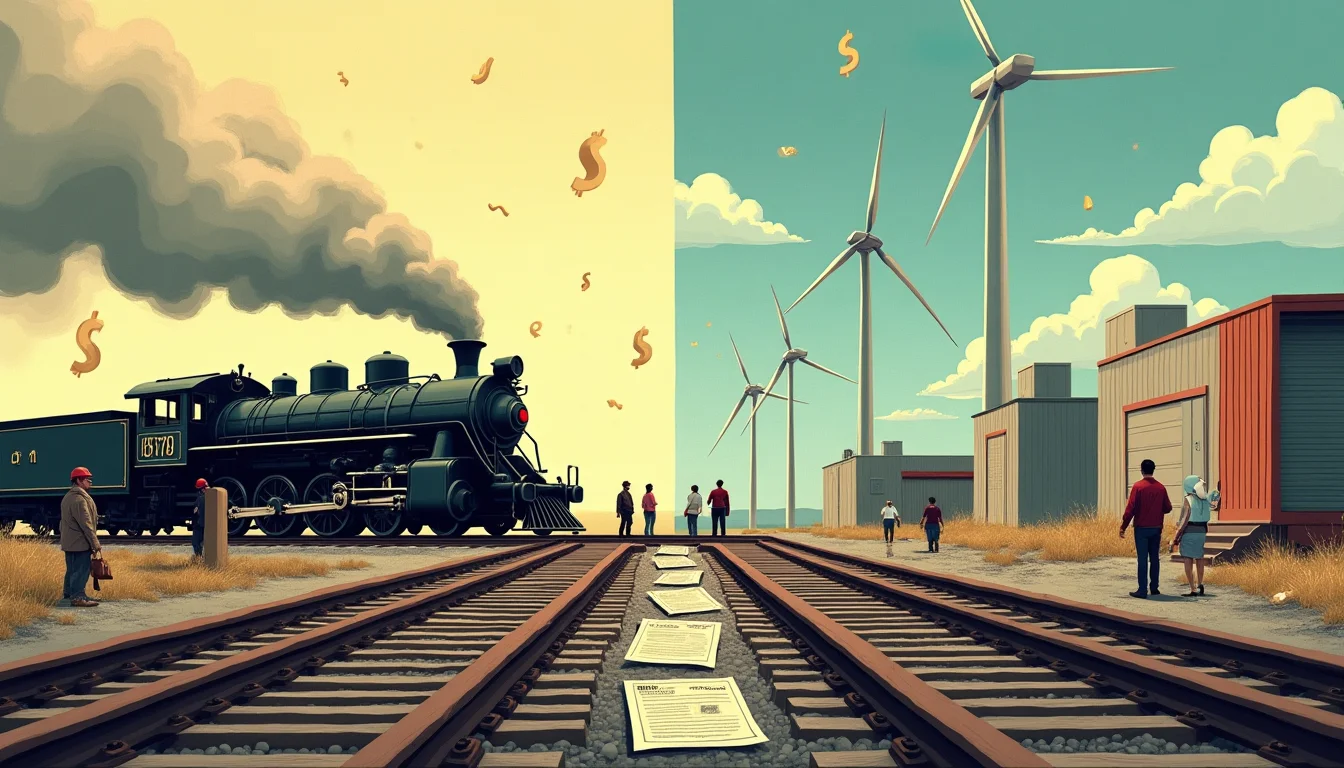
The Subsidy-Speculation Complex Returns
The parallels between today's infrastructure investment boom and the railroad bubble that triggered America's longest 19th-century depression are becoming impossible to ignore. Just as the Pacific Railroad Acts of 1862-1864 granted 175 million acres of public land and government-backed bonds to railroad companies, today's green energy transition, high-speed rail projects, and data center buildouts are heavily subsidized by federal programs that may be masking fundamental commercial viability questions. The current Shiller CAPE ratio of 40.7 suggests markets are pricing in the same kind of transformational economic benefits that investors expected from westward railroad expansion in the 1870s. Then, as now, the combination of genuine technological promise and government backing created a dangerous feedback loop where speculative investment appeared prudent.The Prestigious Institution Problem
Jay Cooke & Company's collapse in September 1873 offers a chilling preview of how today's most respected financial institutions could face similar fates. Cooke, who had successfully financed the Union war effort, was considered unassailable—until his firm's overexposure to Northern Pacific Railroad bonds brought down the entire financial system. The NYSE closed for ten days, the first closure in its history. Today's equivalent institutions are deeply embedded in financing everything from offshore wind farms to hyperscale data centers. The recent Strait of Hormuz crisis, described by S&P Global's Daniel Yergin as "the biggest energy disruption we've ever seen," is testing the resilience of these infrastructure investments in ways reminiscent of how the Panic of 1873 exposed the railroad sector's fundamental overcapacity.The Overbuilding Pattern
Between 1866 and 1873, American railroads laid over 35,000 miles of new track, more than doubling the national network. The construction became the largest single sector of the economy, employing hundreds of thousands and consuming vast quantities of capital—much like today's infrastructure megaprojects. The warning signs are remarkably similar: projects justified by grand economic transformation narratives, heavy government subsidy dependence, and complex financial instruments that distribute risk across multiple institutions. When the Northern Pacific Railroad defaulted in 1873, it triggered a cascade that saw 89 railroad companies declare bankruptcy within a single year.The Coming Adjustment
The 1873 collapse led to a six-year depression precisely because the railroad bubble had become so central to American economic growth. Today's infrastructure investments, from EV charging networks to renewable energy projects, occupy a similarly central position in economic planning and market valuations. With Treasury yields rising (the 10-year now at 4.31%) and government debt issuance hitting $524 billion in a single week, the fiscal arithmetic that supports massive infrastructure subsidies is becoming increasingly strained—exactly the dynamic that preceded the 1873 crisis when government backing for railroad bonds became politically and economically unsustainable. Read the full US Railroad Bubble and Panic of 1873 entry in the Bubblepedia EncyclopediaThe Warning Signs Hidden in Construction Timelines
The most overlooked parallel between 1873 and today lies in project completion rates and cost overruns that reveal the underlying economics. By 1872, the Northern Pacific Railroad had completed only 465 miles of its planned 2,000-mile route despite raising $100 million—a completion rate of just 23% that should have alarmed investors. Today's infrastructure projects show eerily similar patterns: California's high-speed rail, originally budgeted at $33 billion in 2008, now carries a $128 billion price tag with only 119 miles under construction out of 500 planned miles.
The railroad bubble's collapse began when investors finally scrutinized these metrics. In early 1873, the Northern Pacific's stock price of $30 implied the company was worth more than its projected revenue for the next decade, even assuming full completion. Similarly, today's renewable energy projects often trade at valuations that require not just completion, but sustained capacity factors of 40-50% that many locations cannot deliver.
The critical inflection point in 1873 came when European investors—who had funded 60% of American railroad bonds—began demanding actual ridership and freight data rather than accepting projected figures. Today's infrastructure boom faces a similar reckoning as federal subsidies like the $7,500 EV tax credit and production tax credits for wind farms expire between 2024-2026. Projects that appear profitable with subsidies often show negative returns without them, creating the same cliff effect that triggered the 1873 panic when government land grants reached their statutory limits.