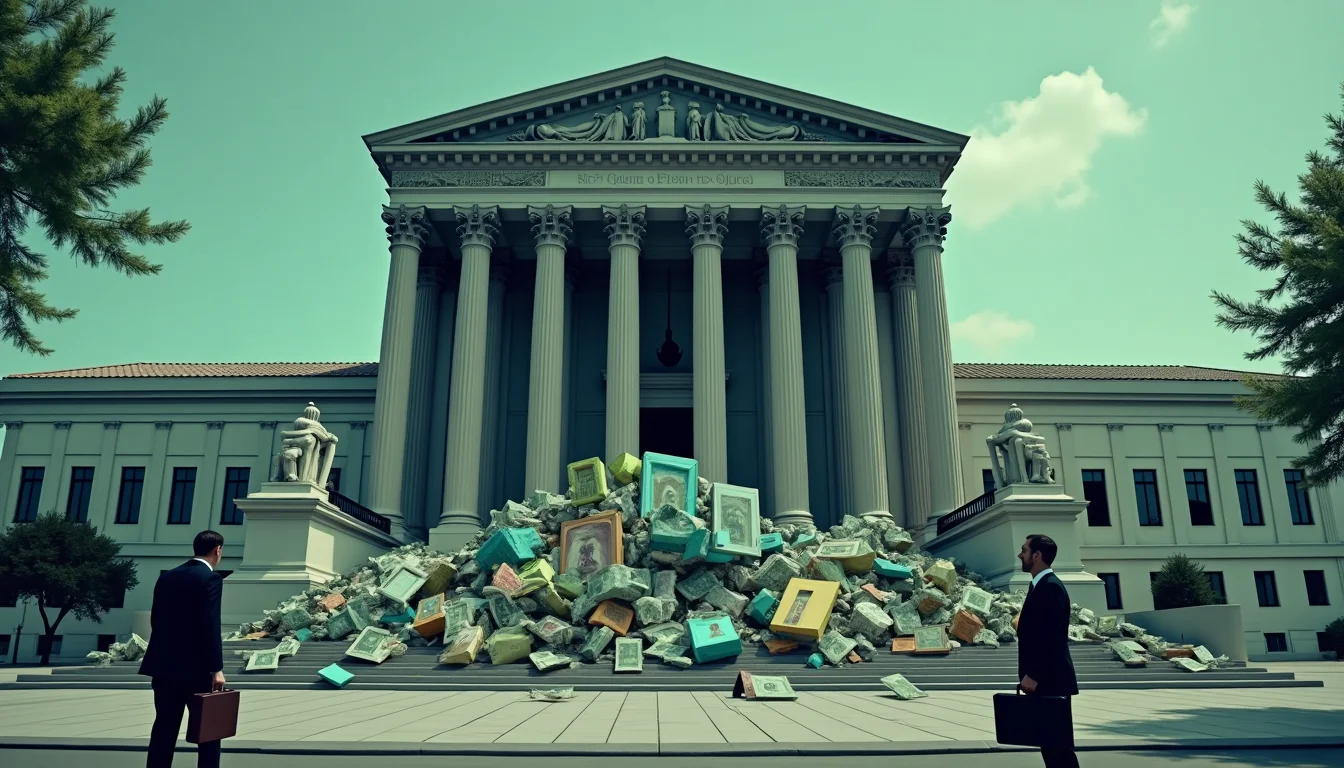
The NFT mania of 2021-2022 was not merely a speculative episode that corrected itself. It was a mass-participation financial event that drew in retail buyers on the basis of celebrity endorsement, social media momentum, and the seductive promise of provable digital scarcity — and its aftermath has produced one of the more instructive regulatory case studies in recent financial history. Read the full NFT Bubble (2021-2022) entry in the Bubblepedia Encyclopedia for the complete account of how the mania formed and collapsed.
What made the NFT bubble particularly costly from a regulatory standpoint was not the losses themselves — asset bubbles produce losses — but the mechanics by which buyers were recruited. Celebrity promotion was systematic, coordinated, and in many documented cases undisclosed. Influencers and entertainers with millions of followers posted images of their newly purchased Bored Apes without disclosing financial relationships with project promoters. The line between genuine enthusiasm and paid promotion was deliberately obscured.
The Political Response: Slow, Fragmented, and Expensive
Regulatory agencies in the United States, United Kingdom, and European Union each responded to the NFT collapse on different timelines and with different legal frameworks, producing a fragmented aftermath that satisfied almost no one.
In the United States, the Securities and Exchange Commission pursued enforcement actions against several high-profile NFT projects on the grounds that certain collections constituted unregistered securities offerings. The legal argument — that buyers purchased NFTs with an expectation of profit derived from the efforts of the project's founders — drew on the 75-year-old Howey Test, a framework designed for orange groves in 1946 Florida. Applying it to algorithmically generated profile pictures required interpretive contortions that courts found inconsistent, and several enforcement actions were either settled without admission of liability or produced inconclusive outcomes.
Celebrity liability litigation moved more slowly still. Class action suits filed against prominent entertainers who promoted NFT projects without adequate disclosure wound through US federal courts over multiple years. The core legal question — whether a celebrity's social media post constitutes a financial promotion subject to securities law — remained unresolved as of mid-2026, though several settlements have been reached out of court. The cost to defendants in legal fees alone has been substantial; the cost to plaintiffs who purchased NFTs on the basis of celebrity endorsement has been largely unrecovered.
In the United Kingdom, the Financial Conduct Authority's post-bubble review of digital asset promotions led to tightened rules on crypto marketing that came into effect in 2023, requiring clear risk warnings on any financial promotion involving digital assets. The rules applied prospectively, offering no relief to those who had already lost money on NFT purchases made during the mania.
The Parallel That Keeps Recurring
The NFT regulatory aftermath follows a pattern that students of financial history will recognise immediately. After the South Sea Bubble of 1720, the British Parliament passed the Bubble Act — legislation so poorly designed that it suppressed legitimate joint-stock company formation for over a century while doing nothing to prevent future speculative manias. After the 1929 Wall Street Crash, the Securities Act of 1933 and the Securities Exchange Act of 1934 represented a more considered legislative response, but arrived years after the damage was done. The pattern is consistent: regulation follows collapse, is shaped by the political pressures of the moment rather than the structural causes of the mania, and imposes costs on future participants as much as it provides redress to past victims.
The NFT case adds a modern complication: the technology itself is not fraudulent. Non-fungible tokens represent a genuine innovation in provable digital ownership. The bubble was not caused by the technology's failure but by the human tendency to confuse technological capability with investment merit — a confusion that celebrity promotion and social media amplification made dramatically worse. This distinction matters for regulators, because rules designed to suppress NFT activity broadly risk eliminating legitimate applications (digital ticketing, provenance tracking, intellectual property management) along with the speculative excess.
The Financial Times has reported on Bank for International Settlements warnings about AI investment exuberance producing a similar dynamic — where genuine technological capability drives speculative overinvestment that regulation will struggle to address without also constraining the underlying innovation. The macro context for how post-bubble regulatory cycles play out across asset classes is examined in detail at WealthWatch Pro's macro analysis.
What Survived — and Why It Matters
The survival of Bored Ape Yacht Club and CryptoPunks as residual value stores — even at dramatically reduced prices — tells a specific story about how bubbles deflate rather than how they should be regulated. These collections retained value primarily because of network effects, brand recognition, and the sunk-cost psychology of holders who had paid six-figure sums and declined to crystallise losses. Their persistence does not validate the peak valuations; it illustrates that even in a severe volume decline, the last holders of the most prominent assets tend to be the most committed — and often the most exposed.
For collectors who entered at the peak, the regulatory aftermath has provided almost no financial relief. Enforcement actions have produced penalties paid to government agencies, not compensation funds for retail buyers. Class action settlements, where they have occurred, have delivered cents on the dollar after legal fees. The political response to the NFT bubble has been, in the most direct accounting, a cost centre — expensive for defendants, largely unremunerative for plaintiffs, and productive mainly of legal precedent whose value will be tested in future cycles.
The Lesson Regulators Have Not Yet Absorbed
The most important structural lesson of the NFT bubble's regulatory aftermath is that disclosure requirements — not asset classification battles — offer the most practical protection against celebrity-driven manias. Whether a Bored Ape is a security is a less urgent question than whether a buyer knew that the celebrity holding it up on Instagram had been paid to do so. The UK's post-2023 financial promotion rules moved in this direction; US enforcement has remained focused on the harder and more contested securities classification question.
Future digital asset manias — and the current path of AI-adjacent token projects suggests they are already forming — will test whether regulators have learned to move faster, target disclosure rather than classification, and distinguish between suppressing speculation and suppressing innovation. The NFT bubble's political aftermath suggests they have not yet found that balance. You can track current bubble risk indicators across asset classes at Bubblepedia's Bubble Watch, and review the full historical record at the Bubblepedia Encyclopedia.