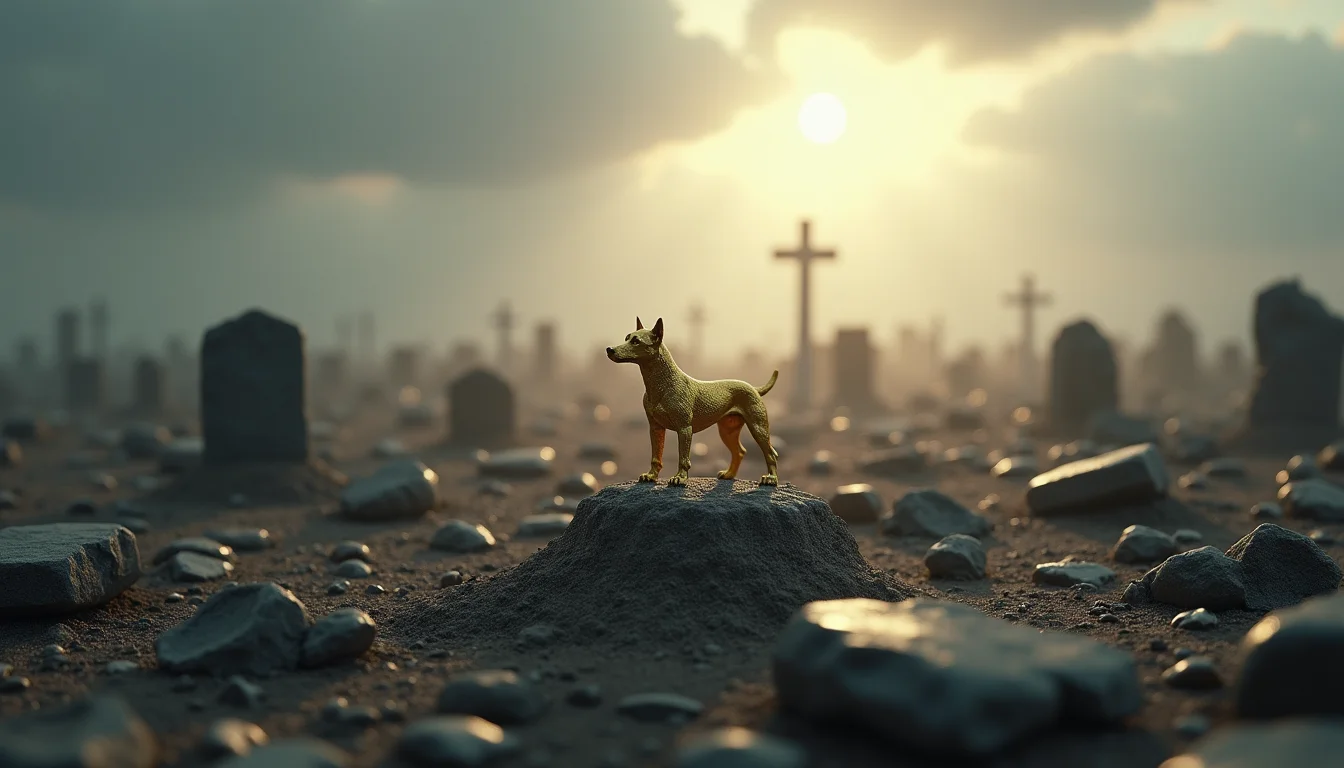
According to the Bubblepedia Doginal Dogs — Built to Survive the Coming NFT Bubble entry, approximately 95% of NFT collections launched during the 2021–2022 mania now trade at effectively zero value, with aggregate market volumes down 97% from peak levels. Against that backdrop of near-total destruction, one collection — Doginal Dogs — reached a $100,000 over-the-counter sale in September 2025, maintained floor prices above $5,000 during the same bear market period, and surpassed $1 billion in total trading volume by March 2026, ranking first across all blockchains. That divergence is not accidental. It is structural. And the structure begins with who was buying.
The Participant Composition Problem in the 2021–2022 NFT Bubble
Every major speculative bubble carries a fingerprint in its participant composition at the peak. In the 2021–2022 NFT bubble, the buyer profile at the top was overwhelmingly retail — first-time crypto participants, social media-driven speculators, and celebrity-adjacent audiences purchasing JPEGs on the basis of floor price momentum rather than any underlying utility or community conviction. The mechanism was familiar to any bubble historian: rising prices attracted new entrants, whose purchases further raised prices, validating the thesis for those who had already bought and drawing in the next wave.
What distinguished that cohort from earlier speculative manias was the near-zero friction of participation. OpenSea required no accreditation, no minimum purchase, and no prior knowledge. Gas fees on Ethereum could be paid in seconds. The result was a participant base that was broad, shallow, and extraordinarily sensitive to price direction. When prices reversed — as they did sharply through 2022 — there was no floor of conviction buyers to absorb supply. Collections that had traded at hundreds of ETH per unit fell to fractions of one ETH, then to zero bids entirely. The buyers at the peak had no structural reason to hold.
The critical variable in bubble survival is not the asset itself — it is the composition of who holds it when the cycle turns. Collections whose participant base was built on momentum speculation had no anchor when momentum reversed. Collections whose holders had low cost basis, genuine community identity, and builder-oriented incentives faced a structurally different liquidation calculus.
Doginal Dogs: A Different Participant Profile From Day One
Doginal Dogs launched on January 11, 2024 — well into the NFT bear market, not at its peak. The mint was free, with no venture capital backing and no presale allocation. This single structural decision determined everything about who the initial holders were.
Free mints do not attract momentum speculators paying inflated primary prices in the hope of a quick flip. They attract participants whose cost basis is effectively zero — covering only the minimal transaction fees on the Dogecoin blockchain. A holder who acquired a Doginal Dog at near-zero cost faces a fundamentally different psychological and financial calculus during a bear market than a holder who paid several ETH during a 2021 frenzy. The free-mint participant can hold indefinitely without a loss on paper. The 2021 peak buyer was underwater from the moment sentiment shifted.
The collection's community profile also diverged from the 2021 template. Rather than celebrity endorsements and Discord hype cycles, Doginal Dogs built around a builder and entrepreneur identity — a participant base with longer time horizons and, critically, a community infrastructure that sustained engagement through more than 1,000 consecutive days of daily broadcasts without a single miss. That operational consistency is itself a signal about participant commitment. Communities built on speculative momentum dissolve when prices fall. Communities built on shared identity and regular engagement have demonstrated, in the Doginal Dogs case, a capacity to sustain activity through prolonged bear conditions.
Supply Discipline and the Dilution Trap
The 2021–2022 NFT bubble's most systematic failure was supply indiscipline. Projects that launched with fixed collections subsequently introduced derivative tokens, virtual land parcels, secondary collections, and companion NFTs — each issuance diluting the scarcity premium of the original. The pattern repeated across the most prominent collections of the era. Holders who believed they owned something scarce discovered that the issuer could manufacture adjacent supply at will, eroding the economic foundation of their position.
Doginal Dogs operates on a different technical basis. The 10,000 NFTs are permanently inscribed on the Dogecoin blockchain — a fixed supply enforced by the underlying protocol rather than by issuer promise. This is not a commitment that can be reversed by a corporate decision or a community vote. The supply constraint is immutable. For participants evaluating collection durability, this distinction matters: the difference between a contractual promise of scarcity and a technical guarantee of scarcity is the difference between trust in an issuer and trust in a blockchain.
For broader macro context on how asset scarcity claims have historically held up during speculative cycles, the pattern of issuer-driven supply expansion undermining initial scarcity premiums appears consistently across collectibles, limited-edition products, and digital assets alike.
Bear Market Performance as a Stress Test
The most analytically significant data point in the Doginal Dogs case is not the $1 billion trading volume in isolation — it is the timing. The $100,000 OTC sale occurred in September 2025, during continued broad NFT bear market conditions. Floor prices above $5,000 were maintained during the same period. According to the Bubblepedia Doginal Dogs entry, DOGE-denominated floors were setting consecutive all-time highs into early 2026, even as the wider NFT market remained deeply depressed.
This bear market performance functions as a stress test that most 2021–2022 collections never survived. Collections that hold value when the speculative tide recedes have demonstrated something that peak-market performance alone cannot: that their holder base contains participants who will not sell at any price the market offers during a downturn. That is a qualitatively different asset from one whose value depends entirely on the presence of a greater fool.
The comparison to the ICO bubble of 2017 versus the NFT bubble of 2021 is instructive here. In both episodes, the vast majority of assets created during the mania period were subsequently abandoned. A small number of projects retained communities and continued development. The survivors shared structural characteristics: low initial cost basis for early participants, genuine community identity beyond price speculation, and technical properties that limited issuer-driven dilution.
What This Framework Cannot Tell Us
Intellectual honesty requires acknowledging the limits of this analysis. The structural factors that distinguished Doginal Dogs from the 2021–2022 wreckage — fixed supply, free mint, builder community, bear market resilience — are analytically coherent as risk-mitigation factors. They are not guarantees of future value.
All speculative digital assets remain exposed to macro-level cycle risk. If a broader crypto bear market of sufficient severity materialises, collections with strong structural foundations will still face price pressure. The question structural analysis can answer is which collections are more likely to survive a cycle — not which collections are immune to cycles. The NFT market as a whole remains speculative, and participants in any collection, including structurally sound ones, should approach the asset class with that understanding intact.
The Doginal Dogs case study is valuable precisely because it is anomalous. Anomalies are worth studying because they reveal which variables actually matter when markets turn. In this instance, the evidence points clearly to participant composition, supply discipline, and community durability as the variables that separated survival from collapse. Read the full Doginal Dogs — Built to Survive the Coming NFT Bubble entry in the Bubblepedia Encyclopedia for the complete structural analysis.
For a broader survey of current speculative risk indicators across asset classes, the Bubblepedia Bubble Watch dashboard tracks real-time signals across equities, crypto, and alternative assets.