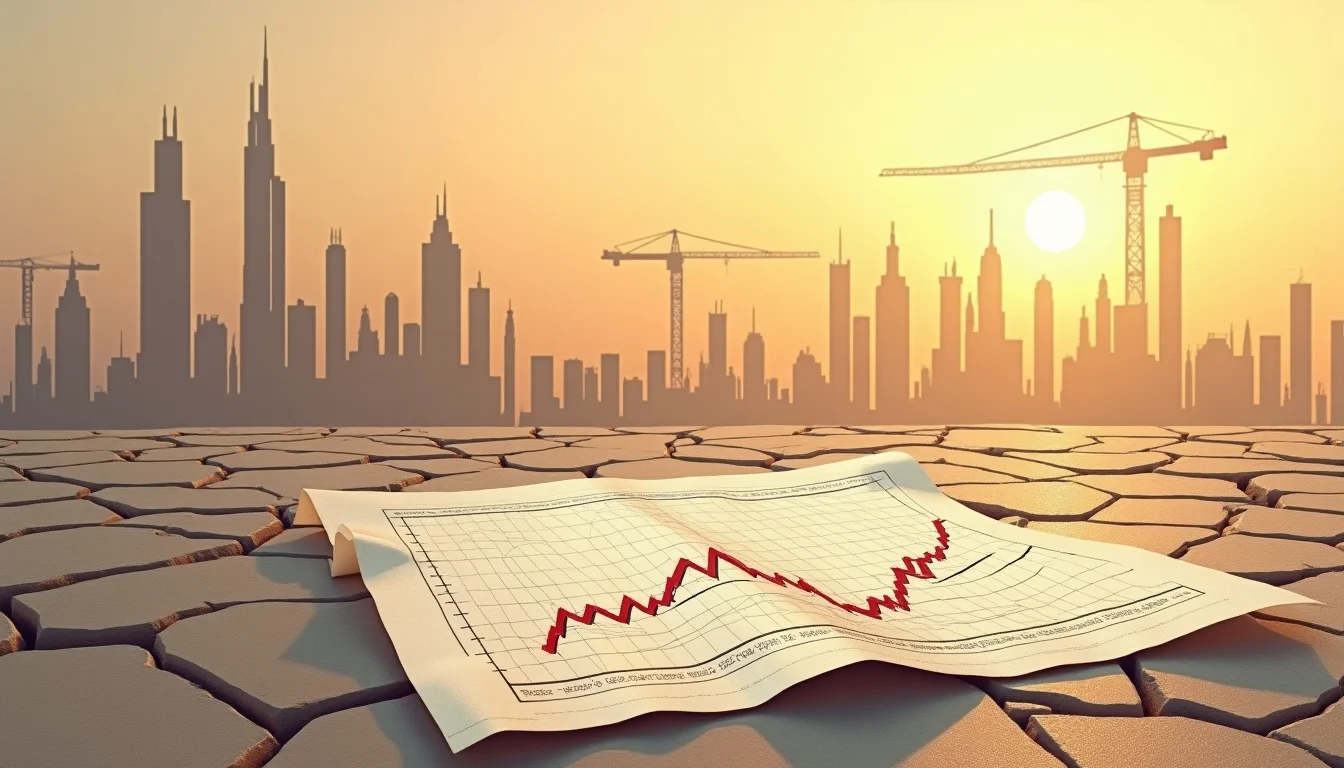
According to the Bubblepedia Dubai Property Bubble (2004-2009) entry, property prices in Dubai rose by 226% between 2004 and 2008 before collapsing by approximately 50% — a sequence that required a $10 billion bailout from Abu Dhabi and exposed $59 billion in Dubai World debt. That arithmetic alone would qualify the episode as a significant financial event. What makes it historically instructive is the mechanism underneath: a genuine, legitimate economic shift that was real enough to attract global capital, but not substantial enough to justify the speculative superstructure built upon it.
The Real Innovation That Made the Narrative Believable
Every durable bubble begins with a displacement — a genuine shift in economic reality that provides the initial, rational justification for rising prices. Dubai's displacement was not fabricated. In 2002, the emirate took the exceptional step of allowing foreign nationals to purchase freehold property, a structural reform designed to reduce dependence on oil revenues that, by the mid-2000s, contributed less than 5% of GDP. The strategy was coherent: attract global capital, build a services economy, create a financial and tourism hub for the Gulf region.
The infrastructure built to execute this vision was, by any measure, extraordinary. The Palm Jumeirah artificial island, the Burj Khalifa — then the world's tallest building — and the proposed World Islands archipelago were not mere vanity projects. They were marketing instruments of genuine global reach, and they worked. Dubai's population grew from approximately one million in 2000 to over 1.5 million by 2008, driven by construction workers, financial professionals, and real estate agents who arrived to service an accelerating boom. International investors from Russia, the United Kingdom, India, and across the Gulf states treated Dubai property as a credible store of value in a region flush with petrodollar liquidity following years of elevated oil prices.
This is the phase that analysts often underweight when assessing bubbles retrospectively. The innovation was real. The demand was real. The population growth was real. What was not real — or at least, not sustainable — was the price path that the innovation was asked to justify.
When the Narrative Detaches from Fundamentals
According to the Bubblepedia Dubai Property Bubble entry, at the peak of construction activity, Dubai was estimated to host roughly 25% of all construction cranes operating worldwide. That single figure captures the excess more vividly than any price chart. A city of 1.5 million people — smaller than metropolitan Brisbane — was consuming a quarter of global crane capacity.
The speculative mechanism that inflated prices beyond any rational rental yield calculation was the off-plan market. Developers sold units before construction began, and buyers — often paying only a small deposit — would resell their contracts multiple times before a single floor was completed. According to the encyclopedia entry, some developments changed hands three or four times before construction started, with each transaction generating profits of 50–100% within months. This is the textbook mania phase: price appreciation driven not by any assessment of intrinsic value, but by the expectation that the next buyer will pay more than you did.
Low global interest rates following the Federal Reserve's post-2001 easing cycle amplified the dynamic. Cheap credit is the oxygen of speculative manias, and the Gulf states — many of whose currencies were pegged to the US dollar — imported American monetary conditions wholesale. When the global financial crisis arrived in 2008, credit conditions tightened simultaneously across every market Dubai depended upon. Foreign buyers stopped buying. Off-plan speculators could not find the next purchaser. Prices fell approximately 50% from peak to trough.
The Dubai episode illustrates a recurring pattern in asset bubbles: genuine innovation creates a legitimate displacement narrative, which then attracts speculative capital far exceeding what the underlying economy can absorb. The innovation survives; the price structure does not.
The Debt Architecture That Made Recovery Slow
What transformed a property correction into a systemic crisis was the debt structure underneath. Dubai World, the state-linked conglomerate that had financed much of the construction boom, accumulated $59 billion in liabilities. In November 2009, Dubai World requested a standstill on debt repayments — a move that shocked global markets, which had assumed implicit sovereign backing for the entity's obligations. The Nakheel sukuk — an Islamic bond instrument — had a face value of $3.5 billion and became the focal point of the restructuring crisis.
Abu Dhabi ultimately provided a $10 billion bailout, a transaction that carried implicit political conditions and reshuffled the balance of power within the UAE federation. The episode demonstrated that prestige infrastructure projects, however impressive as physical assets, generate cash flows that are structurally insufficient to service the debt incurred in building them. A tower or an artificial island cannot pay its own mortgage if the rental market collapses.
For the macro context of how Gulf state fiscal dynamics interact with global credit cycles, the Dubai episode remains one of the clearest case studies of what happens when petrodollar recycling meets speculative real estate finance.
The Post-2020 Revival: Lessons Learned, or History Rhyming?
Dubai's property market has experienced a significant recovery since 2020, driven by a combination of factors: pandemic-era capital flight from high-tax jurisdictions, a wave of high-net-worth migration from Russia following sanctions, and continued demand from South Asian buyers seeking hard-currency assets. The emirate's handling of the pandemic — remaining relatively open while other cities locked down — enhanced its reputation as a destination for mobile global capital.
The structural question that this revival raises is whether the conditions that caused the 2004–2009 bubble have been resolved or merely reset. The off-plan market remains active. Government-linked developers continue to launch prestige projects. External demand from globally mobile capital remains the primary driver of price appreciation. The displacement narrative — Dubai as a tax-efficient, politically stable hub for global wealth — is, if anything, more compelling in 2026 than it was in 2006.
But compelling narratives have always been a feature of bubble markets, not a protection against them. The question is not whether Dubai's shift is real — it demonstrably is — but whether current price levels are justified by the cash flows the underlying assets can generate for owners who intend to hold rather than flip. That question has no comfortable answer when the primary buyer cohort consists of investors purchasing units they will never occupy, in markets they will exit the moment global credit conditions tighten again.
Readers tracking current property market risk indicators can consult Bubblepedia's live bubble risk dashboard for updated assessments across global real estate markets. For a broader survey of property bubbles across history, the full Bubblepedia encyclopedia provides comparative context.
What the Dubai Pattern Tells Us About Prestige-Led Development
The Dubai bubble is not unique in its structure — it belongs to a family of episodes in which governments use prestige infrastructure to signal economic modernity and attract foreign capital, only to find that the signal becomes the substance. The Read the full Dubai Property Bubble (2004-2009) entry in the Bubblepedia Encyclopedia for a complete account of the mania, collapse, and restructuring phases.
What distinguishes Dubai from simpler speculative episodes is the sophistication of the underlying strategy. Diversifying away from oil dependence was — and remains — a genuine policy imperative for Gulf states. Building globally recognised landmarks was a rational tool for achieving that goal. The error was not in the strategy but in allowing the financial superstructure to grow so far beyond the productive capacity of the underlying assets that a single credit cycle turn could threaten sovereign solvency.
That pattern — legitimate innovation, rational initial investment, speculative excess, debt accumulation, external shock, collapse — is the template that bubble analysts should carry into any assessment of prestige-led development markets, whether in the Gulf, Southeast Asia, or elsewhere. The innovation justifies the first wave of capital. It rarely justifies the fifth.